Hypnosis for Couples: The Trust Is Already There
When people write to me about hypnosis for couples, the question is rarely technical. What they want to know is quieter and harder to ask: what happens when the person guiding you down is not a stranger with a diploma on the wall but the person whose socks are on your bathroom floor. Will it work with us? Will it be strange? The honest answer is that it works differently — and the difference is the whole subject. This is the orientation piece; the word-for-word evening lives elsewhere on this site, and I'll point at it as we go.
Hypnosis for couples is the practice of one partner guiding the other into trance — a state of narrowed, absorbed attention — and offering suggestions the two of them agreed on beforehand: for deep rest, for presence, for play. The mechanics are the ordinary ones: a fixed focus, a short induction, one clear suggestion, a clean return. No clinical training is required and nothing about it resembles a stage act. What changes is everything around the mechanics: the guiding voice belongs to someone who knows you, which makes this a discipline of its own.
A third discipline, not a smaller version of the other two
The clinician works from distance. Whatever warmth is in the room, the relationship is scoped — a goal, a fee, a door that closes behind you — and that neutrality is a tool, a good one. The stage hypnotist works from selection: quick group tests, keep the few who respond dramatically and enjoy an audience, send the rest back to their seats. Real trance in unusual people, pre-sorted before the curtain.
At home you have neither. What you have is trust and history, and both cut both ways.
Trust first. You will let go for your partner faster than for any professional — half the consent conversation is pre-installed, and the body already knows this voice. But the stakes invert too: a clumsy suggestion from a clinician is a wasted hour with someone you never see again; a clumsy suggestion from your partner is sitting across from you at breakfast. So: slower, softer, more said out loud beforehand. More care, not less, precisely because letting go comes easier.
Now history. Your partner's voice already means things. It has read you nonsense at one in the morning, argued about money, apologised badly and then well. In trance that is an advantage no professional can buy — the voice arrives pre-weighted. But the same archive holds every old fight, and a phrase that lands wrong at dinner lands wrong in trance too, on thinner skin. "You're safe here" from a clinician is a technique. From your partner it is either a fact or it isn't, and trance has a way of noticing which.
Who guides, who goes under
Most couples cast the roles inside a minute: the organised one will guide, the dreamy one will drift. Fine for the first evening. Wrong as a constitution.
Swap early — not out of fairness, but because swapping teaches what no book chapter can. The partner who has been under knows from the inside how long five seconds of silence actually lasts, what a count taken slightly too fast does to a body that was nearly gone, why "just relax" is a useless instruction. The partner who has guided learns the opposite surprise: that guiding is work — attention paid out sentence by sentence, watching breath and eyelids and the small tells — and that there is nothing passive about going under either. One of you holds; the other lets go. Both are skills. Neither is a personality.
Plenty of couples eventually settle into fixed roles, and that is a legitimate place to land — by choice, after both of you have stood on both sides, not by default on night one. Whichever side you take first, learn the state in your own head before producing it in someone else's: a guide who has practised self hypnosis talks about trance like someone who has been inside the building.
What couples actually use it for
Less exotic than the internet implies, more varied than the skeptics assume.
Deep rest, most commonly. One partner talks the other down at the end of a savage week, and the difference between relaxing yourself and being relaxed by someone is the difference between cooking and being cooked for. For once, the tired one is not running the procedure.
Presence. Twenty minutes of attention resting entirely on one voice is a rarity in a modern evening. Couples who spend their nights side by side on separate screens report this as the surprise — not depth, just being undivided for a while.
Sensory play. Suggestion turns attention up as well as down. Warmth that spreads from wherever a hand happens to rest. Weight. Slowness. A fingertip that seems to leave a trail. This is where the craft opens onto the territory I write books about rather than blog posts — the state heightens whatever you place into it, and what two consenting adults choose to place into it is their business. The mechanics of asking stay the same at every temperature.
And underneath all three, the thing that keeps couples practising: the letting-go itself. For many people the suggestion is nearly beside the point. The point is being allowed to stop steering for twenty minutes while someone they trust audibly holds the wheel and needs nothing back. Some are startled by how much that moves them; that is information, not a malfunction.
Said plainly, once: this is not couples therapy and does not replace it. Trance amplifies what is already between two people — if the ground is cracked, it finds the cracks rather than filling them.
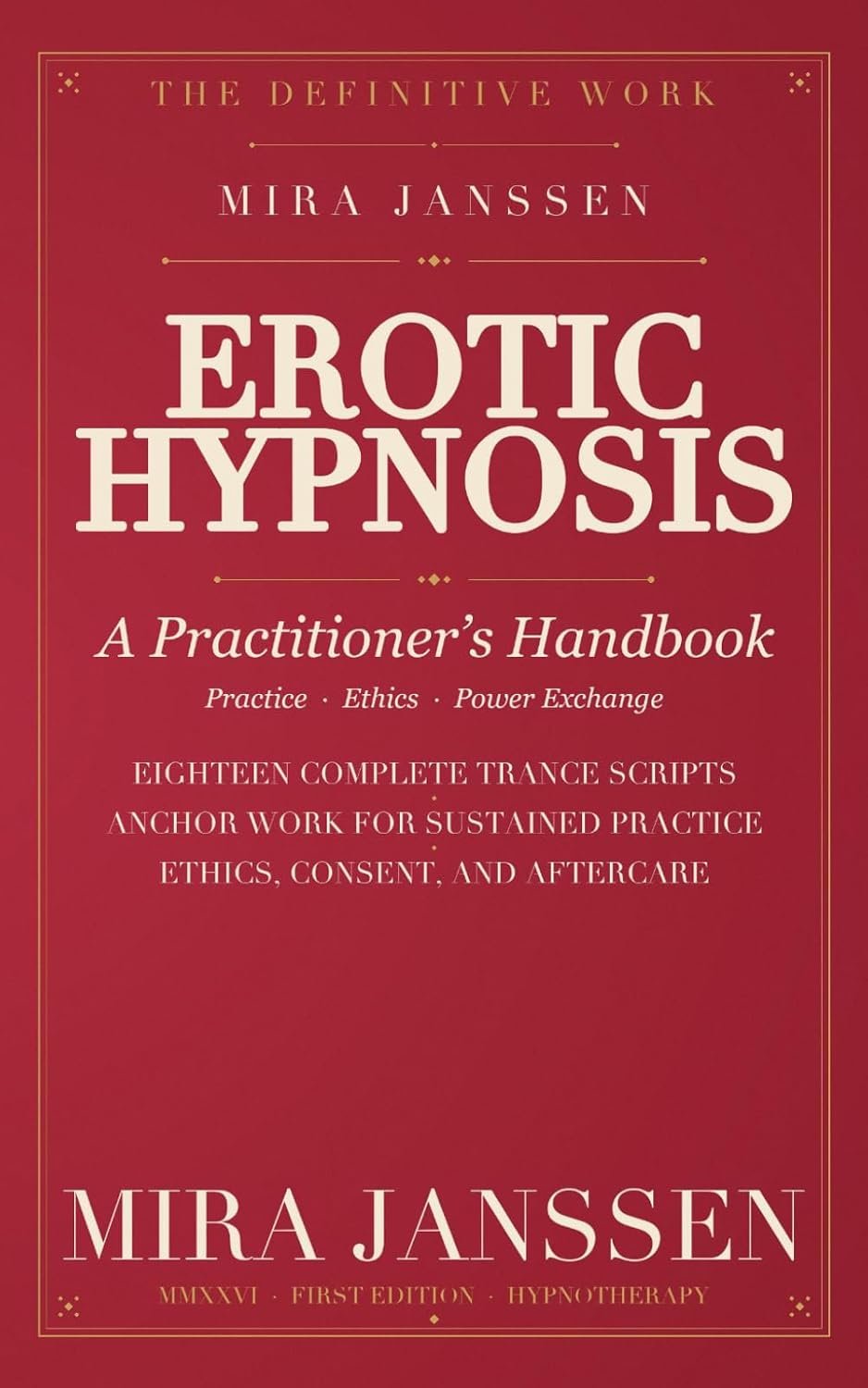
Eighteen complete sessions written out to read aloud — from the first agreement to the way back. The book for turning one attempt into a repertoire.
See the bookThree failure modes that are really about the two of you
The technical mistakes — racing the count, inductions that drone on — are covered where the scripts live. These three belong to couples, and naming them beforehand takes away most of their charge.
Performing instead of allowing. The one going under wants to be good at this — for you — and starts manufacturing the show: the theatrical heavy arm, the reported wave of bliss on cue. That is politeness wearing trance as a costume. Agree out loud beforehand that an honest "not much yet" outranks a beautiful performance. You are not each other's audience.
Testing your partner. The guide's version of the same anxiety. Somewhere mid-session you slip in a little test to find out whether it is "really working". The trouble is that trance narrows attention onto your voice — it does not switch your partner off. They notice. What a test installs is not depth but vigilance, the opposite of what you are building. If you want to know what they felt, ask afterwards; that is what the talk is for.
Treating suggestibility differences as rejection. Responsiveness to hypnosis is a trait, spread across people roughly the way height is, and no amount of love moves someone from one end of the distribution to the other. Odds are one of you responds more. Your partner's eyelids are not a referendum on the relationship: a light responder giving you twenty attentive minutes is trusting you exactly as much as a deep one sinking like a stone. If you would rather know where you each fall before feelings get attached, the suggestibility test takes minutes and removes a future argument.
The shape of a first evening
Broad strokes only — the scripts, word for word, are in how to hypnotize someone and the step-by-step partner guide; duplicating them here would serve nobody.
It begins with an agreement, spoken, short: what you will try tonight, how long it runs, what is off the table. Then a short induction — a few minutes, not a ceremony. Then one simple suggestion, and genuinely one: heaviness, warmth, a hand at rest. Then a clean return — counted up, unhurried, light and water and a stretch. Then the talk: what landed, what felt odd, what to change next time. The talk is not admin; it is half the event, and where the second evening gets built.
As for what to expect while it is happening: read what trance actually feels like before you go hunting for a blackout, because the blackout is not coming. A first evening that produces heavy hands, time gone slightly soft, the mild surprise of having heard everything, and one good conversation afterwards is a first evening that worked. Depth arrives across evenings, not within one — and faster when nobody is chasing it.
What it can become from there — the full sessions, the wording that stays gentle under pressure, the games I have only gestured at — is what my books are for. The orientation is smaller and, I think, better news: it will feel ordinary, it will occasionally be funny, and it will show the two of you something about holding and letting go that most couples never get to watch in good light.
— Mira
FAQ
Do both partners need to be hypnotizable? No. One responsive partner and one patient voice is already a working arrangement, and guiding well does not require being a deep subject yourself. Responsiveness varies like any trait — swap roles from time to time anyway, because even a shallow visit to the other side improves the guiding.
What if one of us laughs? Someone will, usually inside the first ten minutes, and it costs nothing. Laughter is a pressure valve for two people doing something unfamiliar and slightly intimate with straight faces. Let it pass, keep your tone, carry on — no restarting from zero. If it happens every time and only from one of you, that is a conversation about comfort, not a technique problem.
Do we need experience? No. The first evening is deliberately modest — agreement, short induction, one suggestion, clean return, talk — and well within reach of two attentive beginners following a decent guide. What you need is not experience but honesty afterwards; the debrief is where the skill accumulates.
How is this different from meditation together? Meditating together is parallel: two people side by side, each managing their own attention. This is asymmetric: one hands their attention to the other, who shapes it with suggestions agreed in advance. Different skill, different intimacy, different failure modes — closer to dancing, a lead and a follow, than to sitting quietly in the same room.
Eighteen complete sessions written out to read aloud — from the first agreement to the way back. The book for turning one attempt into a repertoire.
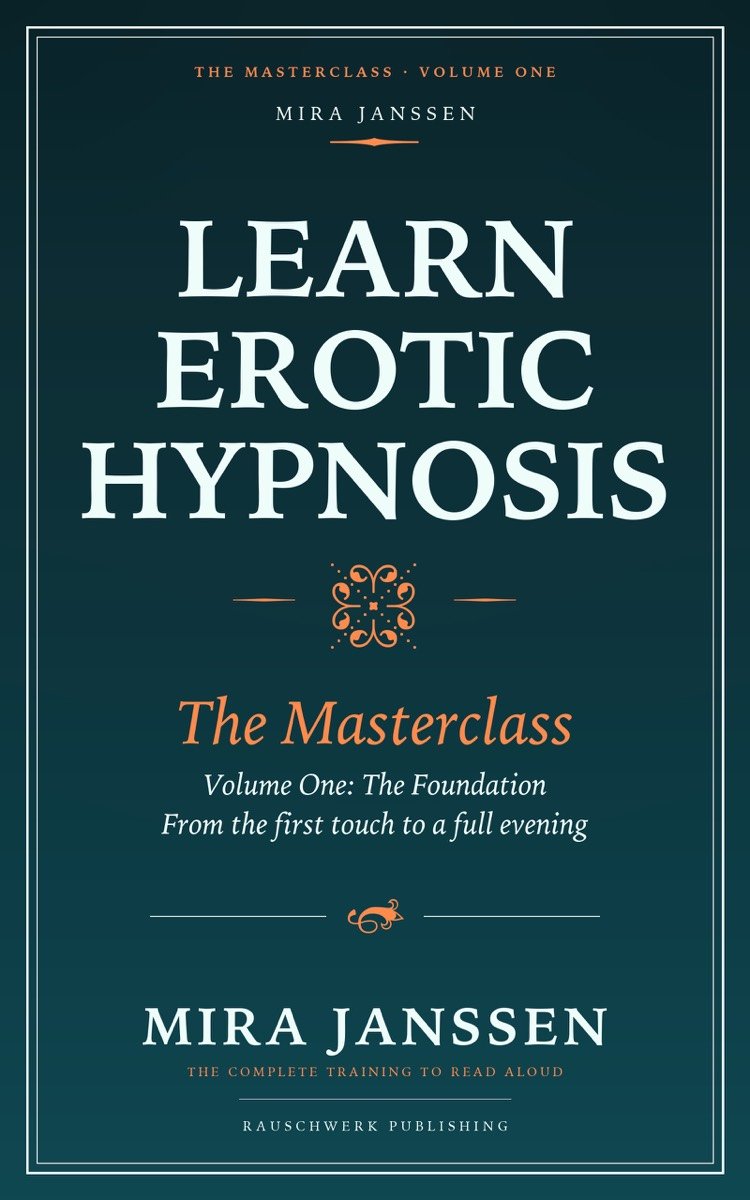
The foundation as a course rather than a reference: language, timing, reading the other person — in the order you actually learn them.
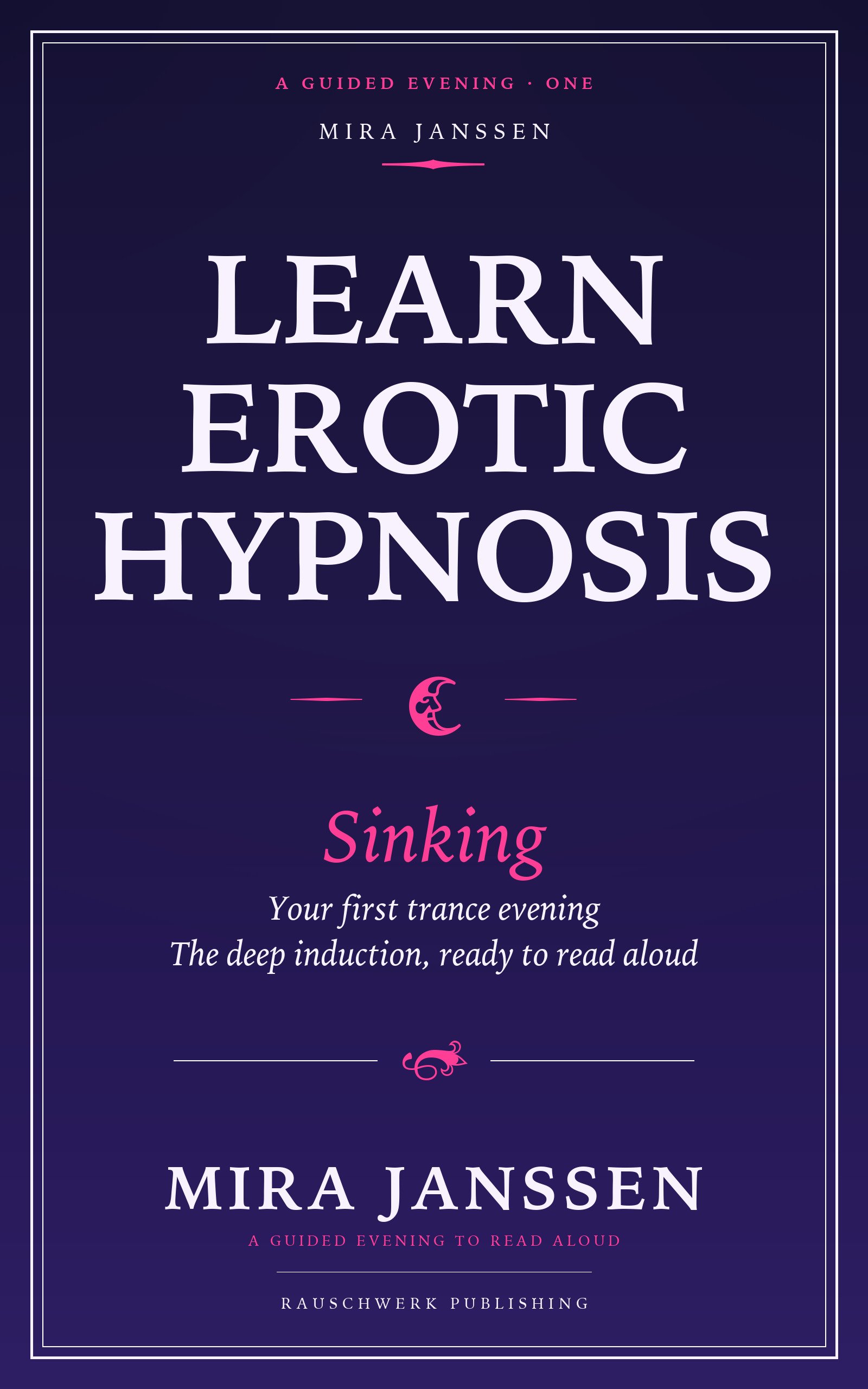
One guided evening, written out word for word. For anyone who doesn't want to understand trance so much as run one tonight.
A voice to guide the conversation
Consenting adults who want to listen together can explore an English AI voice session with Mira. Hear the free preview and agree on boundaries before choosing a session.