How to Hypnotize Someone With a Spiral: the Full 15-Minute Session
Fifteen minutes, start to finish. The spiral runs below — but it is the prop, not the method. It hypnotizes no one. That's the awkward truth about the most famous object in the field, and the exact reason it's still worth putting in front of someone.
[[SPIRALE]]
What the spiral actually does
Four things, and none of them is hypnosis.
It gives the eyes a job. A pair of eyes with nothing to do will wander. They find the clock, the phone, the face across the room. Every jump drags attention back into the world. A fixation object pins the gaze in one place, and the longer it stays there, the narrower the field in which anything else can register.
It tires the eyes out. James Braid noticed in 1841 that sustained upward staring makes the lids heavy. He called that the essential mechanism — and later admitted he'd been wrong. The heaviness is real. It just isn't the cause. It's evidence the person hands themselves: something is happening to me right now.
It manufactures expectation. This is the active ingredient. Everyone knows the spiral from films and cartoons, and everyone knows what's supposed to come next. Anyone who sits down in front of one has already decided to go along with it. That decision does most of the work, long before a word gets spoken — the same ingredient that carries the rest of the mechanics.
It leaves a mark. After a minute or two of watching, the room briefly warps — walls breathe, faces ripple. That's the motion aftereffect, plain fatigue in the motion-sensitive cells of the visual system, and it clears within seconds. To the person watching, it's proof the spiral can do something. Which is why it works better afterwards.
Settle three things first
Read the session through once before you run it — the ending matters as much as the opening, and you can't improvise that.
- How long it runs. Say the number out loud and keep to it.
- What's in scope and what isn't. Specific, not "we'll see".
- A stop word or hand signal that ends everything on the spot, with no questions asked and no explanation owed.
This isn't paperwork and it isn't a mood-killer. It's the entire reason someone lets go. A person who knows they can leave at any second stops standing guard — and until they stop standing guard, nothing else works.
The fifteen minutes
| Time | What happens |
|---|---|
| 0:00–2:00 | Seat them, screen at their eye level, arm's length. Sit slightly to the side — not behind them, that reads as being watched. Ask them to say when the dot sits comfortably. Then stop talking about the setup. |
| 2:00–5:00 | Bind the gaze. Short sentences, paced to their exhale. Say nothing new until you've seen something change — a slower blink, a swallow, the shoulders dropping. Then name that thing. |
| 5:00–8:00 | Deepen. Count down from ten, one number per exhale, one short line between numbers. If their eyes close on the way, keep going; the spiral has done its job. |
| 8:00–12:00 | The middle — whatever you agreed on beforehand. Shorter sentences than feel natural, longer pauses than feel comfortable. This is where beginners fill silence and lose the thread. |
| 12:00–15:00 | Return. Announce it, count up from one to five, stop the spiral, bring the lights back. Water, two minutes sitting, no driving for a quarter of an hour. |
What the opening sounds like
Four lines, spaced across the first minutes. Flat delivery, half volume, each one landing on their out-breath.
Let your eyes settle on the dot. Nothing to do but keep them there.
You'll notice the blinks getting slower. Let them.
Each time you breathe out, a little more of your weight goes into the chair.
You can hear me perfectly well. You don't have to answer.
Not one of those is a command. Three describe what's already happening and the fourth removes an obligation. That's the whole grammar of it — and it's the same thing you'd say to yourself in the three-minute solo version.
Read them, don't perform at them
The signals are small: blink rate slowing, a swallow, the jaw unclenching, shoulders settling a centimetre, answers arriving a beat late. Your job is to wait for one and then say it back. That's why it feels convincing — you're not predicting, you're reporting. The same movement that produces the swing in a pendulum demonstration produces the trust here.
The four ways it goes wrong:
- Talking over the effect instead of letting it land.
- Asking questions, which pulls them out to answer.
- Claiming something that isn't happening, which costs you every claim after it.
- Cutting the return short, which is the one they'll remember.
If nothing visible happens in fifteen minutes, that's information, not failure. Responsiveness varies enormously between people and the sceptics have a point worth hearing. Stop cleanly, say it was a good first go, and try again another day.
By this point you have a structure. What you don't have are the sentences for the forty minutes in the middle — and those don't get written while somebody is sitting in front of you.
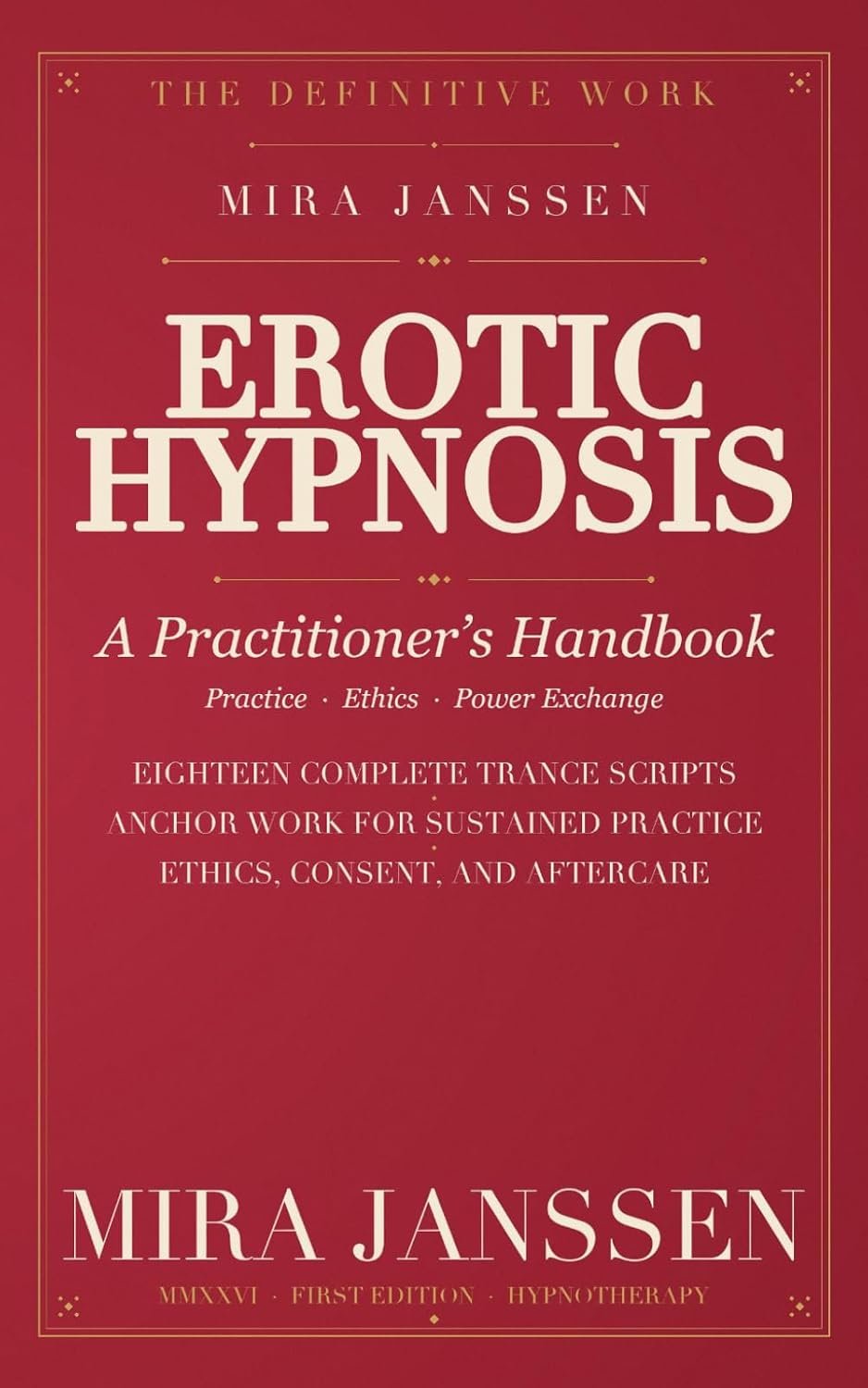
Eighteen complete sessions written out to read aloud — from the first agreement to the way back. The book for turning one attempt into a repertoire.
See the bookHow the spiral became the symbol
The strange part: it didn't come from hypnosis at all.
1841 — Braid and the corkscrew. The Scottish physician James Braid coins the term hypnotism and works with a bright object held just above eye level — usually a corkscrew or a lancet case. No spiral, but the principle is there: a point that binds the gaze.
1849 — an optical illusion, not a hypnosis tool. The Belgian physicist Joseph Plateau describes the rotating spiral that still carries his name. It's a demonstration of the motion aftereffect, and it interests perception researchers rather than hypnotists.
1930s on — Hollywood joins the two. Stage shows and films need an image that reads instantly, with no explanation. The Plateau spiral delivers: you can see at a glance that someone is being hypnotized. The association is built on screen, not in practice — and by now it's so firm that it feeds back into the real thing. The longer history is a chain of exactly this kind of accident.
Today — the myth as the tool. It works precisely because everyone already knows the picture. The spiral arrives carrying a fully formed expectation that would otherwise have to be built by hand. It isn't an instrument. It's a promise — and promises work.
When to leave it alone
Rotating and flickering patterns can trigger seizures in photosensitive epilepsy. Caution also applies with migraine with aura, a tendency to vertigo, or recovery from a concussion. Never while driving, never while operating machinery, and not as background for children.
Hypnosis is not a substitute for treatment. With depression, anxiety disorders, trauma or psychosis it belongs with trained professionals — not on a web page. If something surfaces during practice that's bigger than the evening, stop and get support.
FAQ
Can a spiral actually hypnotize you? The spiral doesn't do it — fixation, expectation and language do. It's a fixation object, and a very good one, because everyone knows what it stands for. Without willingness on the part of the person watching, nothing happens at all.
How fast should it spin? Slowly. Ten to fifteen seconds per rotation is the usable range. Anything faster reads as exciting rather than calming and irritates the eyes.
Does it work on everyone? No. Hypnotic responsiveness varies between people and stays remarkably stable across years. Roughly ten to fifteen percent respond very strongly and a similar share barely at all — and it says nothing about intelligence or willpower.
Can you get stuck in a trance? No. Without further input the state fades on its own or turns into ordinary sleep, which you wake up from. Bringing someone back properly is still worth doing — not because of danger, but because it feels better.
Does hypnosis make people compliant? Not in the way films suggest. Judgment stays intact in trance, and what someone fundamentally refuses, they refuse there too. What hypnosis shifts is willingness to go along with something they already wanted.
Why do the walls warp afterwards? Motion aftereffect. The cells in the visual system tuned to one direction of rotation fatigue, the balance between them shifts, and stationary surfaces appear to drift the other way. Harmless, and over in seconds.
Does the spiral work offline? Once the page has loaded, yes. No video or image is fetched — the spiral is calculated and drawn in the browser.
The spiral is the doorway, not the method
Anyone who wants to get past the prop needs what happens alongside it: language, timing, structure, the way back. Where to start is next door. Everything past that point is written out — line by line, with a plan B for the four things that go wrong for everyone once.
Eighteen complete sessions written out to read aloud — from the first agreement to the way back. The book for turning one attempt into a repertoire.
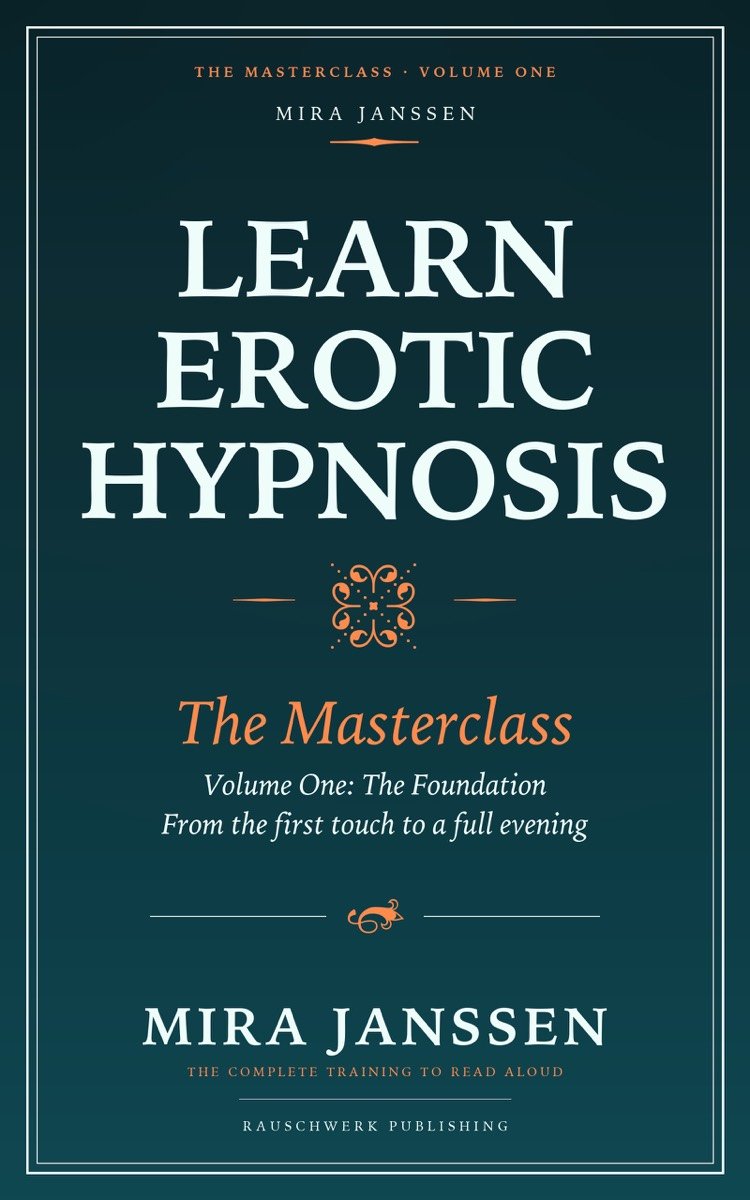
The foundation as a course rather than a reference: language, timing, reading the other person — in the order you actually learn them.
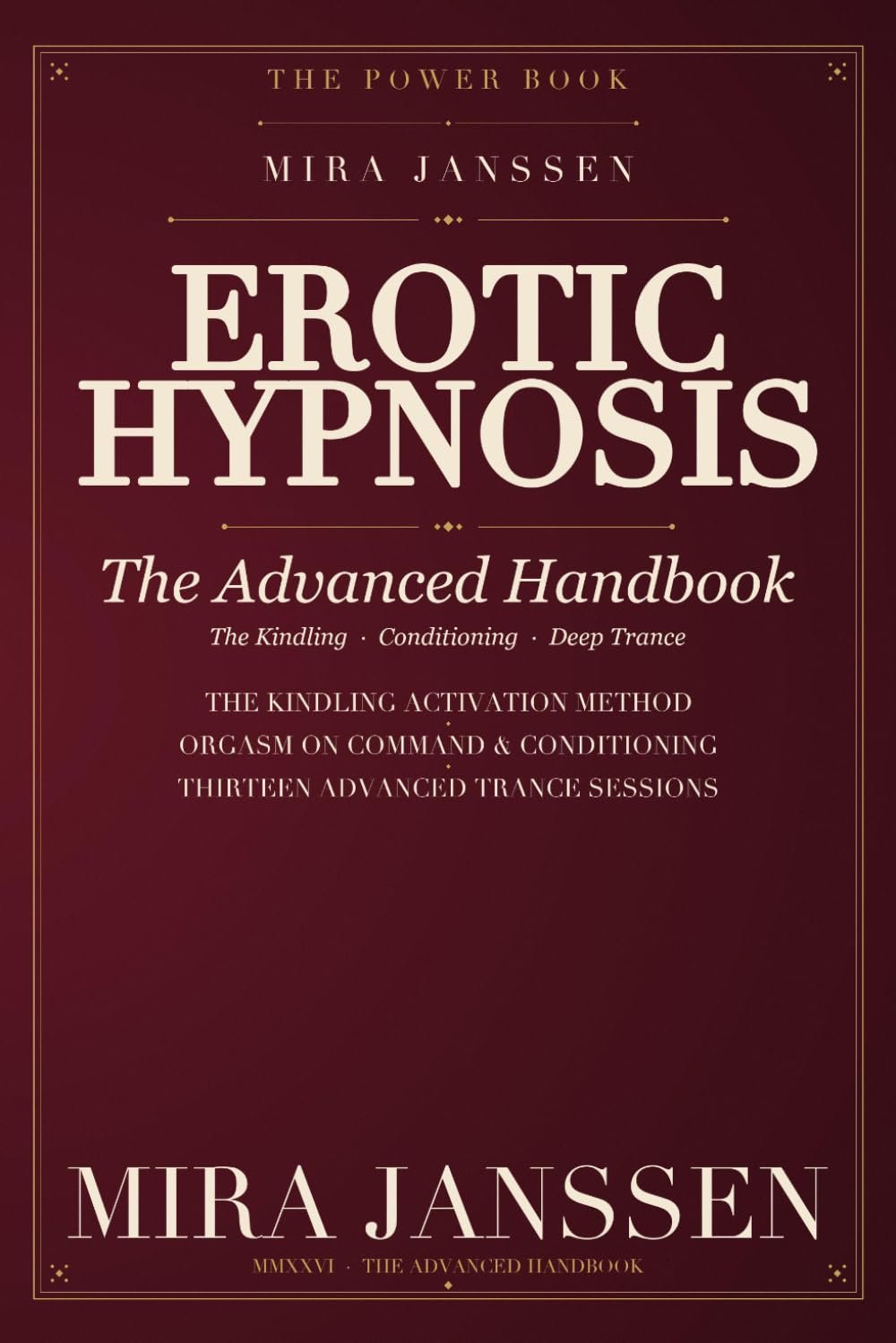
For anyone whose induction is already reliable and whose question has become what comes after it.