How to Hypnotize Yourself: the 3-Minute Spiral Method
Tap a preset, go fullscreen, and your first session runs inside the next minute. The spiral does not do the hypnotizing. It only holds your gaze still; the rest is breath, counting and repetition.
[[SPIRALE]]
Three minutes, right now
No preparation and no reading required. Tap 90-second cut or Wind down above, go fullscreen, and follow the clock.
| Time | What you do |
|---|---|
| 0:00 | Fullscreen. Sit up. Feet flat. Screen about an arm's length away, dot at eye level. |
| 0:00–0:30 | Four breaths, each one out longer than it went in. Don't force the depth — just stretch the exhale. |
| 0:30–2:00 | Hold the dot in the centre. Don't chase the arms. Let every blink close a little slower than the one before. |
| 2:00–2:45 | Count backwards from twenty, one number per exhale. Lose the thread — and you will — start again at twenty. |
| 2:45–3:00 | Press Esc. Look at the farthest thing in the room for ten seconds. Stretch. Then stand. |
Losing count is the effect, not a failure. Anyone who gets from twenty to one without slipping once was awake enough the whole way to take notes.
What to say to yourself
Think these on the out-breath, at the pace you'd speak to someone falling asleep. Don't perform them. Flat and boring is correct.
My eyes are getting heavy. That's fine.
A little heavier with every blink.
I don't have to hold them open.
When they close, I stay with the dot behind my lids.
None of it is a command. Each line describes something already happening or gives permission for something about to. That's the whole trick, and it is exactly the shape suggestion has to take whether you aim it at yourself or at someone else.
Where people go wrong the first time
Waiting for a switch. There isn't one. It's calm, narrow and slightly detached — closer to being absorbed in a film than to passing out, which is the state you already know under another name. If you're waiting for the moment it "kicks in", you're monitoring instead of settling, and monitoring keeps you out.
Cutting the ending. Closing the tab and going straight back to email leaves you foggy and teaches you the whole thing was pointless. The ten seconds of distance vision matter more than they look.
Doing it once. First attempts are usually underwhelming. That's expected — the section below explains why the fourth time is different.
Which setting for what
Starting points from experience, not rules. The right setting is whichever one makes the person in front of the screen breathe more slowly.
| Purpose | Speed | Density | Duration |
|---|---|---|---|
| Falling asleep | 20–30 s per rotation | low, 5–7 turns | until the eyes close |
| Relaxation | 12–18 s | medium, 8–12 | 10–20 minutes |
| Eye fixation | 8–12 s | medium to high, 10–16 | 2–5 minutes |
| Showing the aftereffect | 4–6 s | high, 16–22 | 60–90 seconds |
| Video backdrop | 25–30 s | low, 4–6 | any |
It gets better the fourth time, not the first
And that's not the spiral improving. It's you building a cue.
The first session is spent working out what you're supposed to notice. By the third or fourth, the setup itself starts doing the work: same chair, same setting, same countdown, and the settling begins before the spiral has finished one turn. That's plain conditioning, and it is the single largest factor in how well any of this works.
Which means the boring advice is the important one. Keep the variables still. Same time of day, same seat, same preset, same way of ending. Change one thing at a time or you'll never know what helped.
That's also where most people stop: the frame is standing, and there's nothing to put in it.
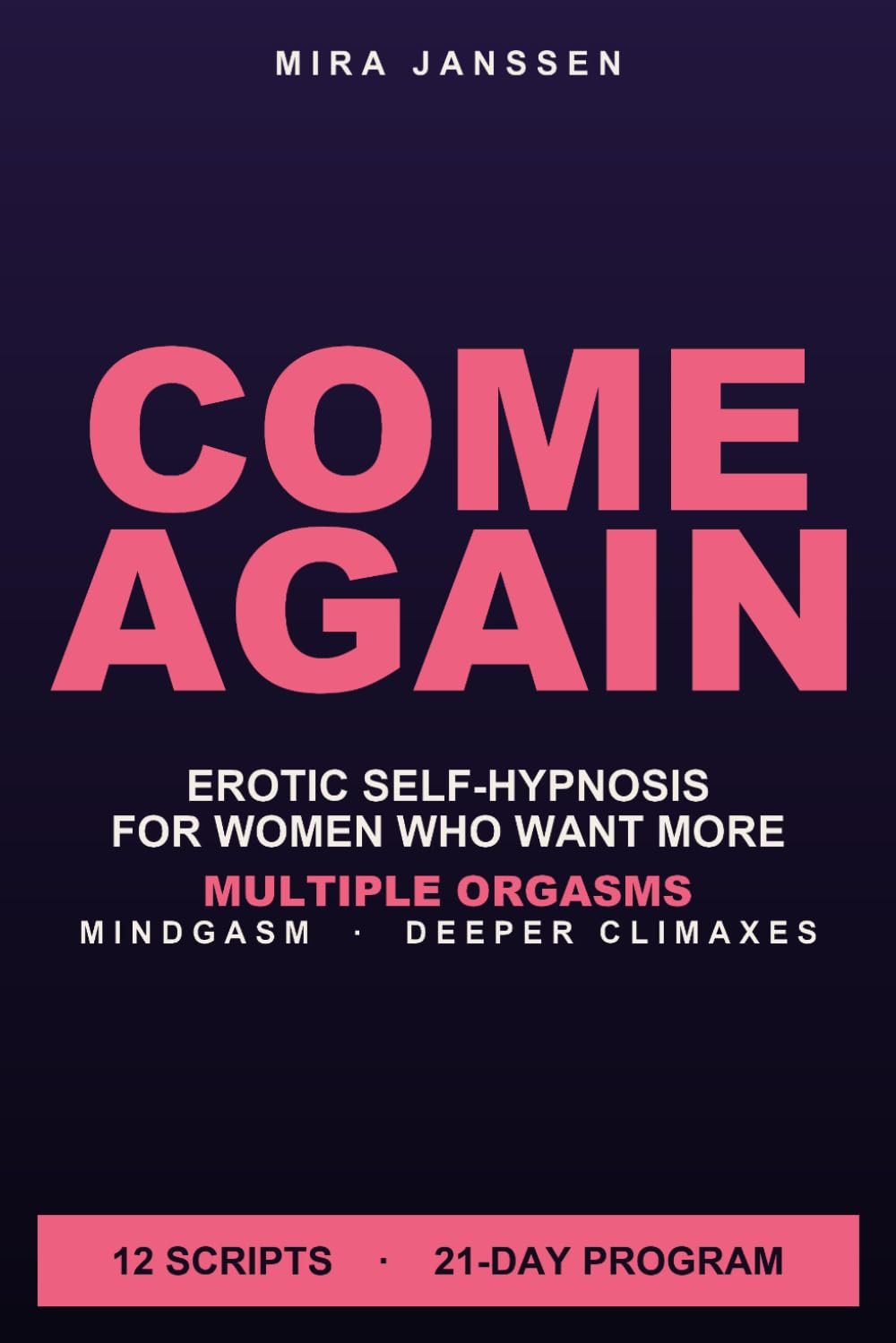
The same machinery — fixation, expectation, repetition — aimed at arousal instead of calm. On your own, with nobody reading over your shoulder.
See the bookKeep your setting
Every time you move a slider, the address bar updates. Bookmark the page while your setting is dialled in — the link reopens the spiral exactly as you left it.
Nothing is stored on your device and nothing is sent anywhere. The setting lives in the link itself, which also means you can send someone your setup.
| Routine | When | Preset | What it's for |
|---|---|---|---|
| 90-second cut | between two tasks | 6 s / 16 turns | Breaks the loop of the last thing before the next one starts. Short enough that you'll actually do it. |
| Eye drill | daily, 5 minutes | 10 s / 12 turns | Trains holding a fixation without drifting. The one that visibly improves over weeks. |
| Wind down | an hour before bed | 18 s / 9 turns | Slows the exhale and takes the day's remaining chatter down a level. |
| Partner session | weekly, 15 minutes | 12 s / 10 turns | Where the skill really develops. |
You are doing all of it
A pair of eyes with nothing to do will wander, and every jump pulls attention back into the room. The spiral's entire job is to stop that: one place to look, nothing to decide. What follows — the slowing breath, the heavy lids, the narrowing field — comes from you, not from the pattern. It is a fixation induction stripped to the bone.
The heaviness is real, though. James Braid noticed it in 1841 and initially mistook it for the cause. It isn't, but it's useful: it's evidence you hand yourself that something is genuinely happening, and that belief does more work than the spiral ever could. The same machinery carries the pendulum and every ideomotor demonstration — the body answers, and the answer convinces.
Afterwards the room may briefly warp — walls breathing, edges drifting. That's the motion aftereffect, plain fatigue in motion-sensitive cells, gone in seconds and completely harmless. Most people find it makes the next session land better, for the same reason: it proves the thing does something.
Where the spiral came from, and why it was never a hypnosis instrument to begin with, is on the page about hypnotizing other people.
When to leave it alone
Rotating and flickering patterns can trigger seizures in photosensitive epilepsy. The same caution applies with migraine with aura, a tendency to vertigo, or recovery from a concussion. Never while driving or operating machinery, and give yourself a quarter of an hour before either.
Self-hypnosis is not treatment. If you're reaching for it because of depression, persistent anxiety, trauma or anything that doesn't lift, it belongs alongside proper care rather than instead of it. If something surfaces during a session that's bigger than the evening, stop and talk to someone.
FAQ
Can you really hypnotize yourself? Yes, in the sense that matters: you can put yourself into a narrow, calm, absorbed state deliberately and repeat it reliably. What you can't do is flip a switch, because there isn't one. It sits closer to being lost in a film than to passing out.
How do I know if it worked? Losing count during the countdown is the clearest everyday sign, along with the three minutes feeling shorter than they were and a certain reluctance to move afterwards. And if you're busy checking whether it worked — that's monitoring, and monitoring keeps you out.
How long does it take to learn? First attempts are usually underwhelming. By the third or fourth session the setup starts doing the work on its own. Keeping the variables constant matters more than the length of any single session.
Is this just meditation with extra steps? They overlap a lot. The practical difference is direction: meditation usually widens attention and observes it, self-hypnosis narrows it onto one thing and adds suggestion. The spiral belongs firmly to the narrowing kind.
Can I fall asleep doing this? Easily — which is why sitting up is recommended unless sleep is the point. If it is, use the slowest preset and let it happen. Sleep hypnosis is its own subject, and a noisier one.
Is it safe to do every day? For most people, yes, and short daily sessions beat occasional long ones. The exceptions are in the section above.
Does it work offline? Once the page has loaded, yes. Nothing is fetched while it runs — the spiral is calculated and drawn in the browser.
How is this different from the techniques page? Self-hypnosis techniques surveys the methods and explains why the trance is the easy part. This page is one method, timed, with a tool attached. Read that one to choose; use this one to practise.
Once you can do it to yourself
The next step is doing it for someone else — and the three minutes you just practised are most of what that takes. Start with the fifteen-minute session for two, and if you want to know how open the channel is in your case, with the suggestibility test.
What's on this page is the frame. What goes inside it is in the books — sessions written out in full, not hinted at.
The same machinery — fixation, expectation, repetition — aimed at arousal instead of calm. On your own, with nobody reading over your shoulder.
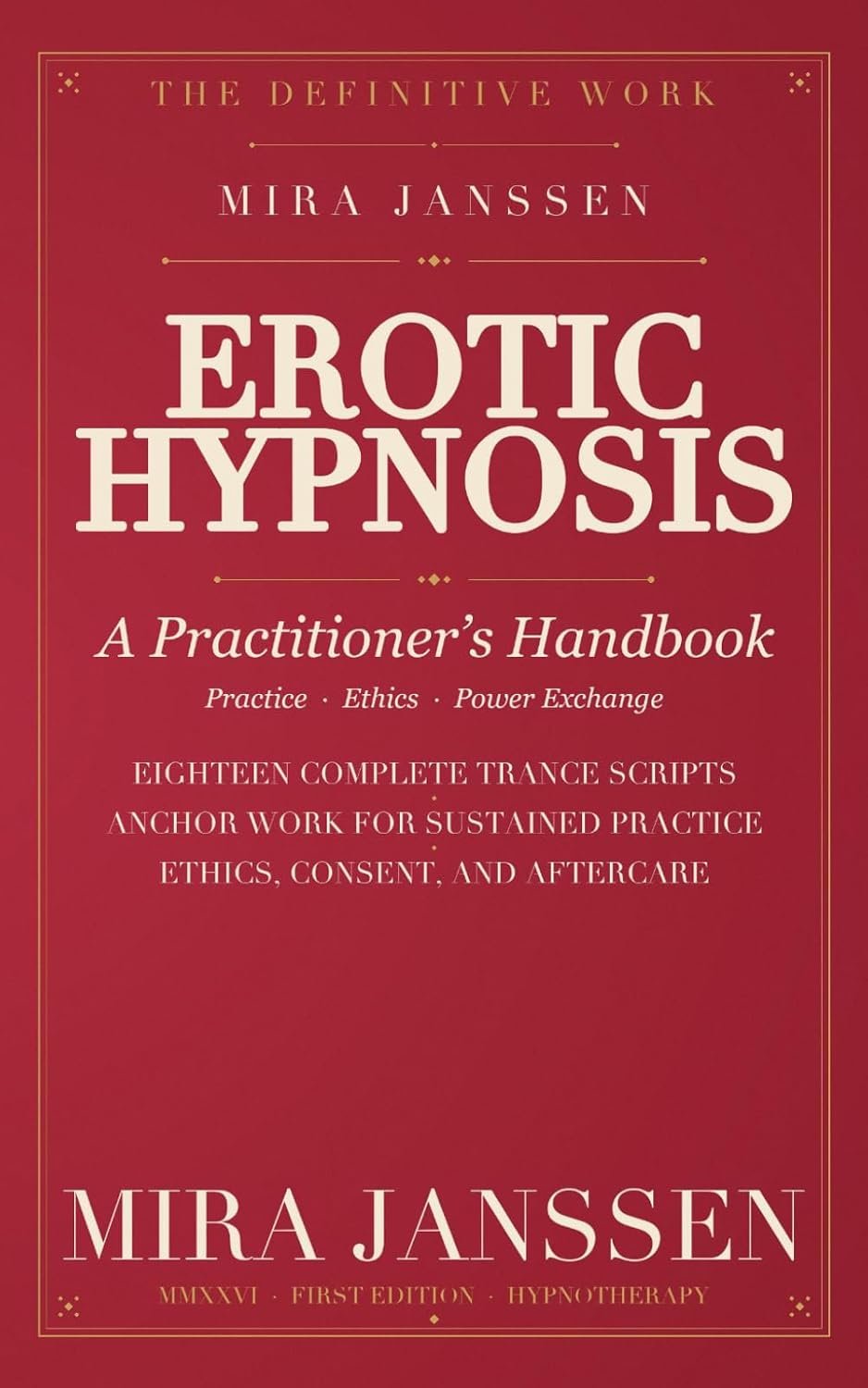
Eighteen complete sessions written out to read aloud — from the first agreement to the way back. The book for turning one attempt into a repertoire.
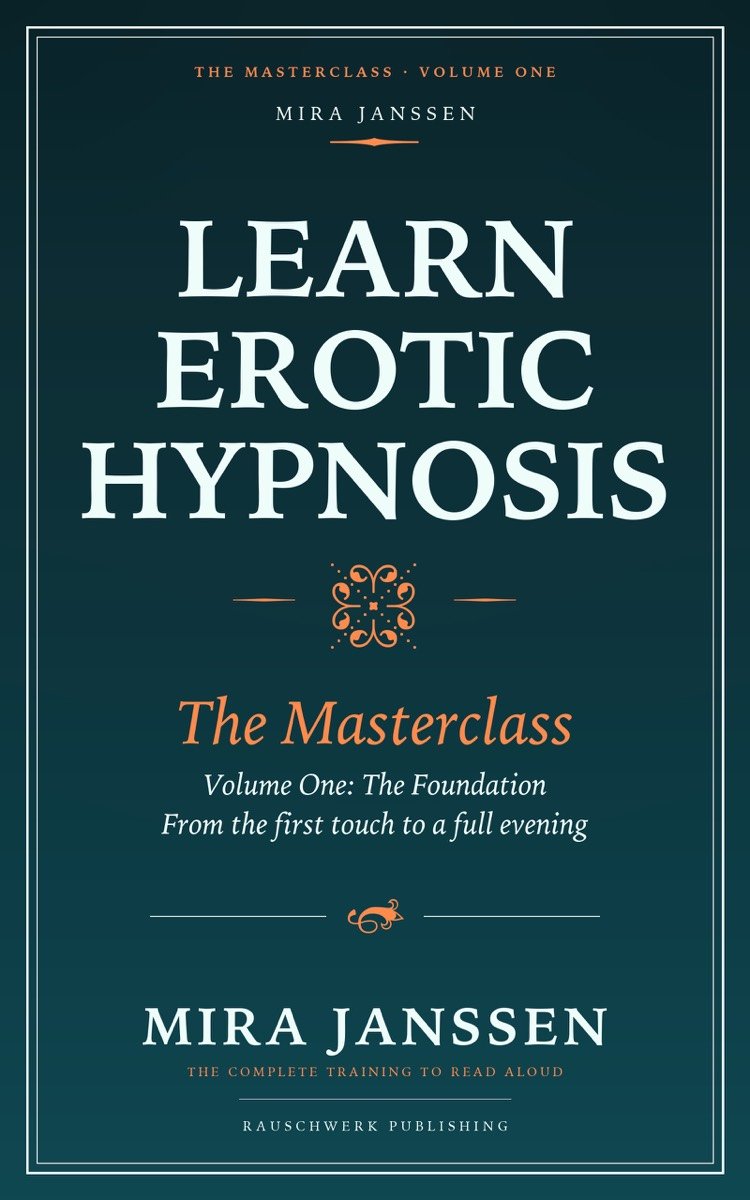
The foundation as a course rather than a reference: language, timing, reading the other person — in the order you actually learn them.