Learn Hypnosis: Where to Start (Without the Guru Detour)
The practice page — magnetic fingers, word for word — is the learn hypnosis guide.
Every week someone writes to me: I want to learn hypnosis — where do I start? And every week the internet answers them with a $2,000 certification, a stage guru, or a YouTube rabbit hole of men snapping their fingers at volunteers. There is a saner path. It costs mostly attention, and it starts smaller than you think.
First, unlearn the film version
You are not learning to control minds — nobody is, that power does not exist. You are learning to guide attention with permission: to build the conditions in which another person's (or your own) focus narrows, the inner critic rests, and well-formed suggestions land. That is a craft. Like every craft it has a floor you can stand on within weeks — and a ceiling you will not touch in a lifetime.
The four rungs, in order
Rung one: feel the state yourself. You cannot guide territory you have never visited. Spend a week noticing your daily trances — the motorway blur, the shower drift, the dancefloor hour that felt like minutes. Then produce the state deliberately: ninety seconds of fixed gaze and counted breath, daily. There is a running tool for exactly that — the three-minute spiral method supplies the fixation point and the timings, so you are not deciding what to do each evening. You are training recognition, and recognition is calibration later.
Rung two: prove the mechanism to your body. Run the Chevreul experiment — a ring on a thread, movement imagined, movement appearing. The ideomotor effect is the entire logic of suggestion compressed into one minute, and once your own hand has demonstrated it, you will never again confuse suggestion with commanding. This rung costs nothing and convinces more deeply than any book.
Rung three: learn two inductions until they bore you. One fixation induction — the pendulum is the classic teacher, it forces a steady hand and a patient pace, and the fifteen-minute spiral session lays the same thing out with timings and opening lines — and one breath-and-count induction for yourself. Not ten inductions — two, until they are boring. Boring means internalised, and only internalised technique leaves your attention free for the person in front of you. What actually makes inductions succeed is calibration and pre-talk, and you can only calibrate with spare attention.
Rung four: learn to speak suggestion. Short sentences. Present tense. Describing the almost-happening rather than demanding the impossible ("the lids are getting heavier" — never "sleep!"). Pacing before leading: three true statements, then one leading one. This is where hypnosis becomes language craft, and where practice partners matter — consenting, patient ones, with agreed signals and an agreed end.
What it costs — and what it doesn't
The honest number first: the four rungs cost nothing. A ring on a thread, a screen, ninety seconds in the evening. Anyone selling you a four-figure entry is selling you structure, not knowledge — and structure is the cheapest part of this.
Money becomes worth spending at exactly two points, and both sit behind rung four.
For the order. The field is a mess because every provider claims a different starting point. A book that fixes the order saves you the months you would otherwise spend collecting techniques instead of owning two. That is the whole difference between well-read and capable.
For the sentences. Suggestion is language craft, and language craft is learned from examples rather than principles. "Describe the almost-happening" is a correct sentence that helps you not at all at ten in the evening, with someone sitting in front of you and three seconds to fill. Sessions written out in full do help then.
The most common reason people stop
Not a lack of talent. A lack of a practice partner.
Rungs one and two work alone. Rung three works halfway. Rung four does not work at all — and that is exactly where most people quit, because they read it as a shortage of ability rather than a shortage of opportunity.
What helps is to stop treating the intimate branch as a distant destination and start treating it as the practice ground. Anyone with a partner already has the practice partner; what is missing is one evening with a session that stands there start to finish, so that nobody has to improvise. A guided evening written out to read aloud is therefore not a luxury item for advanced practitioners. It is the cheapest way to set foot on rung four at all.
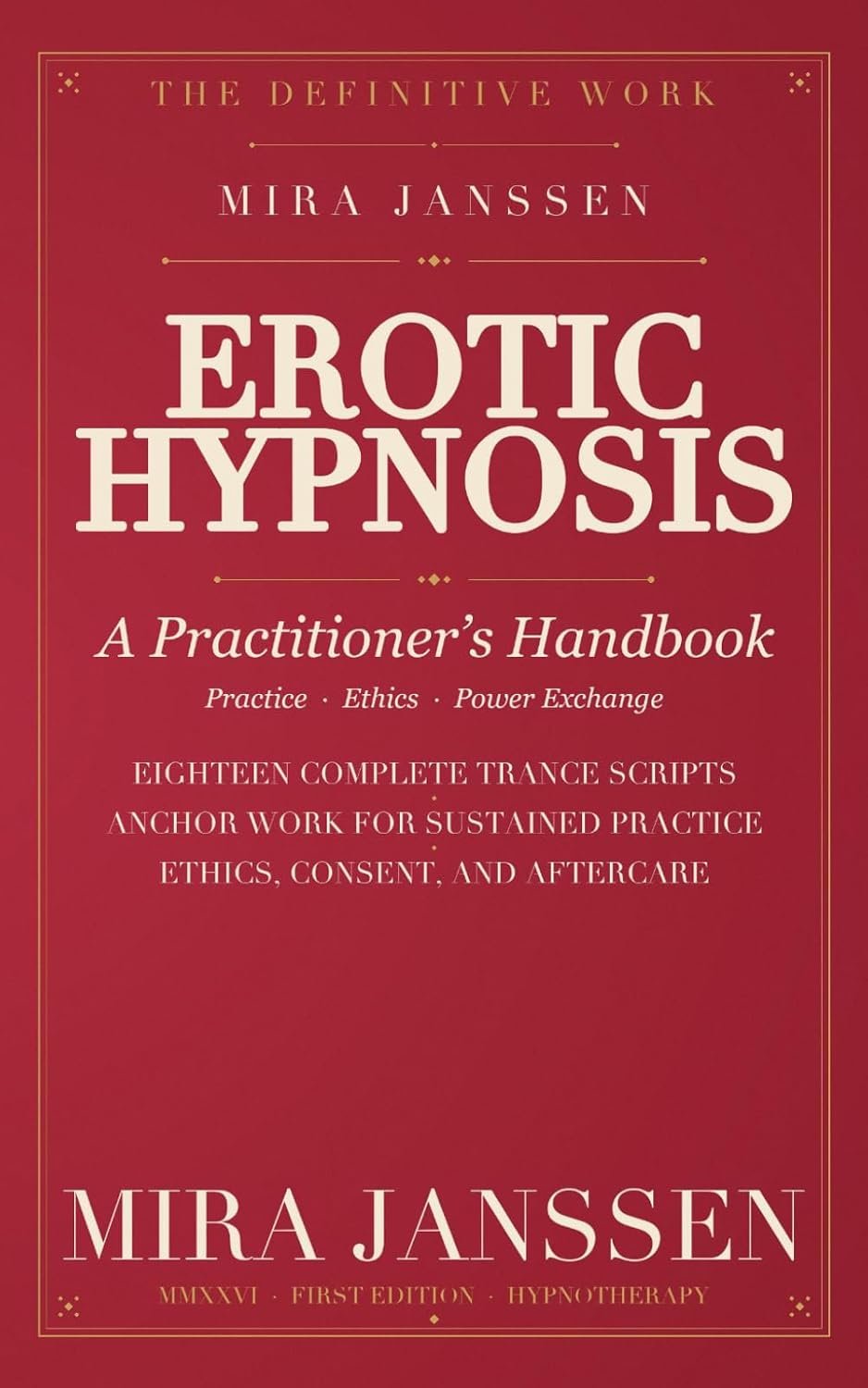
Eighteen complete sessions written out to read aloud — from the first agreement to the way back. The book for turning one attempt into a repertoire.
See the bookThe rules that are not optional
Learn these before your first practice partner, not after. Consent is continuous — a yes at the start is not a yes throughout; agree on a stop word and honour it instantly and cheerfully. No therapy cosplay — trauma, diagnoses and medicine belong to trained professionals; a hobbyist who "treats" a phobia is a liability with a pendulum. Always close cleanly — count out, reorient, check in; the exit is part of the work, not an afterthought. People often ask what separates a good amateur from a bad one. It is not technique. It is that the good one is more careful than the professionals, not less.
Where it leads
Six weeks of the four rungs — honestly done, a little daily — puts you ahead of most people who paid for a weekend certificate. After that the road forks: therapeutic work needs proper accredited training; stage work needs performance chops and a thick skin; and the intimate branch — trance as a game two adults play with trust, my branch — needs everything above plus the best communication of your life. That last road is what my books walk, step by explicit step.
Start with rung one. Tonight, ninety seconds. The craft begins embarrassingly small, which is exactly why it works.
And if you would rather not assemble the order yourself: it is written out, with the sentences to go with it.
Eighteen complete sessions written out to read aloud — from the first agreement to the way back. The book for turning one attempt into a repertoire.
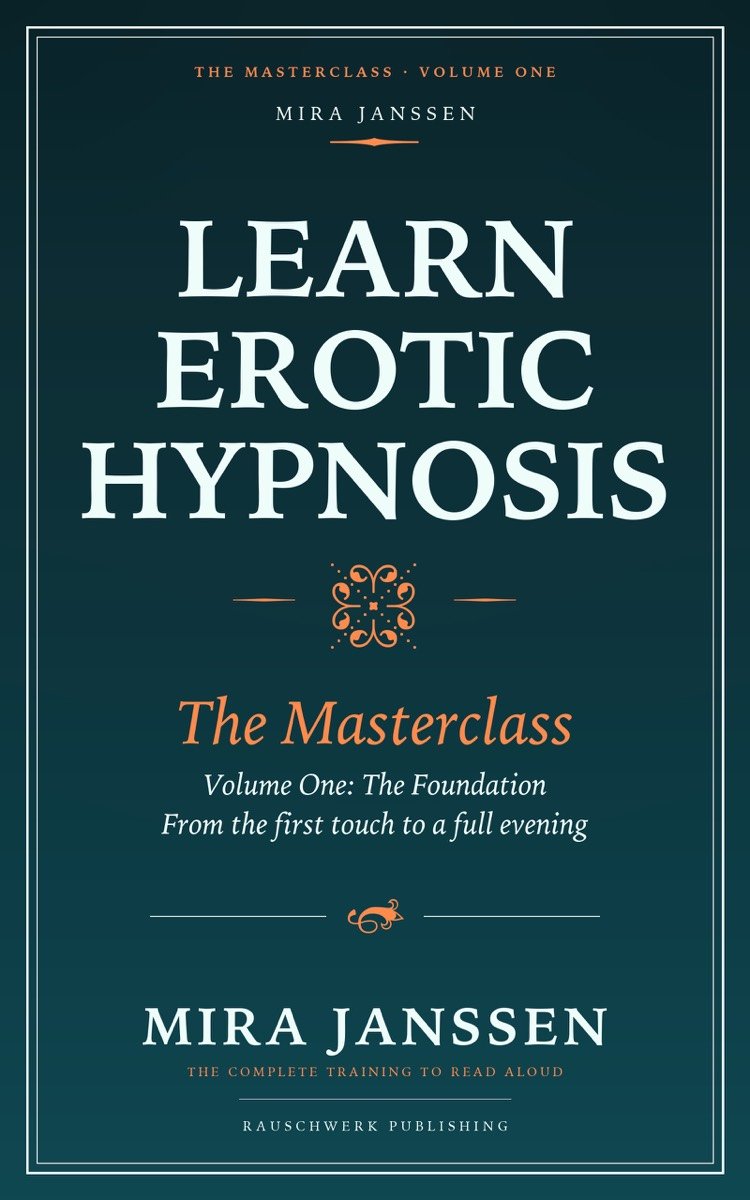
The foundation as a course rather than a reference: language, timing, reading the other person — in the order you actually learn them.
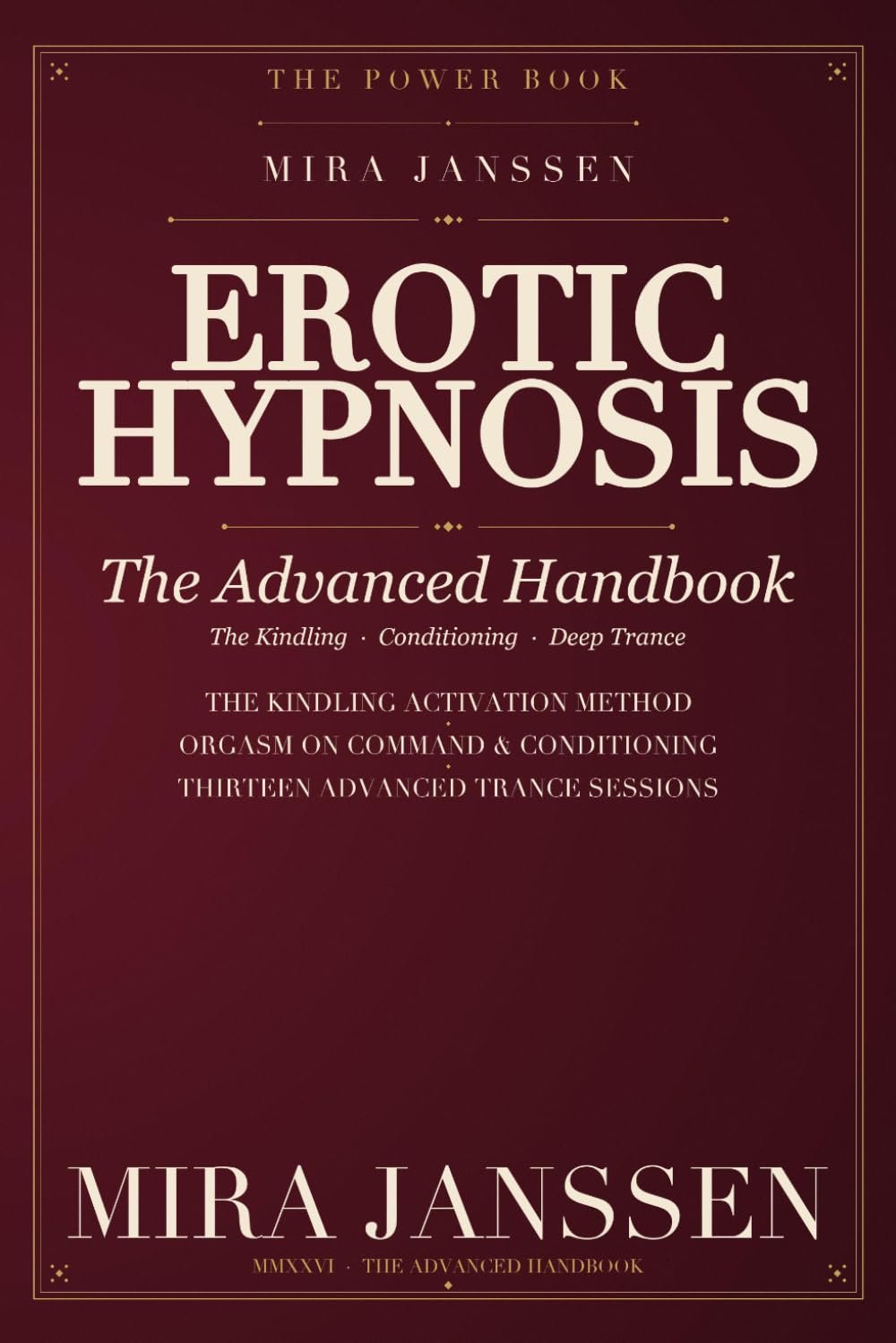
For anyone whose induction is already reliable and whose question has become what comes after it.
— Mira
FAQ
Can I learn hypnosis on my own? The foundations, yes: state recognition, self-hypnosis, the ideomotor experiments, suggestion wording. Guiding others responsibly needs practice partners and honest feedback; therapeutic application needs accredited training.
How long does it take to learn hypnosis? Basics that visibly work: weeks of daily practice. Comfortable competence with willing partners: months. The ceiling: nobody has reported reaching it.
Do I need a certification? For hobby and self-use, no — for anything therapeutic or professional, yes, a recognised one. Be wary of weekend courses selling "master" titles; the word is doing the opposite of what it claims.
Is hypnosis hard to learn? The mechanics are simple enough to demonstrate in an afternoon. What takes time is what takes time in every craft: calibration, patience, and language precise enough to be gentle.
How much does it cost to learn hypnosis? Getting in costs nothing — a ring, a thread, a screen, ninety seconds in the evening. Weekend courses run from the high hundreds into the low thousands and mostly sell you structure and practice partners. Books sit one or two orders of magnitude below that and give you the order but no practice group. If you need both, start with the cheap one and decide after six weeks whether you still want the expensive one.
What do I actually do tonight? Ninety seconds of fixed gaze and counted breath. Nothing more. If you want a ready-made frame for it, use the three-minute method — timings, fixation point and exit are all there, so the only decision left is starting.
Can I practise on my partner? Yes, and it is the fastest route past rung four — provided you agree on length, scope and a stop word first. The fifteen-minute session lays out the whole thing with timings. What must not happen is in the section on the non-optional rules, and that section is not the boring part; it is the reason anyone lets go at all.