Hypnotic Amnesia: Forgetting on Purpose, Not a Wipe
A man once asked me, after a set, whether I could make him forget a conversation he regretted, the way a film would: clean, total, and irreversible by morning. He said it lightly. He did not mean it lightly. I gave him the no first, because the no is the load-bearing wall. Then I gave him the more interesting sentence, which is that hypnotic amnesia is real, and that the version he wanted is a plot.
The plot has a sponge. A word is spoken. A whole evening vanishes. The person walks out blank and grateful, or blank and doomed, depending on the genre. Clubs, thrillers, and bad therapy folklore have been running that sponge for a century. It is a useful plot. It is a poor description of a memory.
The short answer
Hypnotic amnesia is suggested forgetting: in trance, or as a post-hypnotic suggestion, the person is invited not to recall a named, usually trivial content for a named window — a number, a word, a joke — and a responsive person can actually fail to find it until the suggestion is lifted. It is not a wipe. It is not a treatment for trauma. It is not a way to hide a session from the person who sat in it. The memory is not deleted. Access is made inconvenient, on purpose, by agreement, with a way back.
If you came here hoping I would teach you to erase a partner's evening, you are in the wrong house. If you came here because a demonstration made a volunteer lose the number six and you want to know what that was, you are in the right one.
Forgetting is a skill you already have
You already misplace things on purpose, without the costume. A PIN you use once a year. A name at a party you decided not to keep. The dream that was vivid until you reached for it. Memory is not a warehouse with a helpful clerk. It is a reconstruction, and reconstructions can be delayed.
What hypnosis adds is not a new warehouse. It adds a rehearsal of not-reaching. I offer a number. I offer the idea that the number can rest. I ask for it. A certain kind of person looks inward, finds a blank that surprises them, and laughs. The laugh is the tell. They are not unconscious. They are watching themselves fail a search they usually pass.
Dave Elman built tests like that into a sequence — loss of numbers, among other checkpoints — as evidence that the critical editor had stood down far enough to be useful. I have walked through the architecture on the Elman induction page. The test is a test. If the number arrives, the test did not pass. That is information, not a moral verdict on the evening. Operators who bully a number into hiding are no longer testing. They are arguing.
The content matters. Elman's numbers are cheap. A childhood, a fight, a secret, a medical history — those are not cheap. Suggested amnesia that aims at expensive content is not depth. It is a person using a technique as cover for a job they have not been given. I will not tidy that up with a Greek word.
It is still a suggestion
I keep repeating this because the folklore spends its energy on the blank and none on the mechanism.
A forgotten number does not become a deleted number because a voice was slow. It does not become involuntary because the person has stood up. The editor that can decline a hypnotic suggestion in the chair can decline a suggestion to forget. What changes is the volume of that editor, and the volume is still theirs.
I have watched a cue to forget do nothing. The person heard the request, looked mildly interested, and recited the word. I have watched a cue produce a theatrical blank — a performance of forgetting for the room. I have watched a cue produce the quiet, actual thing: a pause, a search, a genuine "it's gone," and then, when I give it back, a snap of recognition that is almost physical. Only the third one is the craft. The first is information. The second is allowed, and is not the same as the thing.
On a stage the blank is the gag. The volunteer leaves, the magic word is spoken, a name will not come, the room applauds. What you are watching is a kept appointment, not a sponge. If they do not want to lose the name, they will not lose the name. The ones who lose it were going to enjoy losing it. Can you be hypnotized against a withdrawn yes is the same question in a cheaper coat.
The ugly, reliable test is the same as with any delayed suggestion. Offer a forgetfulness that crosses something the person actually cares about — a child's name, a boundary they named, the fact of the session itself — and you do not get a robot. You get a person who is suddenly very present, and often slightly angry, and correctly so. The state does not store erasers. It stores rehearsals of not-reaching.
Scope, expiry, and the sentence that makes it safe
Beginners treat the blank as a trophy. They want a word that will stay gone until next Tuesday. I want a word that will come back when we say it comes back, unless we have both said otherwise.
Three pieces of housekeeping, none of them romantic:
Name the content precisely. "Forget the session" is not a content. It is a fog. "The number seventeen, for the next two minutes, in this room" is a content. Precision is kindness. A vague amnesia turns the rest of the person's week into a hunt for holes.
Name only what is cheap. A number. A nonsense syllable. A joke we both just made. Not a trauma. Not a diagnosis. Not "whatever you need to not know." I do not go fishing in memory under the cover of a demonstration. If something large arrives uninvited, I stop, I sit, I do not follow it in.
Name the return. This is the part the folklore never includes. Suggested forgetting that does not expire is not impressive. It is sloppy. The default in this house is: the content comes back when we say it comes back, or when the person says stop, or when the night ends — whichever comes first. Giving it back is the demonstration. Keeping it is not.
People hear "give it back" and think I am being soft. I am being exact. A person who trusts the return will allow the blank. A person who suspects a hole will spend the session monitoring for it, and monitoring is the one activity the blank cannot share a room with. Expiry is not ethics bolted onto the craft. Expiry is how you get the craft to run.
This is also why I will not install amnesia around consent itself. A session whose existence is supposed to vanish is not a session. It is a story someone wants to tell later without a witness. I do not help with that story.
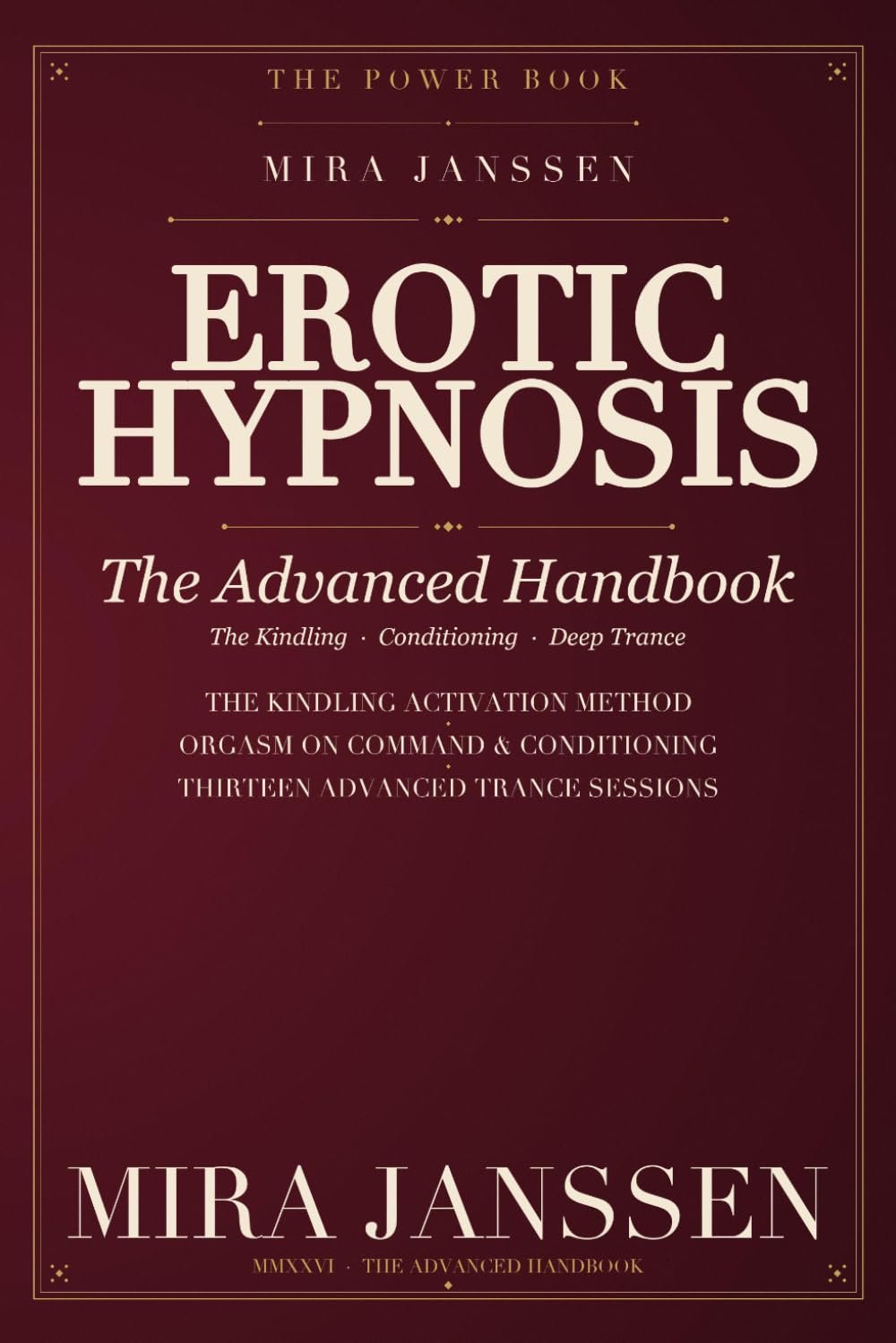
For anyone whose induction is already reliable and whose question has become what comes after it.
See the bookWhat the research names, without the folklore
Laboratories have been producing suggested forgetting for a long time, usually in people who already score as highly responsive on the standard scales. The phenomenon is real enough to have a name in that literature: posthypnotic amnesia, often for the events of the session or for a list learned inside it, lifted by a prearranged cue. I am not going to quote you a percentage. Anyone quoting you a clean percentage on "how many people can forget on command" is selling a cleanliness the measurements do not have. Responsiveness is a spread. The demonstration lives at the high end of that spread. Most of the room is not that end.
Some researchers described a "hidden observer" — a reporting channel that could still name what the person, in the moment, said they could not. I will not turn that into a metaphysics of a second self. I will take the narrower point a practitioner can use: a blank is not always as blank as the face suggests, and a cue can restore access. That is an argument against treating amnesia as deletion. It is also an argument against using it as a vault.
I will not use hypnotic amnesia as forensic method. Memory is reconstructive even on a good day. A session that asks memory to perform, then asks it to vanish, then asks it to testify, is not investigation. It is contamination with extra steps. If you need a record, write it down before anyone sits. If you need the truth of a night, do not run a forgetting exercise on it.
How I would actually offer it
I will give you the shape, not a script to fire at a stranger.
The frame comes first: what will happen, what will not, the word that ends it. Then attention, then the small checkable sentences, then whatever depth the evening actually has — not the depth you advertised. Only then, and only if the person is actually in, a cheap content.
I name the number. I let them say it once, so there is something to misplace. I offer the rest. I ask. If the number arrives, I do not push. I do not "deeper." I go back, or I change jobs. If the number does not arrive, I do not gloat. I show them the return immediately, in the room, while I can still see the face. The return is the point. The blank is only interesting because it ends.
Then I cancel it for the night, unless we have both named a longer window, which I almost never want. A supermarket is not a stage. A person should not spend Thursday wondering whether six still exists.
If you want a sense of whether this kind of sentence lands on you at all, a suggestibility test will tell you more in ten minutes than a week of reading about secret sponges. The test will not certify you as erasable. It will show you, on this afternoon, how readily attention and search play along with a suggestion. Hypnotic amnesia is that same fact aimed at a label.
What it cannot do
It cannot delete a life. A childhood, a grief, an evening you actually had — those are not numbers. Suggestion can make a search slower. It cannot unhappen a nervous system.
It cannot hide the session from the person who sat in it. Suggested amnesia around the fact of having been hypnotised exists as a stage gag and as a research task, usually with practice and by agreement. It is not a factory setting. The boring default is that they remember the chair, including the part where they decided to play.
It cannot replace a conversation. People ask for a wipe when they want not to have said something, or not to have heard something. Do the saying. Do the hearing. Take the no. A blank is not an apology.
It cannot run against a withdrawn yes. The yes is present-tense. Take it back and the "forgotten" word is a word again, often with a look that means I could have found that the whole time. Correct.
The state underneath is the ordinary one. What hypnosis feels like is still heaviness, time a little wrong, the option to stop. Amnesia is what a search does when that option is declined for a labelled item, for a labelled minute. Is hypnosis real does not rest on a missing number. The missing number is just a visible corner of a quieter fact: attention can be invited to skip.
If you want the training — how to offer a blank, how to give it back, what two consenting adults can build once a mind will rest a label — that is what my books are for. They will not teach you to erase anyone. That is the point.
— Mira
FAQ
What is hypnotic amnesia? Suggested forgetting: a person in trance, or after a post-hypnotic cue, is invited not to recall a named, usually trivial content until a named cue returns it. The memory is not deleted. Access is made inconvenient, by agreement, with a way back.
Can hypnosis make you forget a whole evening? Not as a reliable, ethical, or complete wipe. Stage amnesia is a kept appointment in a person who wants to play. A whole evening is not a number. Anyone offering to erase a night, a trauma, or a relationship is selling a film.
Is it the same as ordinary forgetting? Related, not identical. Ordinary forgetting is reconstruction failing on its own. Hypnotic amnesia is reconstruction being asked, for a window, not to succeed. Both are reversible more often than folklore wants. Only one of them has an operator.
Should it be used in therapy to hide painful material? Not by me, and not as a clever trick. Painful material that arrives uninvited is a reason to stop, sit, and get the right kind of help — not a reason to install a hole. I am not a clinician, and a blank is not treatment.
For anyone whose induction is already reliable and whose question has become what comes after it.
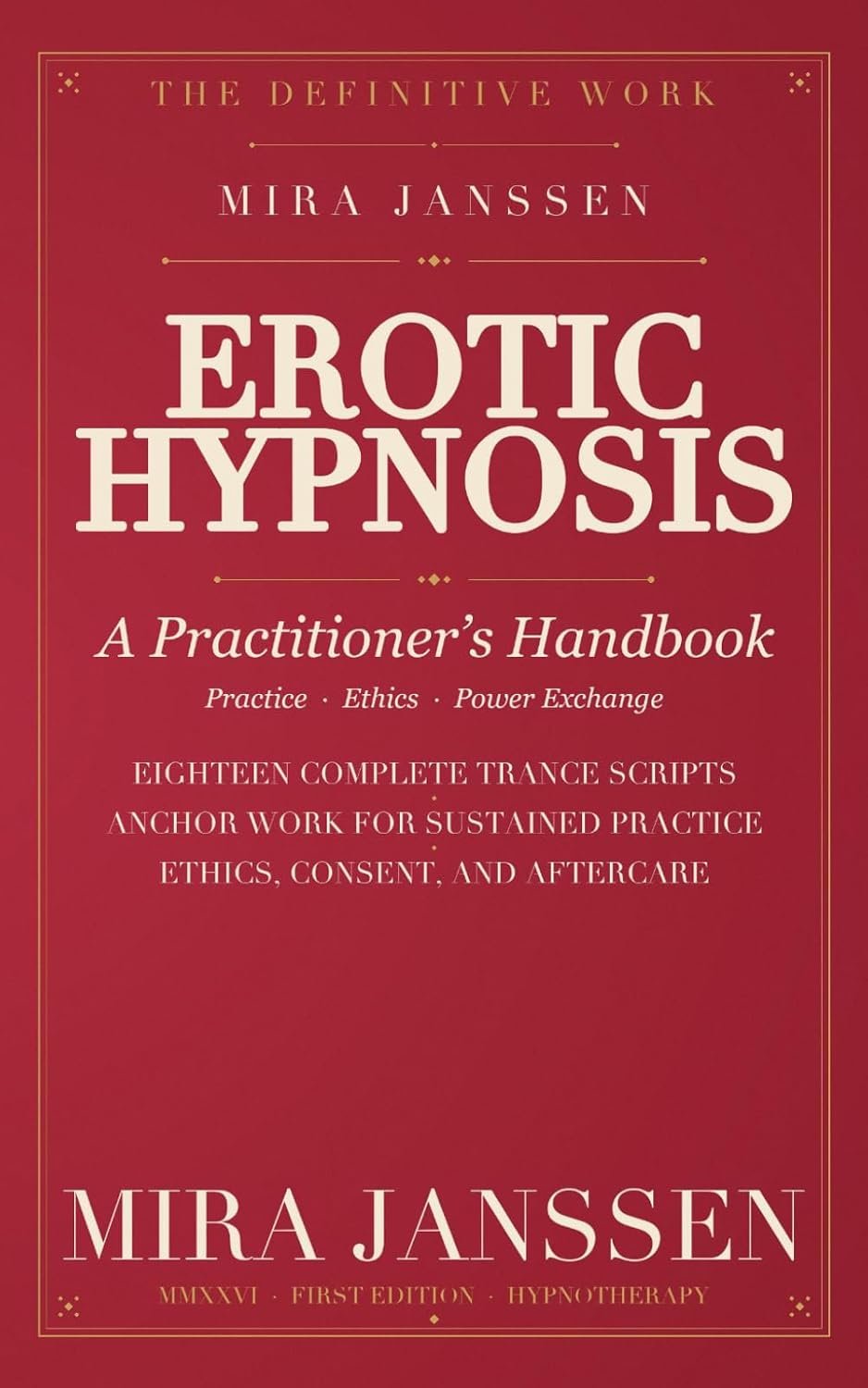
Eighteen complete sessions written out to read aloud — from the first agreement to the way back. The book for turning one attempt into a repertoire.
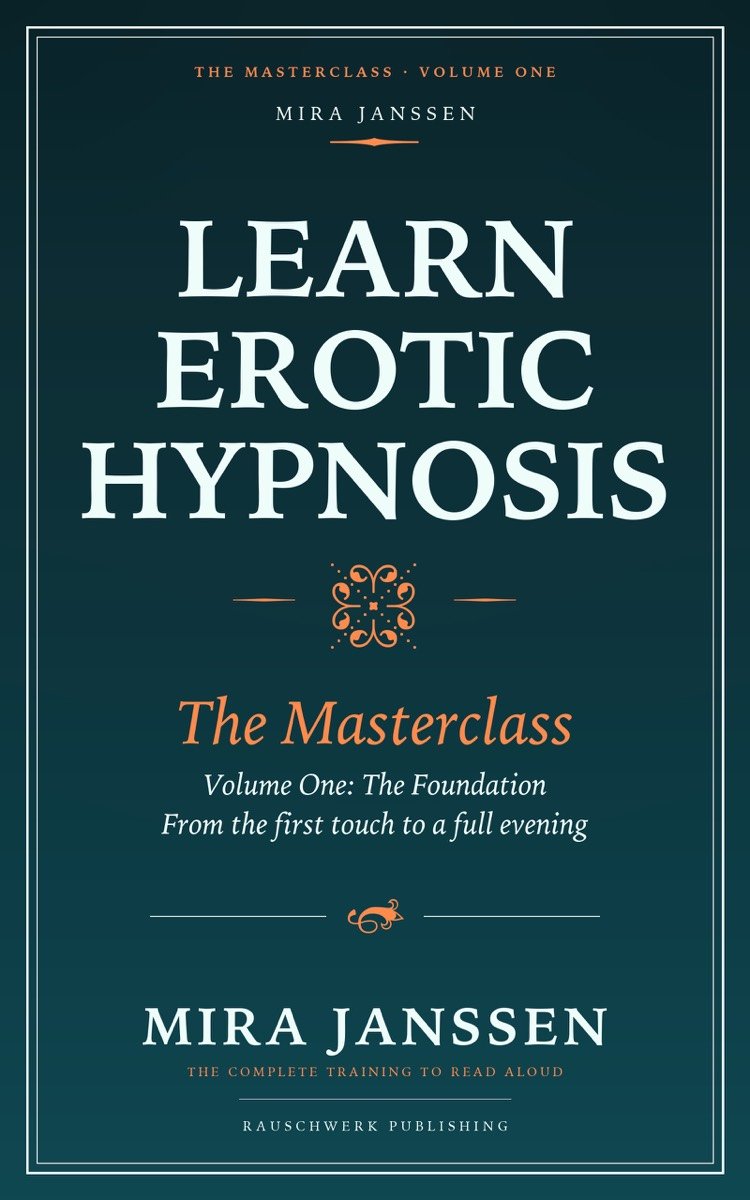
The foundation as a course rather than a reference: language, timing, reading the other person — in the order you actually learn them.