Hypnotic Suggestion: A Sentence, Not a Spell
A woman at the bar after a set once asked me, quite politely, whether I had made her friend drop a glass. The friend had been watching from the edge of the floor. I had said something about heaviness. Twenty seconds later the glass was on the tiles. The woman wanted two things named: was that a hypnotic suggestion, and does a suggestion count as an order.
I told her no, twice. The glass was a coincidence I would not take credit for — people drop glasses in clubs without my help. And a suggestion is not an order. If it were, I would be in a different line of work, and so would half the people who write asking for a sentence that makes someone fall in love.
What a hypnotic suggestion actually is
A hypnotic suggestion is a sentence offered while attention is narrowed, which the other person may take, change, or ignore. Nothing more glamorous sits underneath that. The hypnotist proposes. The listener decides, usually without making a fuss of the deciding, and often without experiencing the decision as a decision at all.
From outside, a person who takes a suggestion looks commanded. From inside it feels closer to agreeing with a weather report that happens to be accurate: yes, the arm is heavy, I hadn't noticed until you said it, and now that you've said it I might as well let it drop. The sentence named something that was available to be true, at a moment when the person was not busy checking.
The conditions matter more than the wording. A suggestion offered to a mind that is still sampling the room, the phone, the next song, the exit — that is just a remark. The same sentence, offered once attention has a single home and the internal editor has gone on standby, is a different animal. That is the whole of how hypnosis works: not a special vocabulary, a special state of attention into which ordinary vocabulary is placed.
The sentence can be refused. It can be rewritten on the way in — heavy? no, warm — and it can be ignored so thoroughly that the person later has no memory of hearing it, which is not amnesia, it is disinterest. A hypnotist who cannot tell those three outcomes apart will spend a career congratulating herself for work she did not do.
Direct and indirect, without the fog
The trade sorts suggestions into two families, and then spends a remarkable amount of ink making the distinction sound like a secret.
Direct is the sentence that says what it means. Your eyelids are heavy. Let them close. Your arm can drop. You can hear it, you can test it, and if it has not landed you both know. On a club floor this is what I use, because the music is loud and I have about four seconds of someone's attention at a time, and because a person who came to be hypnotised is not usually in need of a riddle.
Indirect is the sentence that leaves a gap. A story with the point three layers down. A description of someone else going under. A person can notice how little they need to do. The listener furnishes the missing piece, and what they furnish themselves they tend not to argue with.
Neither family is magic. Direct is not crude and indirect is not advanced. Direct is honest and checkable, which is why I use it with almost everyone. Indirect is useful when a plain instruction would give someone something to push against — the ones who treat every instruction as a dare. Milton Erickson became famous working with those people. The catalogue later assembled from his speech is a separate subject; I have already written it up as conversational hypnosis rather than smuggle a weekend course into this page.
Two practical rules, then I will leave the taxonomy alone. Say only what you can see, or what is about to be cheaply true: your breathing has slowed is a suggestion if it has, and a lie if it hasn't. Keep the request small. Let your eyes rest on one point is something a person can take without rearranging their evening. You will forget your own name is a film. Films are fine. They are not how a first session starts.
It does not go into a mailbox
Here is the picture I am asked to bless, and will not. There is a trapdoor in the mind. Below it sits a second self, loyal, literal, waiting for post. The hypnotist writes a sentence, drops it through the slot, and walks away. The second self reads the letter and carries it out. The person upstairs never even saw the envelope.
That is a story about a building. It is not a finding about a nervous system. I have written at length about why the subconscious mind is a collective noun for processes you are not currently watching, and not a tenant with a letterbox. The mailbox version of hypnotic suggestion is that story wearing a uniform.
What actually happens is less cinematic and more interesting. The person hears the sentence. Or they do not, because they have drifted, and then you say it again or you wait. If they hear it, the auditing voice that normally asks is that true, do I want that, is that my arm is quieter than usual — quieter, not absent, not bypassed. In that quieter condition an idea of movement, of heaviness, of stillness, can run through the same motor circuits a deliberate action would use, without arriving as a decision. That is the ideomotor effect, and it is the load-bearing wall of every physical suggestion I have ever given. The arm lifts because the person imagined it lifting. Nobody posted anything underneath anyone.
The practical cost of the mailbox picture is that the operator stops watching. If the real work is happening in an invisible room, the face in front of you becomes scenery. If it is happening in attention and expectation, the face is the only instrument you have — lids, breath, the small muscles around the mouth. None of that information lives below a trapdoor.
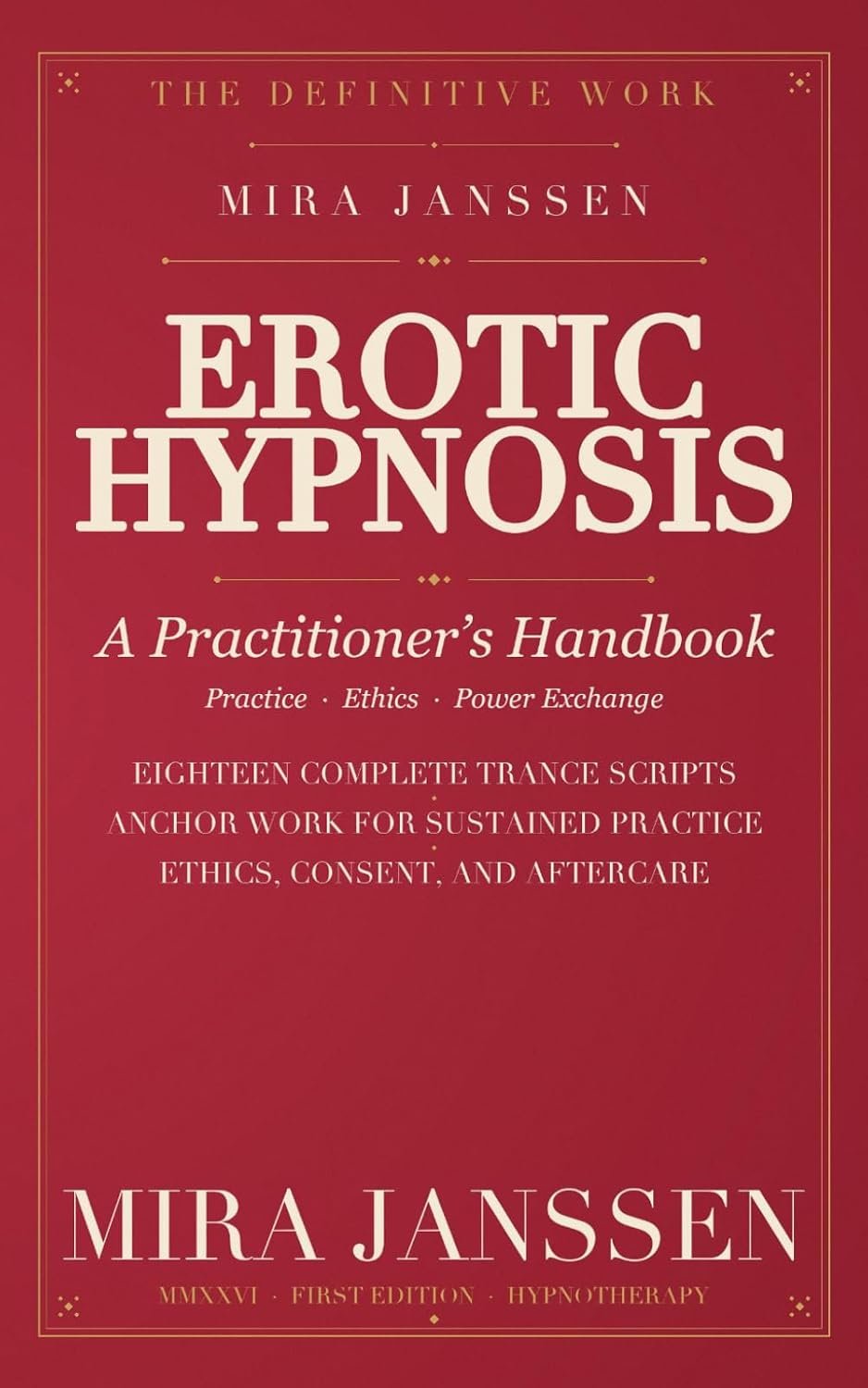
Eighteen complete sessions written out to read aloud — from the first agreement to the way back. The book for turning one attempt into a repertoire.
See the bookHow you can tell one landed
A suggestion that has been taken produces evidence. Not a feeling in the hypnotist. Evidence.
The eyelids go first, almost always: blinks slow, then the lids hesitate at the bottom of the blink, then they stay. Shoulders drop a centimetre the person will deny if you ask. A swallow. The standing weight shifts onto one hip and stays there. If you have offered a physical suggestion — heaviness, lightness, a stuck hand, a slow lift — the body answers before the mouth does, and the mouth is often lying to be polite.
This is why a competent hypnosis induction is built as a sequence of small, checkable suggestions rather than one grand instruction to go under. Each small one that lands buys credit for the next. Each one that does not is information: too fast, too large, they are still auditing, the room is too loud, they did not actually agree. You go back to something cheaper. You do not push. Pushing is how amateurs turn a working evening into an argument.
On a stage the evidence is public. A room can see a hand lock, and seeing it happen to other people is itself a suggestion. A room can also see a failure, and a performer who needs the room more than the volunteer will start dressing failures as jokes. I learned on club floors, where the audience had not come for me, and failure was just failure — which made me slower to claim that a sentence had done something a coincidence could also explain. Back to the glass.
After you offer a suggestion, wait. The body takes a few seconds to catch up with an idea, and if you talk over those seconds you will never see whether the idea arrived. I have ruined more good sentences by decorating them than by choosing the wrong ones.
What a suggestion cannot do
Any honest page on this subject has to say the ceiling, because if I leave the gap the folklore fills it.
It cannot override a person. Cross something they actually care about and you do not get obedience. You get the session ending: the editor comes back the moment there is something worth editing. That is not an ethical extra bolted onto the craft. It falls out of the mechanism. The state runs on cooperation, and they can take it back by opening their eyes.
It cannot be done to someone who is refusing. Argue for their attention and their attention is on the argument. The narrowed channel a suggestion needs is lent, not taken.
It cannot install a programme that runs later like malware. Post-hypnotic suggestion — a cue later, a response then — is real, and it is also still a suggestion. It works in people who agreed to the game and still feel like playing when the cue arrives. On a stage that looks like a time bomb. It is a reminder, offered to someone who kept the appointment. If they do not want to cluck, they will not cluck.
It cannot make you forget that you have a will. You hear. You remember. You could stand up. First-timers miss the state because they were waiting for an absence and got a presence instead.
The last one is the one I am asked in the green room: can you suggest someone into bed with you who did not already want to be there. No. You can be charming, and you can be a pest, and neither of those is hypnosis. A sentence does not create a want.
What I actually say
People want a script. I will give you the shape of one, not the poetry, because the poetry has to fit the person in front of you.
Before any suggestion worth the name there is a frame: what will happen, what will not, how it ends, the word that ends it instantly. Beginners treat this as paperwork. It is the first suggestion of the evening, and the strongest — you are safe enough to stop monitoring me. A person who trusts the exit will use the entrance. Permission is not a disclaimer. It is technique.
Then attention gets a home. A point on a wall, a voice, a beat that does not surprise anyone. I have used a lamp, a knuckle, the bridge of my own nose. None of them contain anything. They only have to be dull enough to lull and alive enough to keep looking at.
Then the small sentences, paced to their exhale, each one checkable. You can hear me. You don't have to do anything with your hands. Your eyes can rest. Present tense, not future: your arm is heavy, not your arm will be heavy. The future is a promise. The present describes a process already underway, which is easier to agree with because some of it is already true. When something changes, I name the change. Naming it is a suggestion too: this is happening, you can let it. That loop — notice, name, wait — is the whole craft in miniature. The grand lines come later, if they come at all, and they only come because the small ones were taken.
If you want to feel the mechanism from the inside before you point it at anyone, a suggestibility test will tell you more in ten minutes than a fortnight of reading. Whether a sentence lands on you is a fact, not an opinion. Everything else you can find out afterwards.
What two consenting adults build once they stop arguing about spells and mailboxes is what my books are for.
Eighteen complete sessions written out to read aloud — from the first agreement to the way back. The book for turning one attempt into a repertoire.
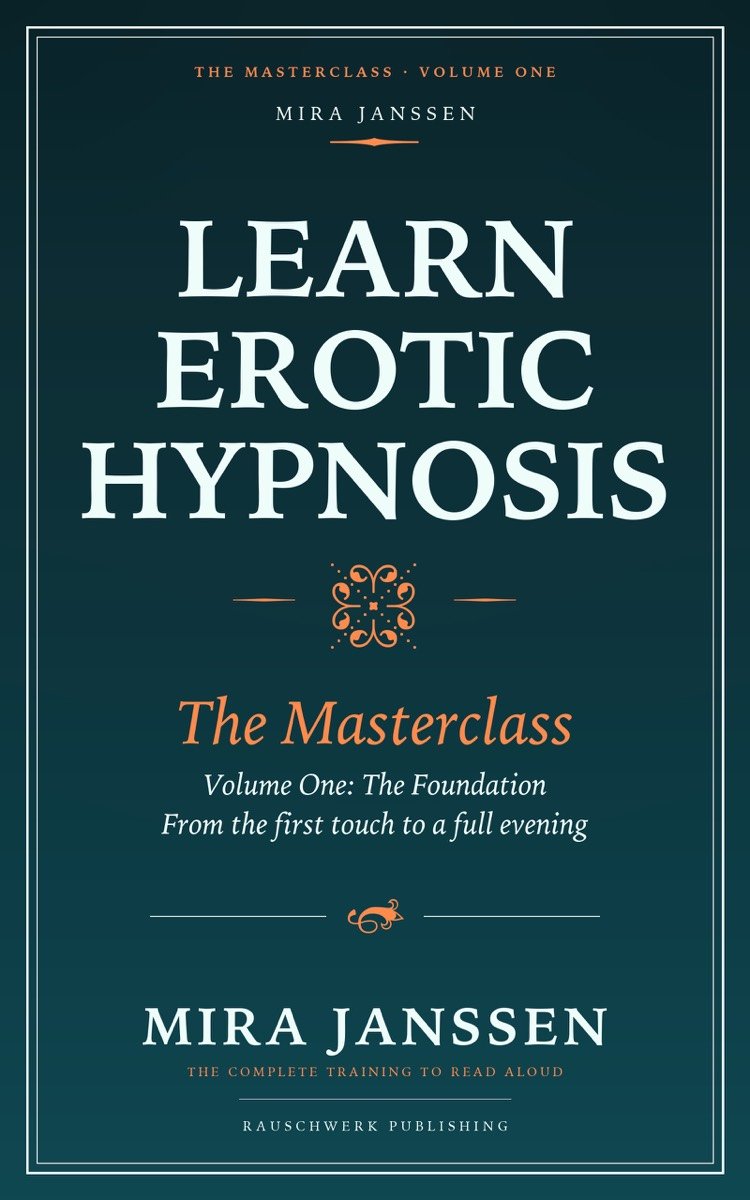
The foundation as a course rather than a reference: language, timing, reading the other person — in the order you actually learn them.
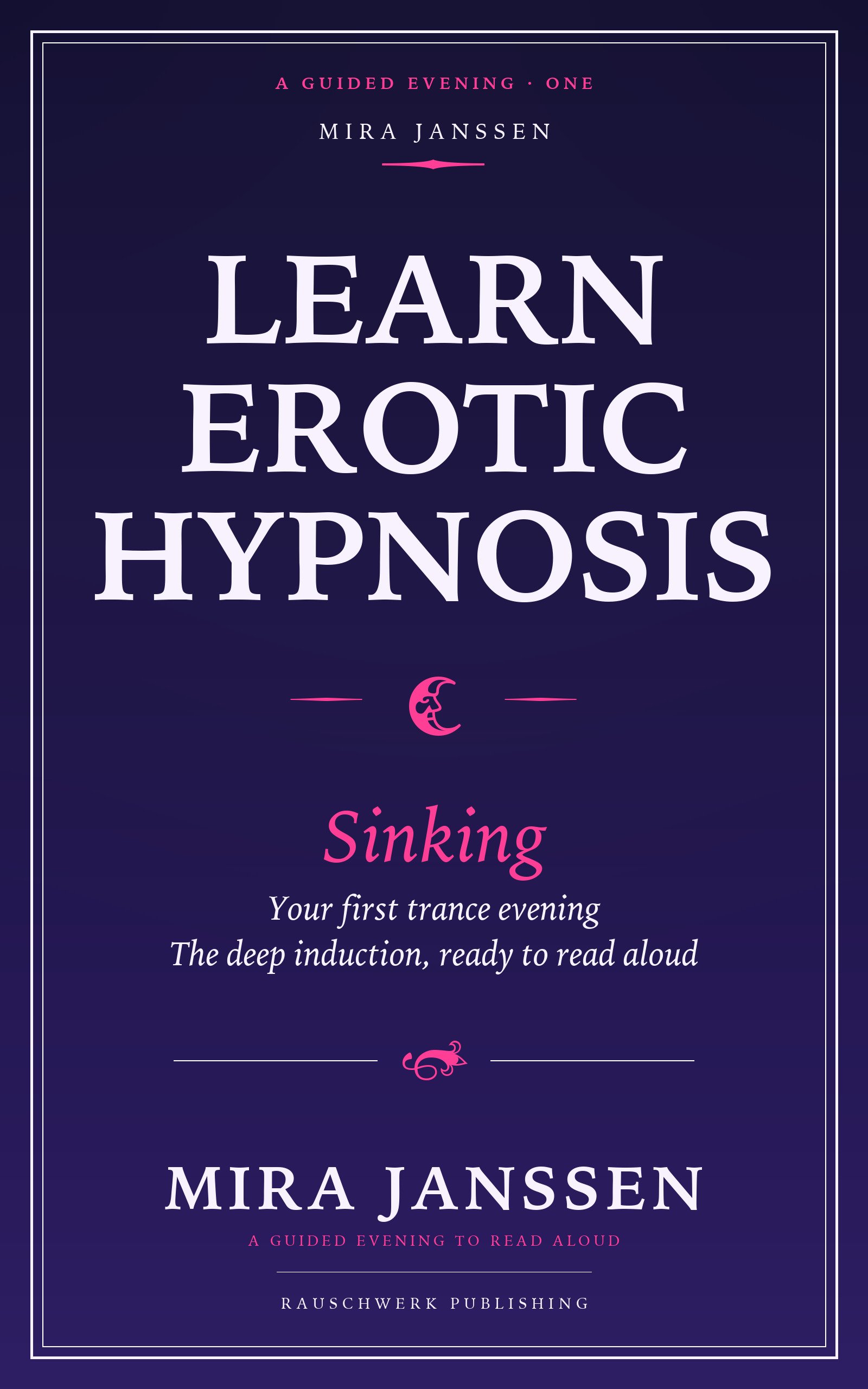
One guided evening, written out word for word. For anyone who doesn't want to understand trance so much as run one tonight.
— Mira
FAQ
What is a hypnotic suggestion? A sentence offered while attention is narrowed, which the other person may take, change or ignore. It is not a spell, not an order, and not a message posted to a second self. The hypnotist proposes; the listener does the work, usually without experiencing it as work.
Can a hypnotic suggestion make someone act against their will? No. The mechanism runs on narrowed attention and permission, and a suggestion that crosses something a person actually cares about brings the critic back on duty. What looks like obedience from outside is cooperation from inside, and cooperation can be withdrawn at any second.
What is the difference between a direct and an indirect suggestion? Direct says what it means and can be checked. Indirect leaves a gap for the listener to fill, which is useful when a plain instruction would give someone something to push against. Direct is not crude. Indirect is not a secret. Most of my working life is direct, because I can see whether it landed.
Do hypnotic suggestions go into the subconscious? Not in the letterbox sense. The person hears the sentence, or they don't. What changes in trance is that the voice which checks a claim before you are allowed to feel anything about it gets quieter. An idea can then run through the body without arriving as a decision — which is ideomotor action, not postage.