Conversational Hypnosis: The Patterns, Not the Myth
Search covert hypnosis and you get the same promise in forty different fonts: sentences that put a person under without their ever noticing. The skeptic reading that is right, and he can have the point before he asks for it. The mind-control version does not exist. What does exist is a set of language patterns that are real, learnable and considerably duller than the sales page suggests — plus a fantasy of power wrapped around them, which is the thing actually being sold.
I use them most nights I work. Not to sneak anything past anyone, but because a formal induction is unworkable in a room with music in it.
What conversational hypnosis actually is
Conversational hypnosis is trance work done inside an ordinary conversation, without a formal induction — no chair, no fixation object, no "close your eyes and listen to my voice". The state gets built through attention, rhythm and wording instead of an announced ritual. Everything else matches the formal version: narrowed focus, a quieter inner critic, suggestions that land better than over coffee. What changes is the door, not the room.
Four names, and what they are not
Conversational hypnosis, covert hypnosis and indirect hypnosis are three names for one approach: hypnotic work without a declared induction. The Milton model is narrower — a catalogue of language forms that Richard Bandler and John Grinder assembled by studying how Milton Erickson spoke, then published under the NLP banner. Hypnotic language patterns are the individual items in that catalogue: presupposition, the embedded command, the double bind. Three names for a method, one for a model of it, one for its parts.
The word that gets abused is covert. In the marketing it means unnoticed by the target. In the work it means unannounced — no ceremony, no visible switch being flipped. My partners know the whole toolbox exists. They have usually asked me to stop narrating it, which is a very different thing from not knowing.
Erickson, and why indirect at all
Milton Erickson was an American psychiatrist who made his name with patients who did not respond to being told what to do. A direct command gives a resistant mind something to push against. So instead of instructing, he described, offered choices, told long stories with the point buried three layers down, and left gaps. The gap is the mechanism: a suggestion someone completes themselves meets no resistance, because there is nobody left to resist it.
He never wrote a "Milton model" — that name and that catalogue came later, from the NLP founders modelling his speech. The packaging deserves an honest word. NLP as a body of claims has a weak empirical record, and the parts tested properly — eye-accessing cues, representational-system matching — have mostly not survived research. The patterns are older and simpler than the framework that branded them, and they hold up better because they only describe how attention and agreement behave. Take the catalogue, leave the science claims.
The patterns that build agreement
None of this works cold. Each of the three below makes the next sentence easier to accept than the last.
Truisms. A statement so obviously true that agreeing costs nothing. You are sitting there. You can hear my voice. You have been aware of your own breathing since I mentioned it. Alone they do nothing; stacked, they set a rhythm of undeniable statements and teach that your words match the listener's experience. Where it tips: the moment one is wrong. Tell somebody their hands feel heavy while their hands feel fine and you have taught the opposite — that your sentences are guesses. Say only what you can see.
The yes-set. The same principle, out loud: three or four statements that draw a genuine yes, then the one that matters. Long week. You're tired. That chair is better than the sofa. And you'd like twenty minutes where you don't have to decide anything. The fourth borrows the credibility of the first three. Where it tips: when it becomes audible as a technique. Four rhetorical questions in a row sound like a man selling windows, and a spotted pattern runs backwards.
Pacing and leading. The load-bearing one. Describe what is already true — three things the listener can verify from the inside — then add one that runs slightly ahead. You can feel the arm of the chair, you can hear the music through the wall, your breathing has slowed, and it would be easy to let your eyes rest on one point. The first three earn the fourth. Where it tips: leading too far, too early. Jump from two true statements to "and now you cannot move your arm" and you have made a claim the body disproves at once. Lead by inches, and if a lead is not taken, go back to pacing without comment.
The patterns that carry the suggestion
Presupposition. The suggestion sits in the grammar rather than in the claim, so the thing being proposed is not the thing up for debate. When you notice your hand getting lighter, tell me treats the lightness as settled and offers only the timing for consideration. Would you rather go under here or upstairs does the same with going under. Where it tips: this is the pattern that makes covert hypnosis look sinister, and not unfairly — it moves something past the point where it would be examined. Inside an agreed frame that is elegant. Outside one it is a con.
Embedded commands. A directive placed inside a longer sentence and marked by voice — lower, slower, a small pause on each side — so it registers without arriving as an order. I don't know how quickly you will let go tonight. A person can relax completely long before they expect to. Delivery does nearly all the work; on paper this is nothing. Where it tips: overacting. Six in one paragraph and the thing sounds like a badly dubbed film, and anyone who catches you doing a voice spends the evening listening for it.
The double bind. Two options, both leading where you want, offered as a real choice. Do you want to go under with your eyes open or closed? Would you like to feel it in your hands first, or your shoulders? The choice is genuine and that matters — people accept a frame far more readily when they picked their own way into it. Where it tips: when both options are transparently fake, or the frame itself was never agreed. Then it is not a choice but a trap with two doors, and adults notice traps.
Deliberate vagueness. The counterintuitive one, because precision is usually the virtue here. A feeling starts to spread — you know the one lands more reliably than any specific warmth in any specific hand: the listener fills the gap with something that fits them. Say "a good feeling", not which one. Say "somewhere", not where. Where it tips: vagueness with nothing underneath. If the whole session is fog, nothing gets built. Gaps work only when the structure around them is firm — clear frame, clear direction, one empty space for the other person to furnish.
Reading a catalogue and using one are two different skills. In the moment there is no catalogue, only three seconds and a person waiting, and what carries you across is having heard the sentences often enough to say them without composing them. Which is why written-out sessions help and definitions do not.
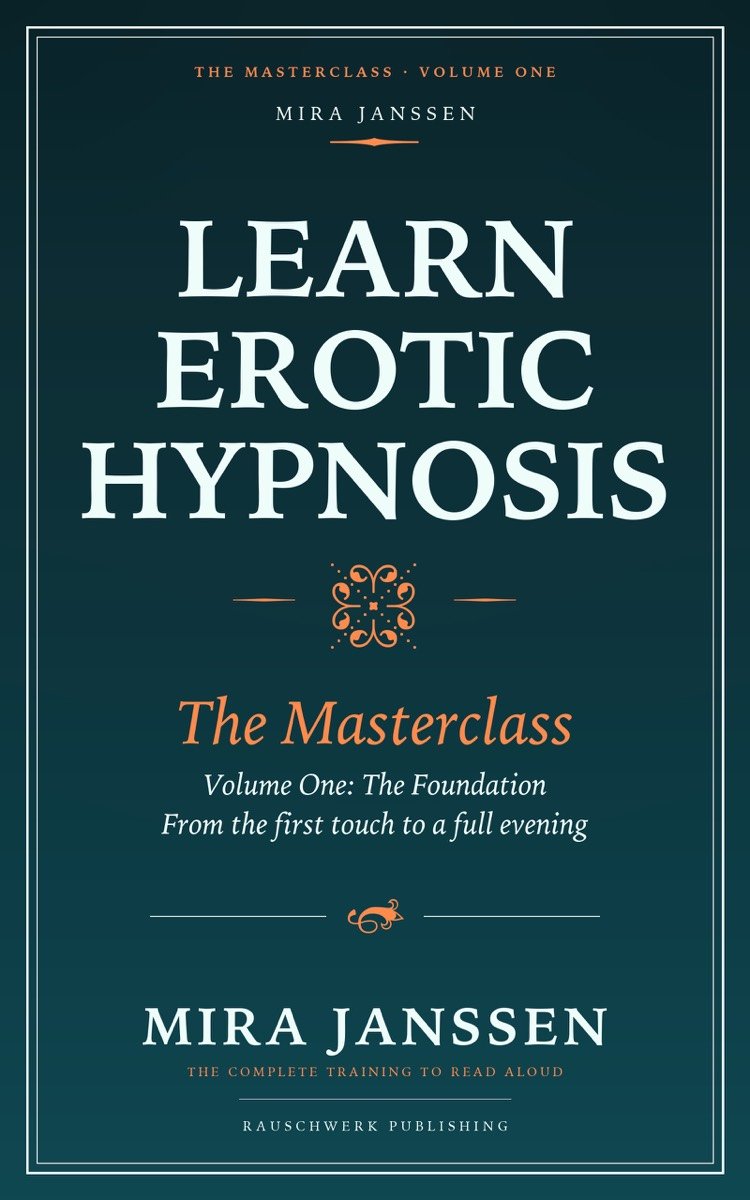
The foundation as a course rather than a reference: language, timing, reading the other person — in the order you actually learn them.
See the bookWhat none of this can do
These patterns do not produce trance against anybody's will. No arrangement of words overrides consent, and if one did, the people selling it online would be doing something far more profitable with it. They do not make anyone will-less either: a person in a deep state can still refuse, still lie, still stand up and reach for their coat. And a suspicious listener is close to immune, because the whole thing runs on attention willing to follow, and attention busy auditing you is not following anything.
That is the uncomfortable fact under the genre: the effect lives in the cooperation, not in the phrasing. Someone who wants to go under will go under through a clumsy sentence; someone who does not will sit through the most elegant construction you ever assembled and simply not go. Patterns raise your floor and smooth the joins. The mechanism they run on belongs to the listener, and anyone teaching this as leverage has either never tried it on a hostile audience or is lying about how that went.
Consent, which is not the disclaimer paragraph
With someone who has agreed to it, this is craft. On someone who has not, it is not advanced technique — it is working on a person without asking. That distinction does not soften with skill.
The objection is predictable: these are just language patterns, and everybody uses language. True, and beside the point. Talking is not the problem. Deliberately steering someone past their own judgement, in a room where they believe they are only having a conversation, is — and calling it hypnosis rather than manipulation launders nothing. In my work the frame gets set beforehand, out loud, boring and specific: what happens, how far it goes, which word ends it instantly. After that we can be as unannounced as we like, because the unannounced part is what was agreed on.
Where to start
Learn a formal induction first. The indirect version is harder, not easier, and holding a state you announced is what trains you to spot one you didn't — that order is laid out in how to learn hypnosis, and the first full session with a partner comes with timings. Then take one pattern, not seven, and run it for a week. Pacing and leading first; the rest is decoration.
The full sessions — the erotic branch I work in, sentence by sentence, used on people who asked for them — are what my books are for.
The foundation as a course rather than a reference: language, timing, reading the other person — in the order you actually learn them.
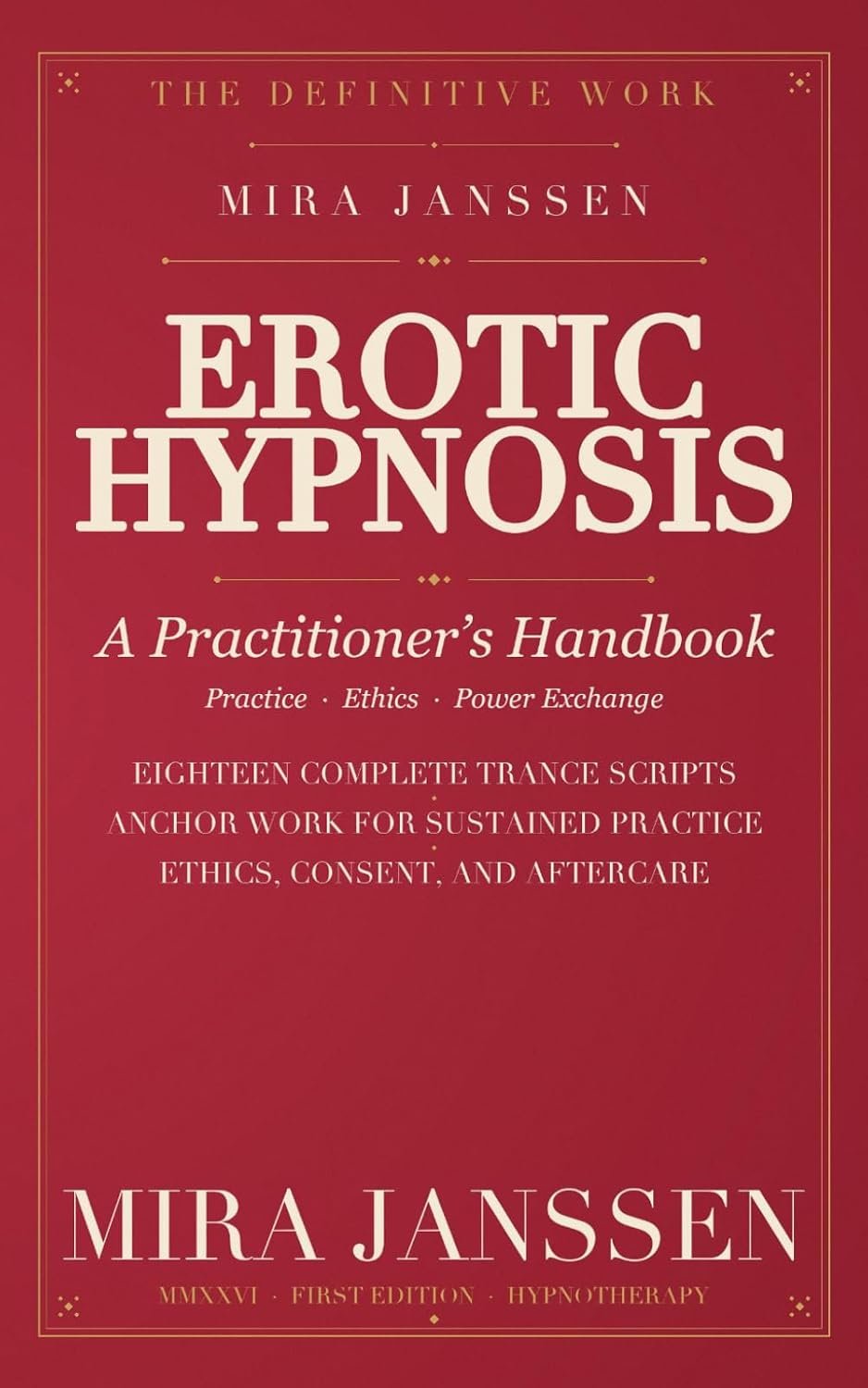
Eighteen complete sessions written out to read aloud — from the first agreement to the way back. The book for turning one attempt into a repertoire.
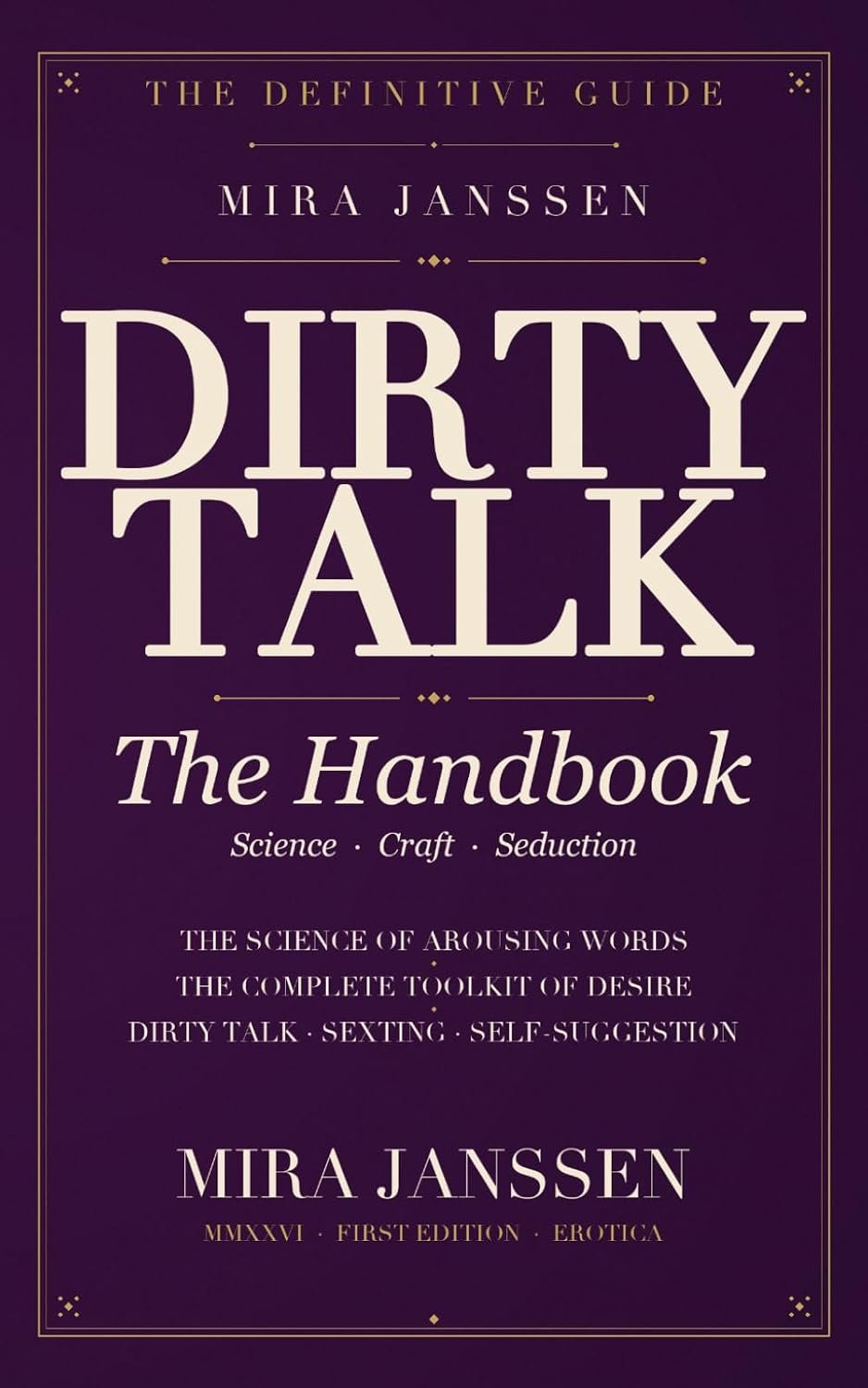
If the section above made the point that the shape of a sentence matters more than its content — this is the whole register, from soft to blunt.
— Mira
FAQ
Is covert hypnosis real? The language patterns are real and learnable. The version sold online — putting somebody under without their knowledge — is not: the state runs on cooperation, and a person who is not cooperating does not go. Covert honestly means without a formal induction, not without the other person's knowledge.
What is the Milton model? A catalogue of the language forms Milton Erickson used, assembled by the founders of NLP from studying his work. Erickson never published anything under that name. The patterns are worth having; the NLP framework they arrived inside has not held up well under testing.
Can you hypnotize someone in a normal conversation? With their agreement, yes — that is what conversational hypnosis is, and it is how most of my work runs. Without it you can be persuasive and occasionally absorbing, which is a different thing and does not become the same with practice.
How do I practise hypnotic language patterns? One at a time, out loud, with somebody who knows what you are practising and will say when it sounded like a technique. Start with pacing and leading, and check first how your own attention answers suggestion — the suggestibility test takes a few minutes and saves you from guessing.