Past Life Regression: Where Those Memories Come From
The best story I heard all last year was told to me on a smoking terrace at four in the morning by a woman who had been someone else six weeks earlier. Cold stone under bare feet. A kitchen that smelled of tallow. A name she had never encountered before the session. I do not think she was lying, and I do not think she was ever in that kitchen. Both can be true at once, and the gap between them is the most interesting thing in my trade.
What a past life regression session actually is
A past life regression is a hypnosis session in which the subject is guided backwards through their own memory — through childhood, past their earliest recollection, past birth — and then invited to describe whatever is on the other side. Mechanically it is ordinary hypnotic regression: an induction, a deepening, then questions about what the person sees, wears, hears and is called. What makes it a past life regression is not the technique but the frame: the guide proposes that whatever surfaces is a life already lived. People come out with names, places, deaths, and an emotional charge that can last for weeks.
I am not going to tell you whether reincarnation is true. I have no instrument for that, and neither does anybody selling sessions. What I can talk about is the room, and why "it felt completely real" is the weakest evidence there is. If you have read about mesmerism you know the shape. The experience is genuine. The explanation bolted onto it does not survive contact.
Why it feels like remembering and not like imagining
Three ordinary things stack up. The first is the state: trance narrows attention onto whatever is being described and thins the commentary that normally audits it — the commentary that stops you, in daily life, from mistaking a daydream for a recollection. Turn it down and material arrives without the usual customs check. The second is that imagery under trance is not the pale stuff you get with your eyes closed on a train. It goes multisensory and unbidden. You do not construct the smell of tallow, you notice it, and content that arrives without effort feels found rather than made. Found is halfway to remembered.
The third happens afterwards. Memory does not file things with a label reading imagined, Tuesday, in a chair. What we use to judge whether something is a memory is the texture of the trace: vivid, sensory, first person, emotionally loaded. A regression manufactures traces with all four, plus real tears, which everyone in the room reads as proof. A week later the mind runs its check, and the check passes.
Memory does not play a recording. It builds one.
This is the part that matters, and it is not a fringe position. Recall is reconstruction: you rebuild a memory each time from fragments, general knowledge, expectation and the context you are sitting in, and the rebuilt version is what gets stored back down. Efficient, mostly good enough, and open at the edges.
Work by Elizabeth Loftus has spent decades showing how open. Show people a filmed accident, then ask about it with a slightly more violent verb, and their accounts shift: the estimated speed goes up, and some later remember broken glass that was never in the film. Change the question and you change the memory. She went further with a procedure since repeated in many forms: hand an adult a plausible childhood event that never happened, confirmed by a family member, and invite them to recall it across a few sessions. A substantial minority come back with it — not a vague sense of it, but details they supply themselves, held with confidence, and sometimes flat disbelief when they are told at the end it was planted.
Sit with the part that should worry you. Those people were not credulous, not lying, not unusual. From the inside a false memory and a true one feel identical, because the same machinery built both out of the same material. Sincerity is not evidence. Detail is not evidence. Confidence fails hardest of all.
A regression works in exactly this territory, with one extra problem. The normal check on a recovered memory is asking someone else who was there. For a life in another century there is nobody to ask, and no version of the account can come back wrong.
A leading question weighs more in trance
In ordinary conversation you can decline the premise of a question — you can simply say you have no idea. In trance that refusal gets expensive.
"What are you wearing on your feet?" already contains feet, shoes, a body, a floor, a room, a century. The subject is absorbed, cooperative, disinclined to argue, and asked by the one voice in the room carrying authority — and they know what kind of session this is, so they know what kind of answer is wanted. Suggestion runs on that exact stack: expectation, lowered criticism, trusted operator. A competent guide can build a whole scene out of questions alone, with no instruction and no intent to deceive. The presuppositions do the work.
Ideomotor signalling makes it worse, and I say that as someone who uses it. Set up a finger to lift for yes, ask the unconscious to answer, and it lifts without the subject deciding to lift it. That is the ideomotor effect. It is real, and it is not a channel to a hidden archive — it is your own expectation moving your own hand, and it does not feel like your hand. The most persuasive witness in the room is you, in a costume.
None of this needs a dishonest practitioner. Most of them believe it themselves, which is what makes the effect so clean.
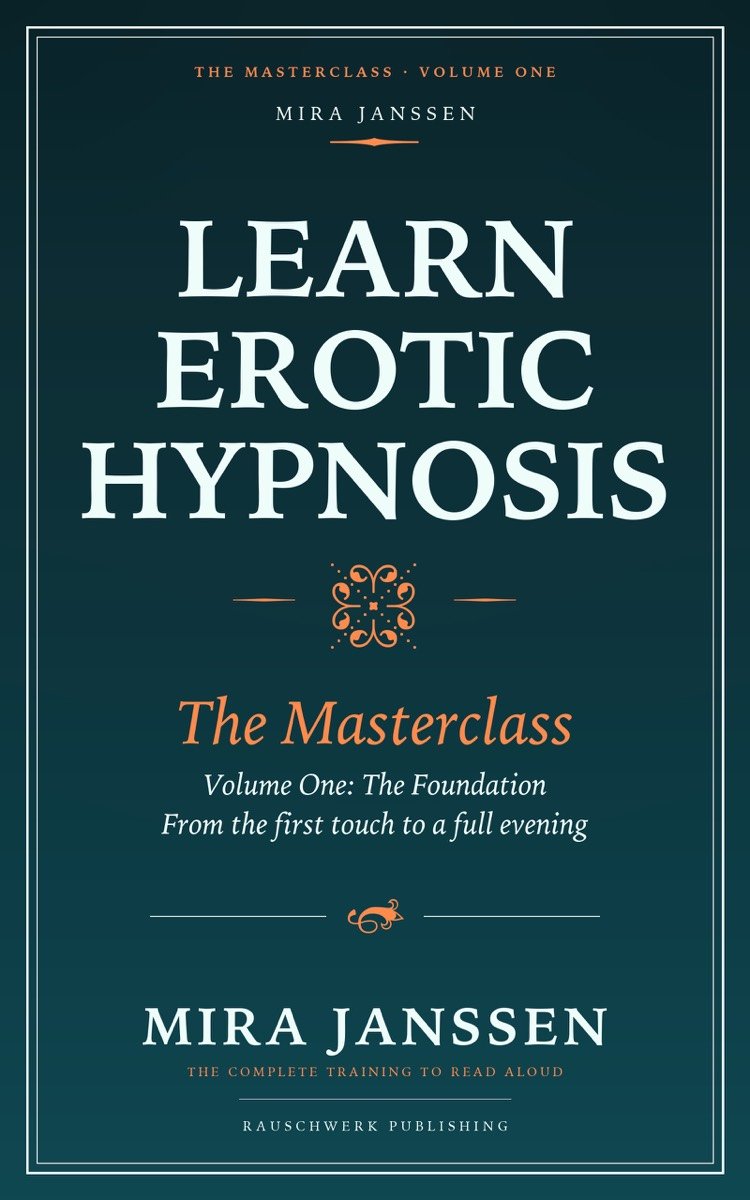
The foundation as a course rather than a reference: language, timing, reading the other person — in the order you actually learn them.
See the bookThe case everybody has half-heard about
In the mid-1950s an American businessman and amateur hypnotist, Morey Bernstein, ran regression sessions with a Colorado housewife his book identified only by a pseudonym. Under hypnosis she spoke as an Irishwoman called Bridey Murphy, born early in the nineteenth century, and not thinly: an accent, songs, family, domestic detail, place names, a death, a funeral.
The book appeared in 1956 and set off a national craze. It caught fire because this was reincarnation with homework attached: Bridey named things, and names can be checked.
Then reporters stopped searching Ireland and started searching the subject's own life. What came back were plausible sources close to home: relatives, childhood surroundings, an Irish-born neighbour from her Chicago years whose name resembled the one she gave in trance. Rival papers disputed parts of that, and the argument got messier than either side pretended. But nobody ever produced Bridey Murphy. No record of the woman was found. That is not the same as exposing a fraud — nobody has shown the subject was faking anything. It is that every time investigators looked for a source, they found one inside her own life.
Cryptomnesia, the least discussed and most likely explanation
The Swiss psychologist Théodore Flournoy named this around 1900, studying a medium who described previous existences on Mars and in India in remarkable detail, and who turned out to have read a great deal. Cryptomnesia is hidden memory: material you genuinely acquired, genuinely forgot acquiring, and which returns later stripped of its origin.
We store content far more reliably than we store where it came from. A documentary at fourteen. A grandmother's story. Six pages of a novel abandoned in a rented flat. The where goes first, and what stays is a scene with no receipt. Add a state that suppresses source-checking and a frame saying this is a life you lived, and the material has somewhere to land.
I find this the most respectful explanation available, not the most dismissive. The person is not inventing. They are remembering. They are simply remembering this century.
The part I am not going to soften
Regression is not only sold as a curiosity. It is sold as therapy — for phobias, for chronic pain, for patterns that keep repeating in relationships, on the reasoning that a wound from an earlier life drives this one.
The problem with that is not theoretical. Techniques that generate vivid, sincerely believed memories do not confine themselves to the nineteenth century. Point the same procedure at this life and it produces material about real, living, named people. There was a long and bitter public argument about exactly that through the 1980s and 1990s, in which memories recovered under suggestive conditions led to accusations, prosecutions and families that never repaired, including cases that later collapsed. Some were true. Some were not. The technique could not tell the difference, and neither could the people holding it. It is also why courts in a number of jurisdictions restrict testimony from witnesses hypnotised about the events at issue.
So, plainly. If you are carrying something heavy, that belongs with a qualified professional trained in trauma who understands how memory behaves under suggestion. Not a regression session. Not me, and not a weekend certificate. Hypnosis is a real clinical tool in trained hands, which is a separate question from whether trance is a reliable route into the past. It is not. I promise no cures, and anyone offering healing through a life you cannot check is a salesperson.
What is left is strange enough
Take reincarnation out and look at what remains. A person sits in a chair in an ordinary room, in a state no more exotic than absorbed attention with the critical filter turned down, and out of a few questions and their own forgotten material they build a coherent world. Consistent across sessions. Furnished. Weather in it. People with faces. And while it runs it is more present than the room they are sitting in.
That is astonishing, and it needs no previous life to be impressive. It is also the entire working capital of what I do. Everything I write about — building a scene in someone's head that their body responds to as though it were happening, with consent, for pleasure — runs on that capacity. Regression practitioners found something real and filed it under the wrong heading. If you want to know how strong your own version is, ten minutes with a suggestibility test will tell you more than any session. What you do with it afterwards is what my books are for.
I still think about the woman on the terrace. Cold stone, tallow, that name. She built the whole thing herself in about ninety minutes, with no idea she was doing it. That is a better story than the one she told me.
The foundation as a course rather than a reference: language, timing, reading the other person — in the order you actually learn them.
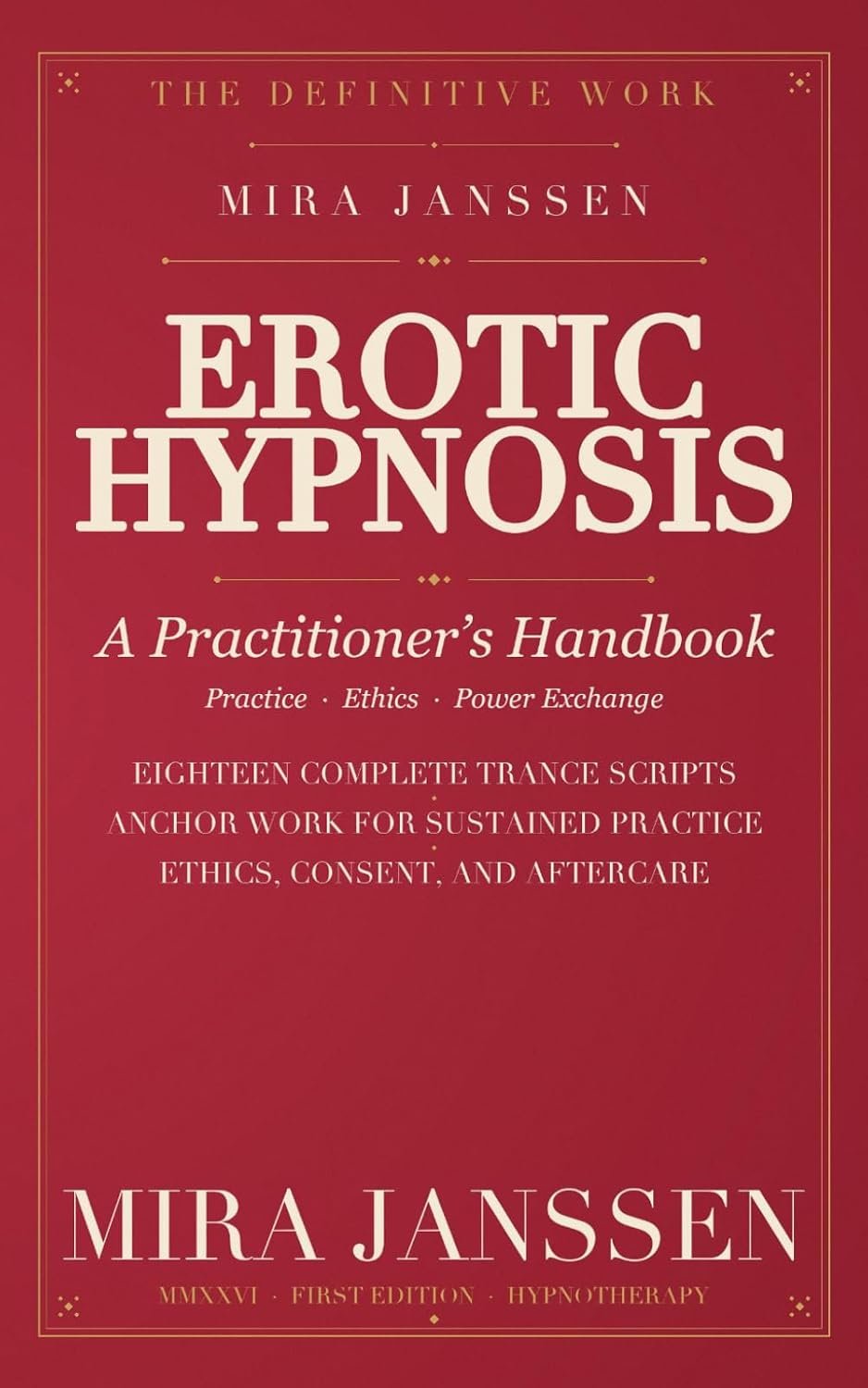
Eighteen complete sessions written out to read aloud — from the first agreement to the way back. The book for turning one attempt into a repertoire.
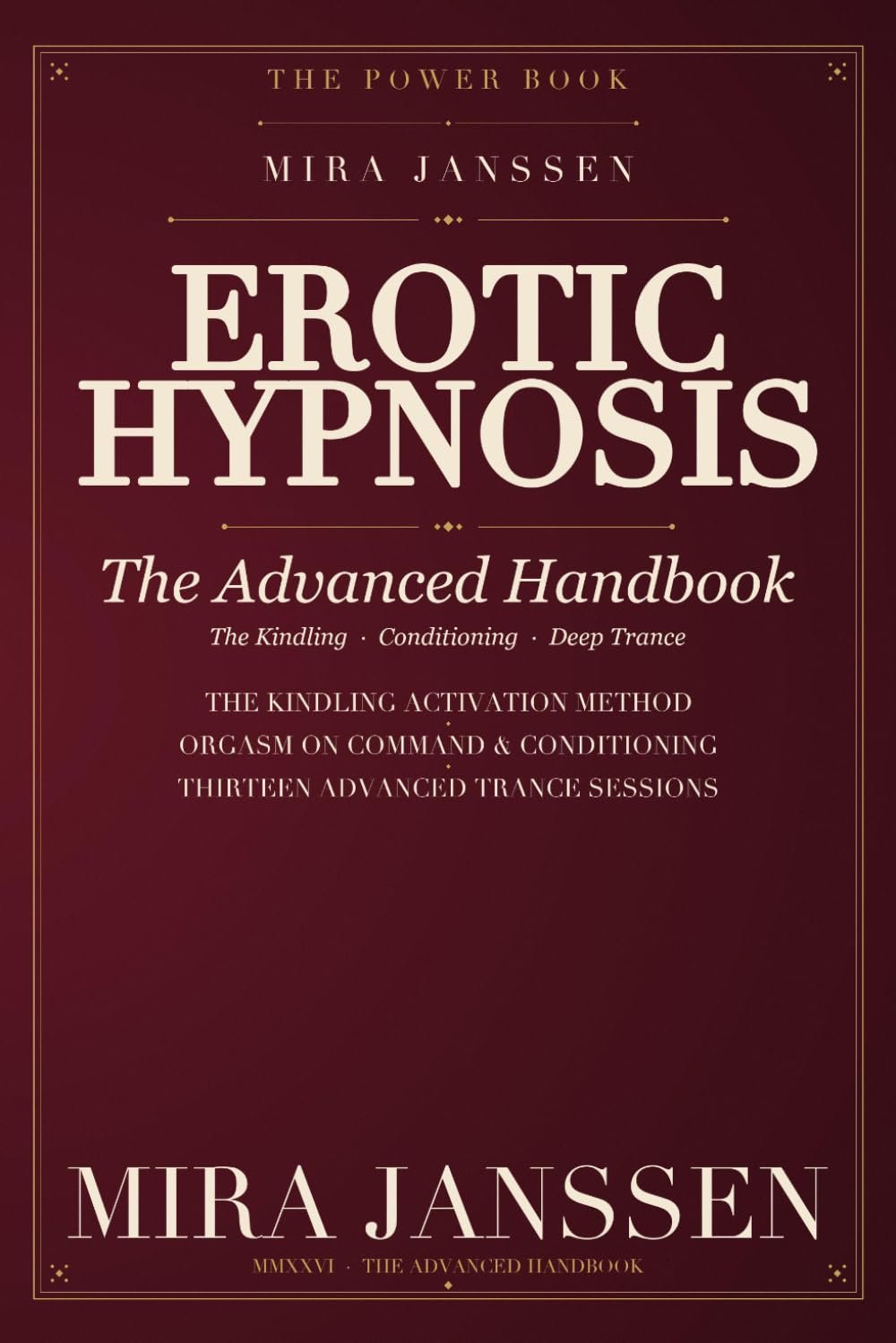
For anyone whose induction is already reliable and whose question has become what comes after it.
— Mira
FAQ
What actually happens in a past life regression? An induction, a deepening, then a guided walk backwards through memory until the subject is asked to describe a life before this one. What they produce is real experience — vivid, emotional, sincerely held. What it is evidence of, the session cannot answer.
Are past life memories real? The experience is real. Whether it records an earlier existence is not something a hypnosis session can establish, because there is nothing to check it against. Everything reported can be produced by ordinary mechanisms: reconstructive memory, suggestion, and forgotten sources returning without their labels.
Can hypnosis create false memories? Yes, dependably enough that it is one of the better-established findings in memory research. Suggestive questioning produces detailed, confidently held memories of events that never happened, in people who are not lying. Trance raises that risk, because it lowers the critical checking that would otherwise catch it.
Is past life regression therapy safe? Not as a way of handling real distress. A technique that generates believed memories can generate them about living people, with consequences that are hard to undo. If you are working on something painful, see a qualified professional trained in trauma. Nobody should be sold regression as treatment.