Dissociation: One Word, Three Very Different Things
Somebody writes to me about once a month with a version of the same sentence: my hand didn't feel like mine, is something wrong with me? And underneath it, always, the reason they are asking a hypnotist and not a doctor — they typed a word into a search bar, and the word came back wearing a hospital gown.
The word is dissociation, and it is doing three jobs at once. It names the driver who missed three exits. It names a piece of craft I use on purpose, in a room, with someone who agreed to it. And it names a family of clinical conditions that are serious, trauma-associated, and nothing to do with what happens in a session. Those three share a label and almost nothing else.
What this page is not: medical advice, or a diagnostic aid. I am not a clinic. If you have landed here frightened, skip to the section on when to see a professional and read that first.
The short answer
Dissociation is a break in the usual joining-up of experience — attention, sensation, memory, and the sense that all of it belongs to you — and it comes in three forms that get constantly confused: the everyday kind (absorption in a book, the lost stretch of motorway), the hypnotic kind (a suggested split, such as a limb that feels borrowed or pain that registers without hurting), and the clinical kind (dissociative disorders, trauma-associated conditions requiring proper medical and psychotherapeutic care). The honest dividing line is not intensity. It is control: the first two are benign, dosable and reversible. The third is defined by being none of those.
The term is old. Pierre Janet, in France in the late nineteenth century, used désagrégation — dissociation in English — for the idea that parts of mental life can run detached from the rest, outside ordinary awareness. He built it from what he saw in his patients, so the clinical shadow has been on the word from the start. The craft borrowed it later, and that borrowing is the whole source of the muddle.
The kind you have already had
Start with the harmless version, the most common and the least discussed. You reach the bottom of a page and nothing arrived. Your eyes tracked every word, you would have caught a misprint, and yet the paragraph is gone. Somebody says your name twice in a kitchen you are standing in. You take your exit and the last half hour is missing — a phenomenon so reliable it has its own name, which I have written about in highway hypnosis.
None of that is a symptom. It is what a finite attention system does when it commits hard to one channel and lets the others idle. The world does not stop being processed. It stops being joined up with the sense of a person standing there noticing it. Daydreaming does the same, as does any absorbing task where hours vanish.
Everyday dissociation is the raw material. Whatever a hypnotist does with a limb or a memory is not a new capacity installed in a person. It is this one, ordinary and universal, aimed somewhere deliberately.
The kind I do on purpose
Here is the part that is actually my trade.
Hypnotic dissociation is a suggested split, offered to someone who agreed to receive it, in a setting where they can stop. The classic version is a limb: an arm described until it feels like it belongs to the chair, or the room, or nobody in particular. People report it as strange rather than frightening — the arm is still there, still theirs on request, but the ownership tag has gone quiet. Arm levitation and catalepsy are the same family. One is movement without authorship, the other stillness without authorship. Dissociation is the general case: the doing and the owning coming apart.
The version people find hardest to believe is the analgesic one: under suitable conditions, some people can be given a suggestion that a sensation will be noticed but not suffered. The information arrives, the alarm does not. That is not a claim that hypnosis abolishes pain, and I am not offering it as a treatment for anything. It is a reported effect, studied for decades, and one reason hypnosis is taken seriously in research at all.
Which brings me to Ernest Hilgard. At Stanford in the 1960s and 70s he proposed neodissociation theory: that under hypnosis mental processes can run in parallel, divided by a barrier of amnesia, rather than one simply replacing another. His famous demonstration was the hidden observer. A participant given an analgesia suggestion would report little discomfort — and then, addressed with a particular set of instructions, a separate channel of report would give substantially higher numbers. Something in there had been keeping score the whole time.
I like the finding and mistrust the story people build on it. The observation — two different reports from one person under the same conditions — is real and has been produced in laboratories more than once. The interpretation has been contested since it was published: critics argue the hidden observer is a product of the instructions used to elicit it, a demand characteristic in a lab coat rather than a window onto a hidden part of the mind. That argument is not settled. Anyone telling you it proves there is a second person living in your head is selling something, usually a course.
What survives the argument is useful anyway: the mind can hold two accounts of the same event at once, and hypnotic language is unusually good at addressing one of them without waking the other.
Memory does the same trick, which is why hypnotic amnesia sits on this shelf. Suggested forgetting is not deletion. It is information temporarily filed where the retrieving hand does not go — and it comes back on the agreed cue, which is the proof that nothing was destroyed.
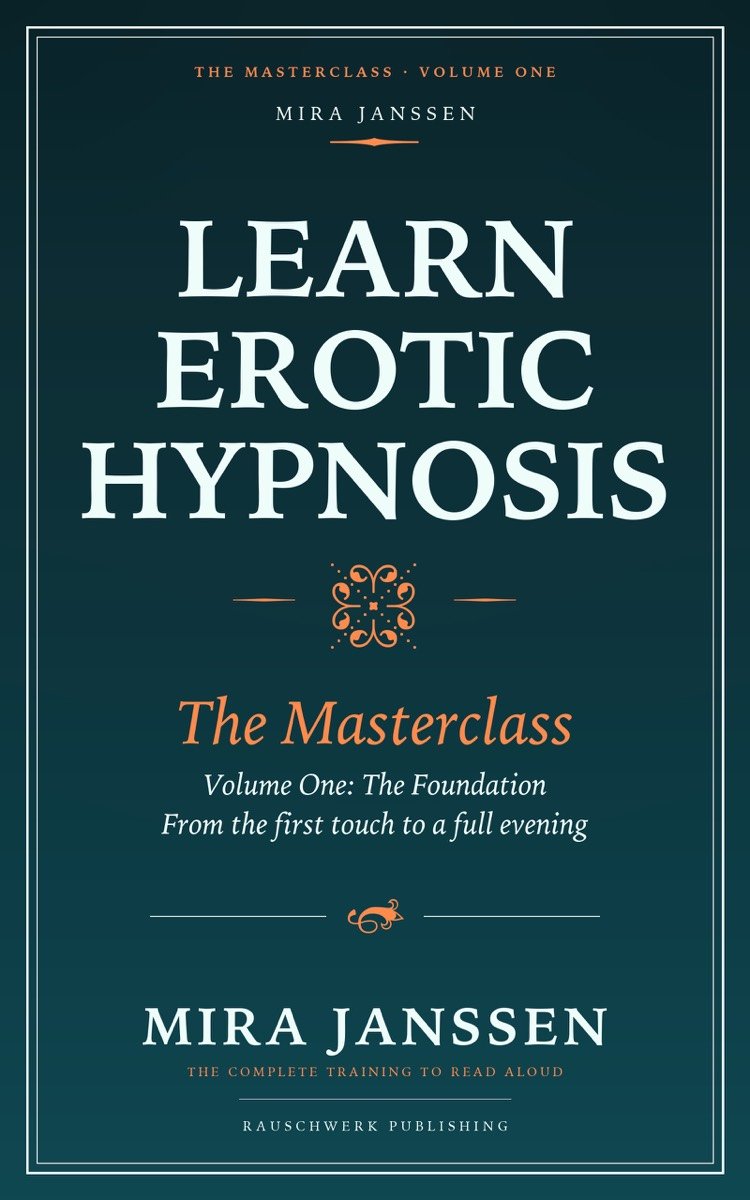
The foundation as a course rather than a reference: language, timing, reading the other person — in the order you actually learn them.
See the bookWhy the language works, and how it breaks
The craft part is smaller than people expect. Dissociative suggestion is mostly grammar.
You do not tell someone their arm is not theirs. You give the arm somewhere else to be. Let that arm belong to the room for a while. You can leave the hand out of it. The sentences do two things at once: they relocate ownership, and they attach a time limit — for a while, for now, until I ask for it back. That second half is not decoration. It is the reversibility, stated up front, before anyone needs it.
Then the permissive frame that runs through all of this, described in how does hypnosis work: descriptions, not commands. Something offered can be declined without anyone losing face, and a suggestion that can be declined is a suggestion people accept far more often.
Overstatement kills it. Your arm is gone. You have no arm. You cannot feel anything at all. Now you have handed the person's inner editor a claim it can check, and it will check it, and it will find an arm. One failed absolute unravels the frame — not because the person is resistant, but because you gave them a sentence that is plainly false while asking them to take your sentences seriously. Hedged, deniable language survives inspection. Big claims do not.
And the way back is part of the procedure, not part of the manners. You end a dissociative suggestion deliberately, naming what returns and confirming that it did. That's yours again. Move the fingers. Tell me what it feels like. You wait for the answer. If the answer is odd, you go again, slower. People need to feel the limb return, or the session writes a story about being stuck — and that is how folklore gets made.
None of it happens without a yes covering the specific thing you are doing, which is the longer conversation in hypnosis consent. "You may hypnotise me" is not consent to have a body part reclassified.
The kind that is not mine to touch
Now the third meaning, and the reason I wrote this article at all.
Clinical dissociative disorders are recognised conditions. Depersonalisation and derealisation — the persistent sense of being detached from yourself, or of the world being unreal, flat, filmed. Dissociative amnesia, where autobiographical memory becomes unavailable in a way that is not ordinary forgetting. Dissociative identity disorder. These are strongly associated with trauma, often severe and early, and distressing enough that people organise their lives around them.
The difference from everything above is not that they are the same experience turned up louder. It is structural — the three properties I named at the top:
Control. A hypnotic dissociation is entered on purpose. A clinical one arrives uninvited, usually at the worst moment.
Dose. In a session you take a small amount and stop. Clinical dissociation does not come in a chosen quantity.
A way back. The decisive one. In craft the return is built in, cued and confirmed. The defining difficulty of a dissociative disorder is precisely that the person cannot reliably come back when they want to.
That is a more honest test than any scale or checklist, and I would rather leave you with it than with numbers I would have to invent.
So: if you regularly lose time, frequently feel detached from yourself or from the world, have memories missing in ways that do not match ordinary forgetting, or find any of this distressing — that belongs in front of a doctor or a psychotherapist. Not a blog. Not a partner with a soothing voice. Not me. The established route is assessment by a qualified professional followed by psychotherapy, frequently trauma-focused, with a clinician trained for it. Hypnosis does not substitute for that. Where hypnotic technique has a role in such treatment, it is a tool in the hands of a treating professional inside a therapy — never a partner, never a coach, never a weekend course, never a stranger from the internet. Even the general clinical use of hypnosis, which I sketch in hypnotherapy, is a different world from what I write about here.
I am a writer on erotic hypnosis. Rauschwerk is a publisher. Neither is a clinic, and I am not going to pretend otherwise for the sake of a broader audience.
What the word is worth once you split it
Pulled apart, the word stops being frightening and starts being informative. It says that owning your own experience is a construction rather than a given — assembled continuously, well enough that you never notice until it briefly runs without you. That is why the missed exit is unsettling. Not because something broke, but because you saw the seam.
The craft lives in that seam and nowhere else, which is also why the state is so underwhelming from the inside. What hypnosis feels like is not oblivion. It is being entirely present while some ordinary part of the arrangement quietly declines its job.
The driver who missed the exit and the person whose hand went somewhere else run the same machinery — one by accident on a motorway, the other on purpose, in a room, with a way back agreed in advance. The third meaning is not on that continuum, and the kindest thing I can do with a page that ranks for it is say so and point somewhere better. If you want the deliberate version — how to offer a split, keep it small, bring someone all the way back — that is what my books are for, and a suggestibility test will tell you in a few minutes how readily this language lands for you at all.
— Mira
FAQ
What is dissociation? A break in the normal joining-up of attention, sensation, memory and the sense of ownership over your own experience. It covers three quite different things: everyday absorption such as the lost stretch of motorway, deliberate hypnotic effects such as a limb that feels borrowed, and clinical dissociative disorders, which are trauma-associated conditions requiring professional care.
Is dissociation in hypnosis dangerous? Hypnotic dissociation is chosen, small and reversible, and a competent operator builds the return into the procedure. It is not the same thing as a dissociative disorder and does not cause one. It is also not appropriate for someone already struggling with unwanted detachment — that belongs with a treating professional, not a partner or a hobbyist.
What is Hilgard's hidden observer? In Ernest Hilgard's experiments, participants given hypnotic analgesia reported little discomfort, but a separately addressed channel of report gave much higher ratings, as though part of the person had registered everything. Hilgard read this as parallel mental processes divided by amnesia. The observation has been replicated; the interpretation has been disputed since publication, with critics arguing the effect is created by the instructions used to elicit it.
When should I see a doctor about dissociation? If you regularly lose time, feel persistently detached from yourself or the world, have memory gaps that do not match ordinary forgetting, or find any of it distressing. That warrants assessment by a doctor or psychotherapist, and the established route is psychotherapy with a qualified clinician, frequently trauma-focused. Hypnosis is not a substitute, and nothing on this page is medical advice.
The foundation as a course rather than a reference: language, timing, reading the other person — in the order you actually learn them.
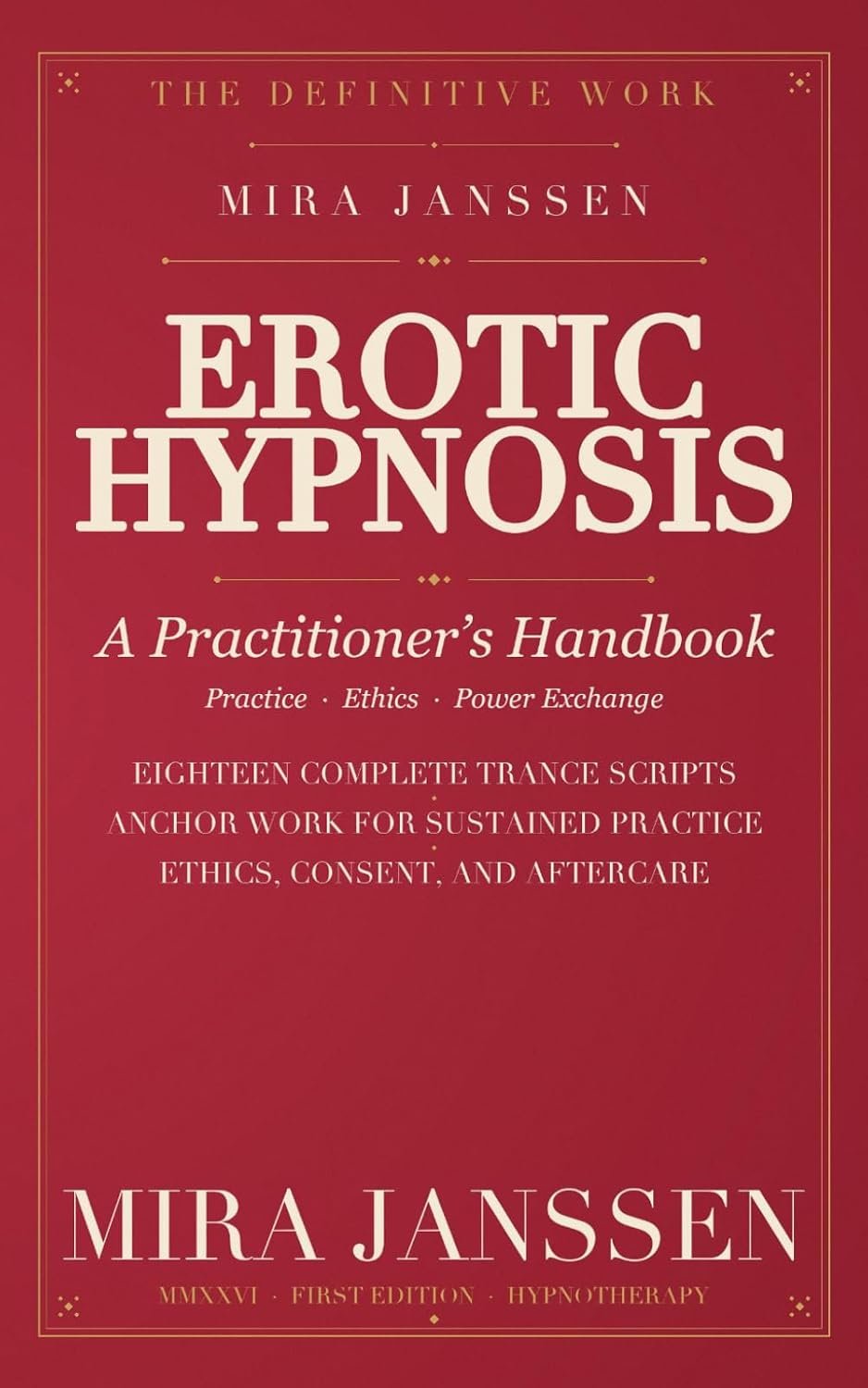
Eighteen complete sessions written out to read aloud — from the first agreement to the way back. The book for turning one attempt into a repertoire.
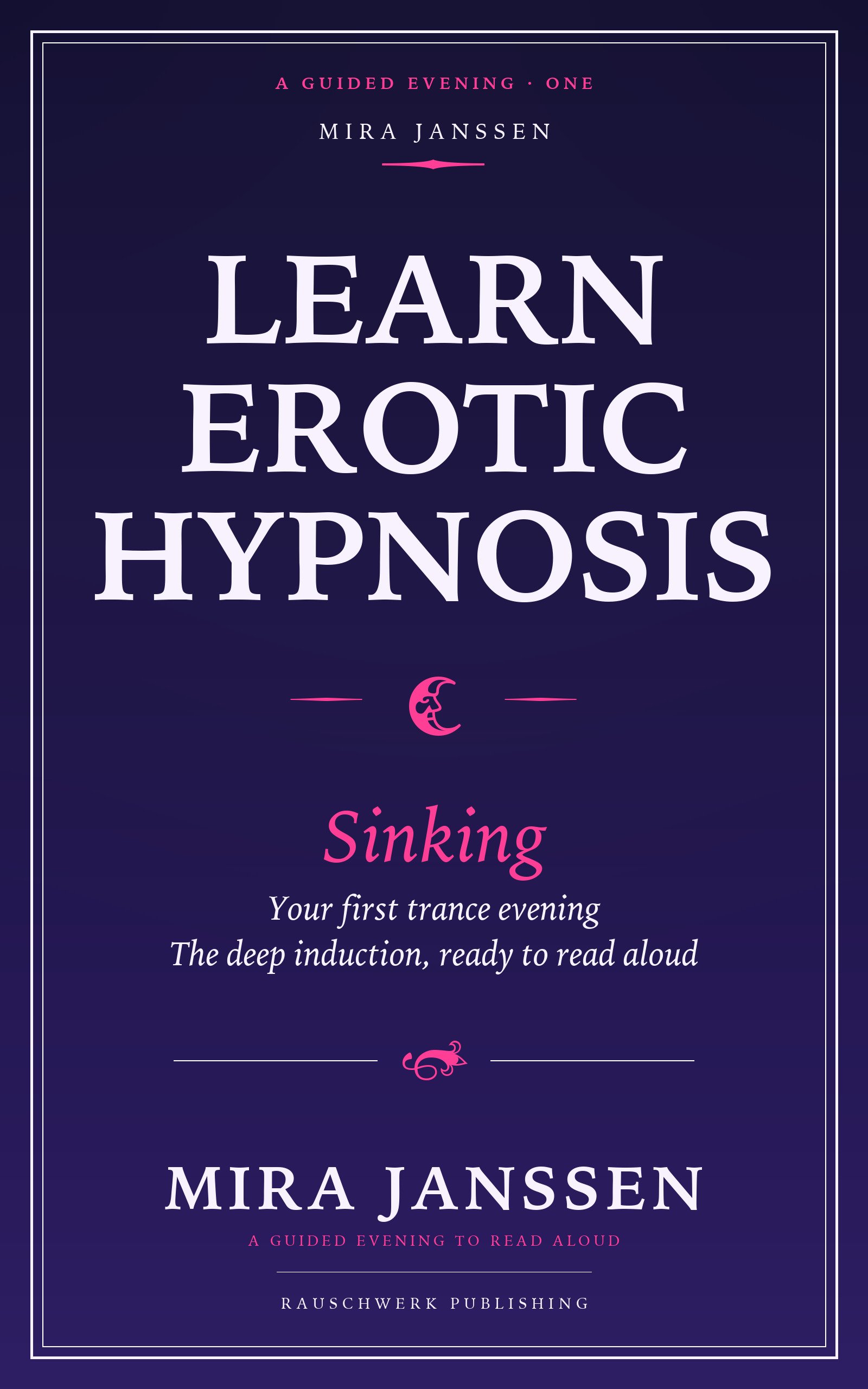
One guided evening, written out word for word. For anyone who doesn't want to understand trance so much as run one tonight.