Mirror Neurons: A Small Finding Wearing a Very Large Crown
There is a moment in a long set, usually past two in the morning, when a floor stops being four hundred people dancing and becomes one thing moving. You can see it from the booth. Shoulders find the same angle, heads drop on the same beat, and it holds for a track and a half before it comes apart again. Nobody announced it.
I have chased that moment for years, from the booth and from a stage with a microphone, and I still cannot tell you what produces it. What I can tell you is that a man once explained it to me at the bar afterwards in three words — it's mirror neurons — and walked off satisfied. That is roughly what the term has become: a full stop where a question mark belongs.
What mirror neurons actually are
Mirror neurons are individual nerve cells that fire both when an animal performs an action itself and when it merely watches someone else perform the same action. They were found in Parma in the early 1990s, in the premotor cortex of macaque monkeys, using electrodes placed directly in the brain: the same cell responded when the monkey reached for a piece of food and when it watched a human hand reach for it. Giacomo Rizzolatti's laboratory published the work, Vittorio Gallese was among the people who did it, and the finding has been replicated in monkeys since.
That is the finding. Everything else you have heard is a storey added on top of it, and the building permit was never issued.
Why it caused an earthquake
The excitement was earned. Before Parma, the standard picture had perception and action in separate departments — you saw a thing, machinery in the middle worked out what it meant, and then, if required, you moved. A cell that treats doing and seeing done as one event does not fit that picture. It suggests the brain understands another person's movement by quietly running it, a rehearsal without the muscles.
An elegant idea, and it deserved a decade of hard work. What it got instead was a marketing department.
Vilayanur Ramachandran wrote that mirror neurons would do for psychology what DNA did for biology, and gave a TED talk called The neurons that shaped civilisation. From there the term escaped into the wild, where it was said to explain empathy, language, imitation, culture, why you cry at films, why yawning spreads, and why hypnosis works — I have heard that last one from people in my own trade, delivered with the air of someone closing a file.
The distance between a cell in a macaque's premotor cortex fires during observation and this is the biological basis of human civilisation is enormous, and it was crossed by assertion rather than by evidence.
The human problem
Here is the part that almost never survives the trip to the seminar room.
Single-cell recording requires electrodes inside the skull. You do not do that to healthy volunteers, so nearly all human work here is indirect: brain imaging, EEG, magnetic stimulation. Those methods tell you that regions overlap between watching and doing. Overlap at that resolution is an address, not a mechanism — a neighbourhood lighting up in both conditions can be produced by many arrangements of cells, only one of which is a population of genuine mirror cells.
There is one real exception, worth stating precisely rather than waving at. Recordings have been made in patients with epilepsy who already had depth electrodes implanted for clinical reasons — to locate where their seizures start — and who consented to researchers using those electrodes while they were in place. Cells were found that responded both when the patient acted and when the patient watched. That is direct evidence and it is not nothing. It is also a very small number of people, in an unusual clinical situation, with electrodes placed where their neurologists needed them rather than where the theory would have wanted them — and the cells that responded were not in the region the monkey work made famous at all. They sat in medial frontal and medial temporal areas, because that is where the seizures were. Mirror-like cells in humans: yes. In the place the theory predicted: nobody has looked, because nobody can.
So: mirror cells in humans, probably yes. A mirror system running empathy and language and culture, on the evidence available, no. The neuroscientist Gregory Hickok wrote a book taking the case apart at length; it is called The Myth of Mirror Neurons. The argument is not happening at the fringes of the field but in the middle of the claim.
Mirror neurons and empathy
This is the pairing that made the term famous, and it is the weakest link in the chain.
The reasoning runs: the same cells fire when I act and when I watch you act, therefore I feel what you feel, therefore empathy. Notice how much work the word therefore is doing. Motor resonance — my system quietly rehearsing your movement — is not the same as caring what happens to you. A good con artist reads other people beautifully and feels nothing about it. Whatever empathy is, it is assembled out of memory, language, attention, history with the particular person and a decision to bother, and none of that reduces to one cell type doing one thing.
If empathy really were an automatic neural echo my job would be trivial, and my job is not trivial. Half of what I do in a room is dealing with people who watch someone else go under and feel precisely nothing except mild embarrassment.
The autism claim, which should be retired
For a while there was a popular idea called the broken mirror hypothesis: autism as a deficit in the mirror system, difficulty with social understanding explained by faulty mirroring.
In its strong form it has not held up. Reviews of the evidence found the picture far messier than the hypothesis needs it to be, and the field has moved on to models that fit the data better. I am not a researcher in that area, so that is the extent of what I will say — except this, because the claim still circulates in trainings and on social media as though it were settled. It is not. Passing it on does harm to actual people.
The counter-argument that deserves airtime
The strongest alternative account is not that mirror neurons do not exist. It is that they are not a gift.
Cecilia Heyes has argued for years that mirror properties are learned — the product of ordinary associative learning. You watch your own hand grasp, over and over, from infancy: the sight and the act arrive together thousands of times, and cells come to respond to both because the two have been correlated your whole life. On that account mirroring is a result of experience, not an evolved module for understanding others.
That reframing matters more than it looks. If mirroring is learned, it can be shaped and taught — and it explains why experts mirror things novices do not. Dancers watching dancers. Musicians watching hands. I notice a shift in someone's breathing three seats back that the person sitting next to them will not see, and I do not think that is a superior brain. I think it is ten thousand hours of looking at people breathe.

The foundation as a course rather than a reference: language, timing, reading the other person — in the order you actually learn them.
See the bookWhat genuinely crosses a room
None of the above changes my working night by a degree, because the things that actually travel between people are visible, and I can name them without a neuroscientist present.
Where I look. The cheapest lever in the building. I do not have to point at anything; I only have to look at it long enough, and heads turn. Gaze is contagious in a way that survives any theory about it.
Tempo. A shared beat binds people, which is why techno does half my work for me before I have said a word. On a stage without music I do it with pauses — the same instrument played quieter.
A voice that descends. If I slow down, the front row slows down, and it spreads backwards from there — not everyone, not instantly, but reliably enough that I sort out my own breathing before the first sentence rather than after it. Not mysticism. Signal hygiene, and the whole basis of conversational work.
Permission. The most underrated of the four. When twenty visible people go along with something, not going along costs effort. That is plain social pressure rather than a neural echo, and it runs both ways — cynicism in the front row is every bit as catching as softness.
A fifth thing gets counted as contagion and is not: the small movements people make without deciding to. Watch a hand drift while its owner watches somebody else's hand drift, and you are seeing the ideomotor effect with an audience, not a cell firing in sympathy. And a room that has quietly drifted inward together is doing something nearer to collective daydreaming than to anything neural I could name.
Contagion is not consent
The part that carelessness drops first.
A body going along with the room is not a yes. Going along can be permission, and it can equally be freeze, politeness, fawn, or not wanting to be the one person sitting up straight. A soft room manufactures agreement-shaped behaviour, which is why agreement has to be asked for in words and kept open the whole way through. If you take one operational thing from an article about neuroscience, take that one.
The sentence I keep
Trance travels because we are social animals with bodies, and bodies leak. Whether particular cells in the premotor cortex are firing while it happens changes nothing about what I do on a Friday night.
I use the phrase because it is short. I do not lean on it, because it is borrowed — from monkeys, from Parma, from more than thirty years ago. It has had the same career in everyday speech as the subconscious mind: a word that sounds like an explanation and is really a box for things we can observe but not yet account for. Most of the honest answers to is hypnosis real live in that box too.
If you are ever in an audience and notice your own hands going heavy when you only came to watch, that is where trance starts. You can let it carry on or open your eyes and go and get a drink. Both are answers, and neither requires you to know which cell did it.
What all of this is good for between consenting adults is what my books are for.
— Mira
FAQ
What are mirror neurons? Nerve cells that fire both when you perform an action and when you watch someone else perform the same action. They were identified in Parma in the early 1990s in the premotor cortex of macaques, using electrodes placed in the brain. In humans the direct evidence is far thinner, because single-cell recording requires implanted electrodes and is only possible in rare clinical situations.
Do mirror neurons explain empathy? That is the most repeated claim about them and the least supported. An overlap between watching and doing is not the same as feeling for another person. Empathy draws on memory, language, attachment, context and a willingness to attend, and none of that collapses into one cell type. Motor resonance and compassion are separable — con artists read people superbly and feel nothing.
Is autism caused by broken mirror neurons? The broken mirror hypothesis was popular for a period, and in its strong form it is not supported by the evidence. It should not be passed on as an explanation of autism. Anyone still teaching it as settled is working from a version of the literature that is well over a decade out of date.
Do I need mirror neurons to understand hypnosis? No. Everything that travels between people in a room can be described at the observable level — gaze, rhythm, voice, breathing, social permission — and every one of those keeps working regardless of what happens to the theory. Building a craft on a disputed mechanism means losing the craft if the mechanism goes.
The foundation as a course rather than a reference: language, timing, reading the other person — in the order you actually learn them.
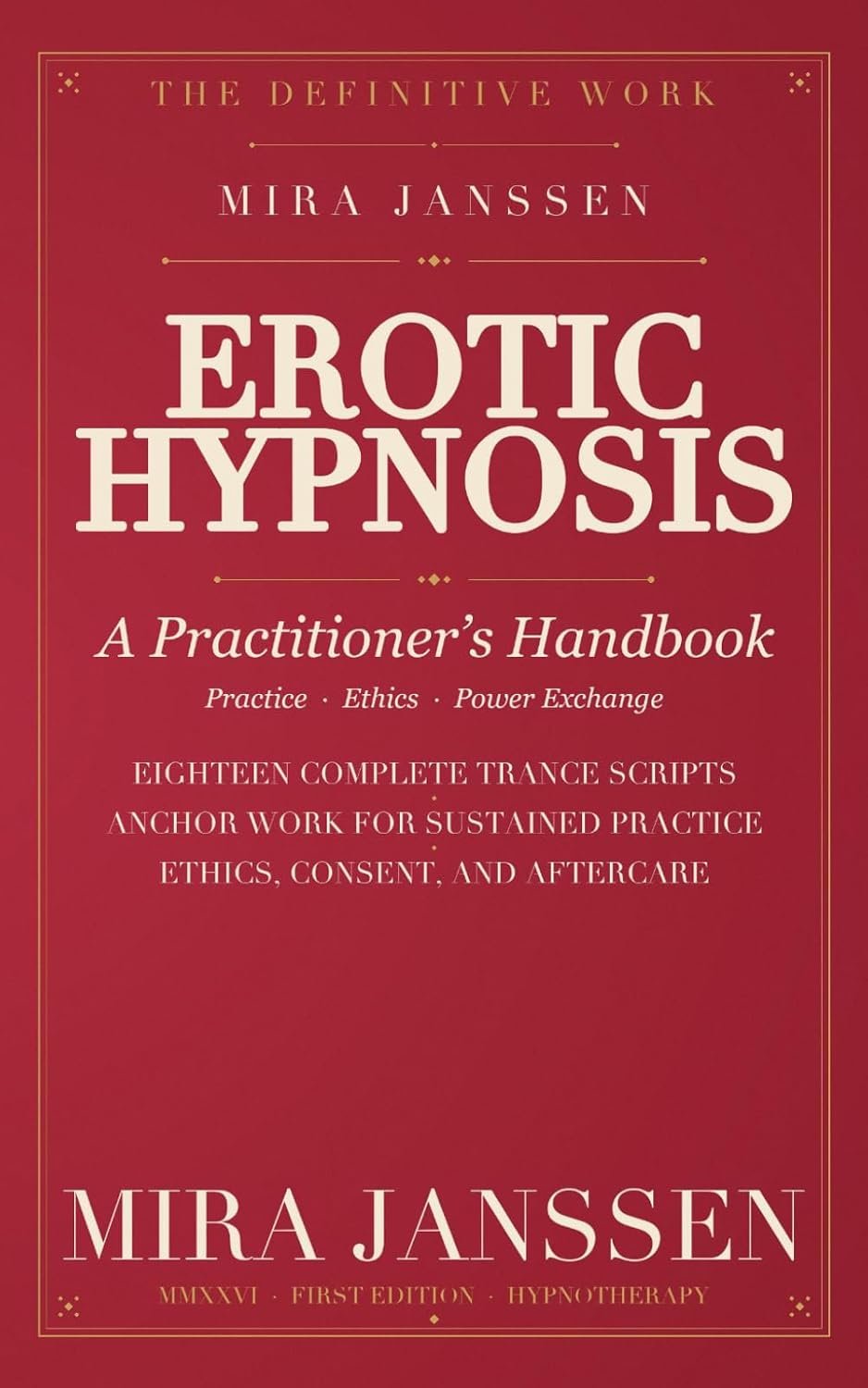
Eighteen complete sessions written out to read aloud — from the first agreement to the way back. The book for turning one attempt into a repertoire.
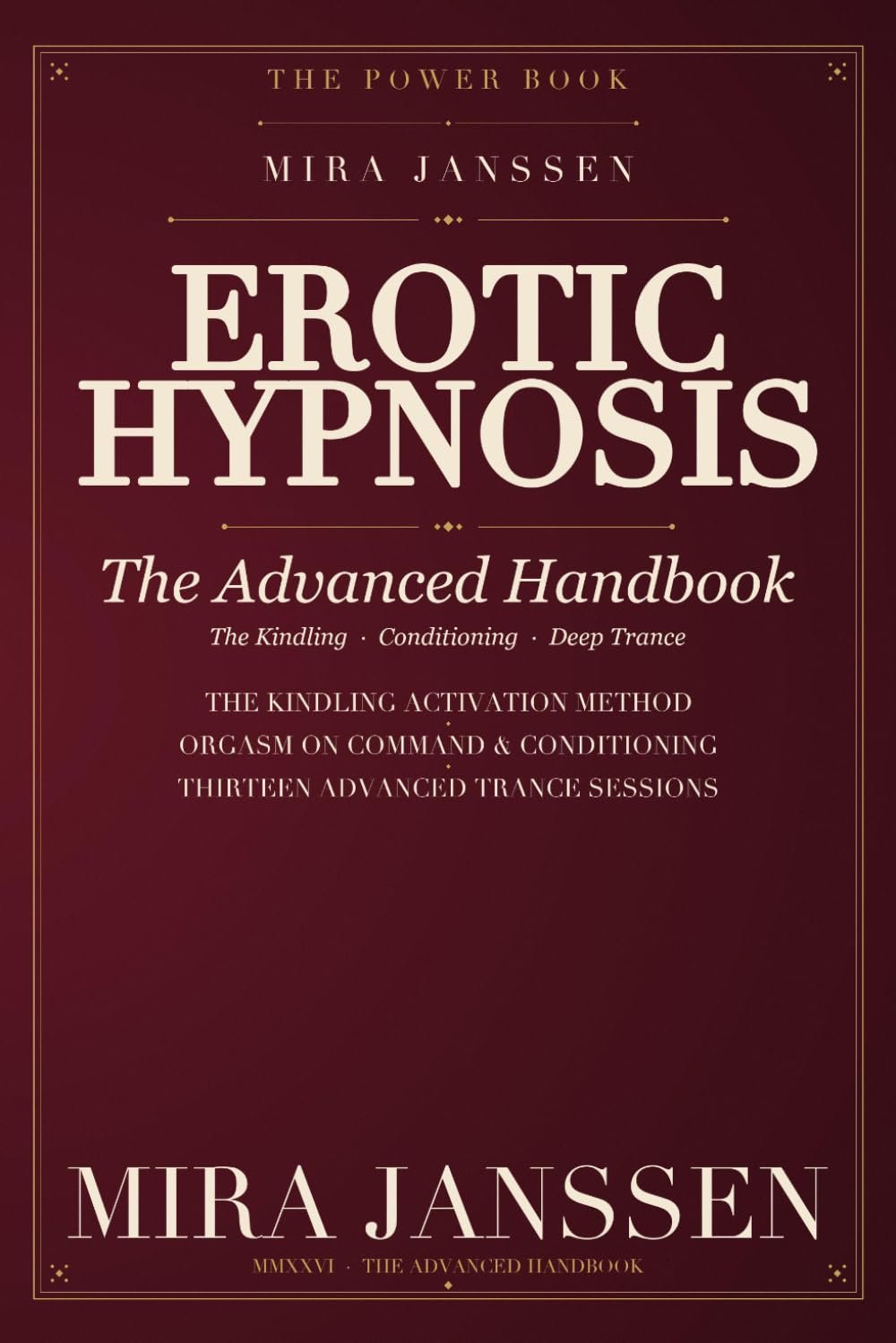
For anyone whose induction is already reliable and whose question has become what comes after it.