Erotic Hypnosis: What It Is, What It Isn't, and What It Can Do
The short definition sits in the Erotic hypnosis lexicon.
There is a particular pause after I tell someone what I write. In those two seconds they are sorting me onto one of the two shelves the culture keeps for this subject: stage-villain mind control, or a corner of the internet they once backed out of at speed. Craft books for couples belong on neither shelf. I publish under a pen name, which tells you where the subject still lives; I write about it as soberly as any other skill, because that is what it is.
Erotic hypnosis is the consensual use of hypnotic attention and suggestion with erotic content. It uses the same absorbed focus, expectation and responsiveness found in other forms of hypnosis; what changes is the subject matter, not the basic mechanism. It is not mind control, unconsciousness or permission to cross a boundary.
There is no special erotic trance with separate rules. There is hypnosis — a documented procedure built from attention, expectation and suggestion — and there is the question of what two adults agree to put into it.
Where the internet files it, and who the filing forgets
Look the term up and you will find three shelves. One holds BDSM mind play: dominance and submission by psychological means. One holds hypnokink, where trance or the act of being guided is itself erotic. The third holds hypnosis erotica — stories and audio that use trance as a plot device. All three are real uses of the term. None defines the whole practice.
BDSM communities discuss erotic hypnosis openly because they already have useful infrastructure: negotiation, limits, stop words and an ordinary vocabulary for desire. The technique is not inherently BDSM, any more than rope is. Many readers are simply couples who wonder what happens when a familiar voice guides attention deliberately. This article is for them too: no scene, label or performance required.
The same four ingredients, with the weights moved
Trance is built from four ordinary components: fixation, which gives attention one home; monotony, which reduces novelty; expectation, which shapes how a suggestion is interpreted; and permission, because the listener must be willing to follow. I take the machinery apart in how hypnosis works, the foundation this article stands on.
The recipe does not change when the content becomes erotic, but expectation and permission carry more weight. Someone who feels safe, knows what was agreed and wants the experience has better working conditions than someone lying there auditing every sentence. Clever wording cannot repair missing trust.
Anticipation helps because an erotic setting already narrows attention. A sentence said on Tuesday about Thursday evening can keep returning without effort; suggestion has started before any formal session. The resulting state is usually less cinematic than expected: hearing continues, choice remains, and the main feature is absorption. Read what trance actually is before trying anything. Expecting a blackout is a reliable way to miss the quieter experience that is actually happening.
What is actually possible
Trance does not give a body new capacities. It can change where attention goes and how a person interprets an existing sensation — a narrower claim, but still the useful one.
Amplified sensation. A touch receiving undivided attention may feel more intense than the same touch competing with tomorrow’s schedule. Suggestion can hold that attention in place; it does not create new nerve endings.
Time distortion. Twenty minutes may feel like five, or much longer. Altered time perception is a well-described hypnotic response, though not everybody experiences it and no guide can guarantee it.
Suggested sensation. Some responsive people experience warmth, tingling or touch where no contact occurs. That is a change in perception, not a new physical stimulus, and it varies sharply between people.
Letting go. Often the appealing part is not an exotic effect but a period in which nothing needs deciding. Structure matters here: surrender feels different when its limits were chosen in advance.
None of this happens on command or for everyone. Standard hypnosis scales find wide differences in responsiveness, and scores tend to be fairly stable over time. Trust and practice improve the working conditions; they do not make every response available to every person. A suggestibility test offers an approximate starting point, which is all a first conversation needs.
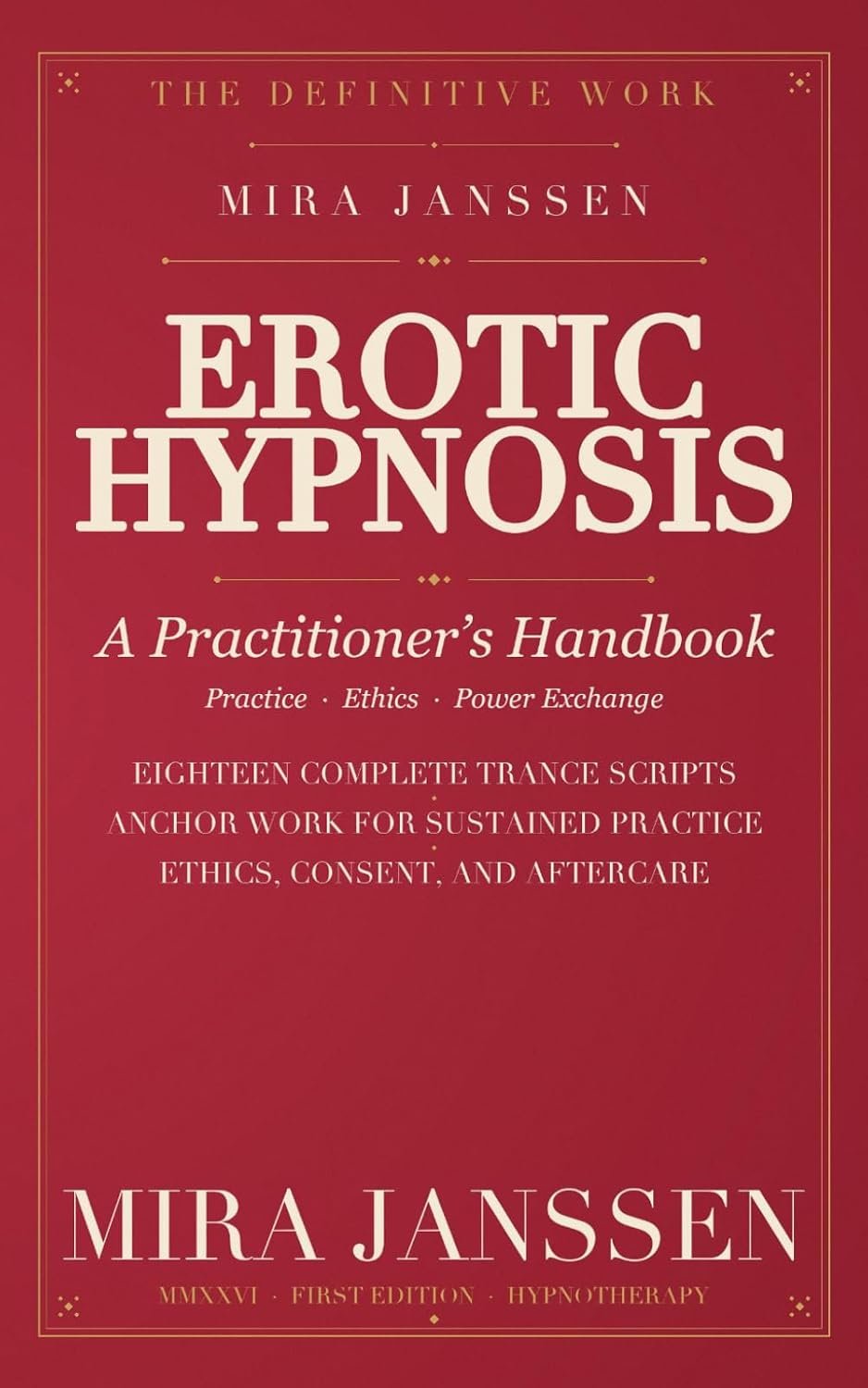
Eighteen complete sessions written out to read aloud — from the first agreement to the way back. The book for turning one attempt into a repertoire.
See the bookConsent is a technique, not a disclaimer
A stubborn myth holds that trance can make a person do what they do not want. The mechanism runs on participation, not transferred will. Everything about guiding another person into trance depends on the listener following, and a suggestion can be refused.
That does not mean nothing can go wrong. Absorbed people may feel unusually open, and the guiding partner is responsible for the frame. Agree beforehand on what is wanted, what remains off the table, the signal that ends the session instantly, and how the listener will be brought fully back. A new yes during trance does not erase a limit set while both people were clear-headed.
Consent is therefore not small print beneath the technique. It is the first working step. A person who feels watched, hurried or uncertain is likely to keep auditing the process; a person who trusts the frame can stop doing that work. Ethics and mechanics meet at exactly this point. If either person cannot discuss limits plainly while fully alert, there is no session to have.
What it is not
Not loss of control. People generally remain aware of what is happening, can reject a suggestion and usually remember the session afterwards. A first session often feels mundane because films promised oblivion.
Not treatment. Pain, anxiety or serious relationship trouble belongs with someone qualified to treat it, not inside a bedroom trance. Nothing here diagnoses or heals anything.
Not acting. Controlled experiments produce hypnotic responses, and systematic reviews of brain-imaging research report group-level differences associated with hypnosis. That does not create a scan that can certify one person as hypnotised, a distinction I explain in is hypnosis real.
Not a power of the guide. No force flows between people. The guide contributes timing, wording and attention; the listener contributes the capacity to respond. Craft can be learned, but it cannot manufacture willingness.
Where to start — and why not with the main event
Not with an erotic session. I mean that practically, not prudishly.
Start alone with a small demonstration. Hang a ring on a thread, hold it over a table, and imagine it swinging left to right. It may begin to move through tiny muscle actions you do not consciously initiate: the ideomotor effect in plain view. It proves no grand theory, but it demonstrates the useful gap between deliberate movement and movement shaped by expectation.
Then run a plain partnered session: two people, phones elsewhere, one familiar voice slowing for perhaps twenty minutes. Agree the stop signal first. Keep the suggestions ordinary — eyes resting, breathing evening out, hands feeling heavier — and end completely. The job is calibration: learning the listener’s tempo, recognising a refusal and discovering what returning to ordinary attention feels like. Add erotic content only when those mechanics are almost boring.
After that, wording and session architecture matter, but they do not fit honestly into a paragraph. The longer examples, escalation choices and retreat paths are what my books are for. This page is the map, enough to decide whether the territory interests you.
Erotic hypnosis does not need its lurid mythology. The defensible version is attention and language used precisely, within limits chosen by two adults. It promises no automatic response and grants no special authority. It asks for practice.
Research basis
The factual boundaries in this article follow the revised APA Division 30 definition of hypnosis (Elkins, Barabasz, Council and Spiegel, International Journal of Clinical and Experimental Hypnosis, 2015), Oakley and Halligan’s review of hypnotic suggestion in Nature Reviews Neuroscience (2013), Landry, Lifshitz and Raz’s systematic review of brain correlates in Neuroscience & Biobehavioral Reviews (2017), and Woody and Barnier’s review of hypnosis scales in The Oxford Handbook of Hypnosis (2008). These sources support claims about attention, suggestion, responsiveness and group-level brain findings; they do not support mind control, guaranteed effects or medical promises.
— Mira
FAQ
What is erotic hypnosis? The consensual use of hypnotic attention and suggestion with erotic content. It uses the same basic processes as other forms of hypnosis; the subject matter changes, not the mechanism. It may overlap with BDSM or hypnokink, but neither label is required.
Is erotic hypnosis real? Hypnotic responses can be produced in controlled experiments, and imaging reviews report group-level brain differences associated with hypnosis. That evidence does not support the film version: mind control, automatic obedience or a scan that proves one particular person is hypnotised.
Is erotic hypnosis safe? It can be practised more responsibly when sober adults agree boundaries, use an immediate stop signal and check in afterwards, but no activity is risk-free. Stop if either person becomes distressed or disoriented, and do not use bedroom hypnosis as treatment. Anyone concerned about a mental-health or neurological condition should ask a qualified clinician who knows their history.
How do I start with a partner? Not with an erotic session. Settle the agreement first — what's wanted, what's excluded, the stop signal — then run plain, unhurried relaxation sessions until the state itself is familiar to both of you, and add erotic content only once the mechanics feel almost boring. A suggestibility test beforehand saves a lot of guessing about tempo and depth.
Eighteen complete sessions written out to read aloud — from the first agreement to the way back. The book for turning one attempt into a repertoire.
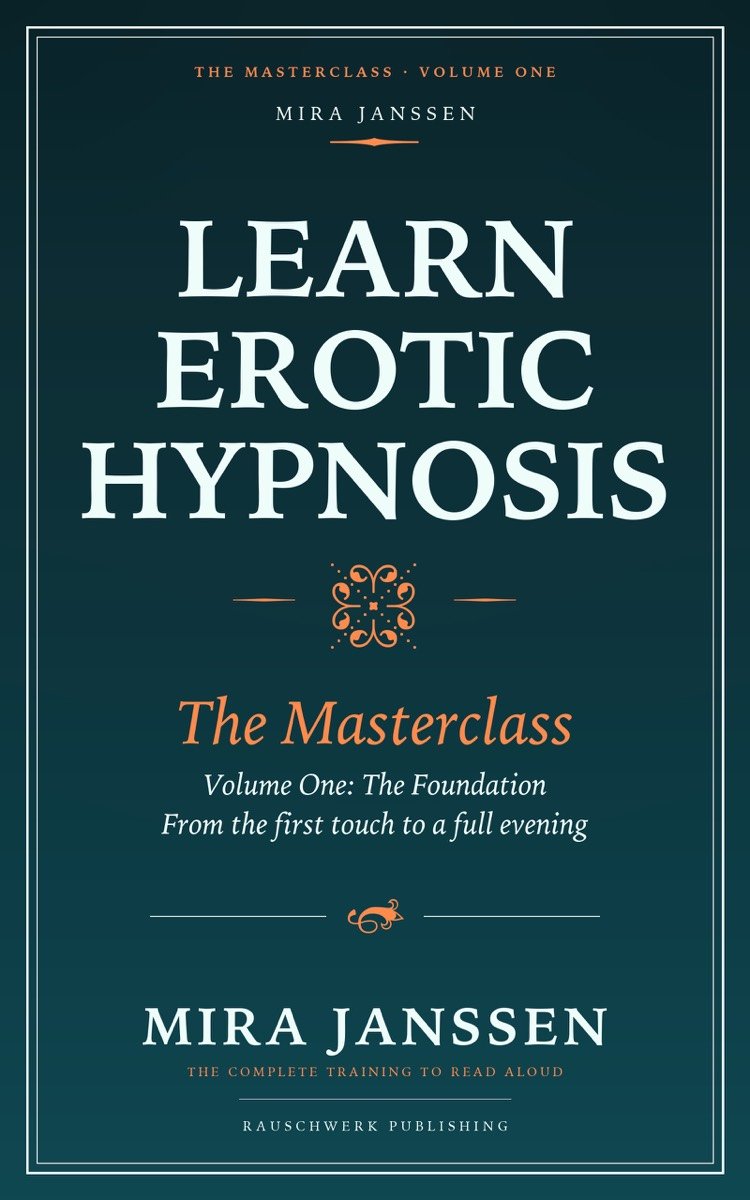
The foundation as a course rather than a reference: language, timing, reading the other person — in the order you actually learn them.
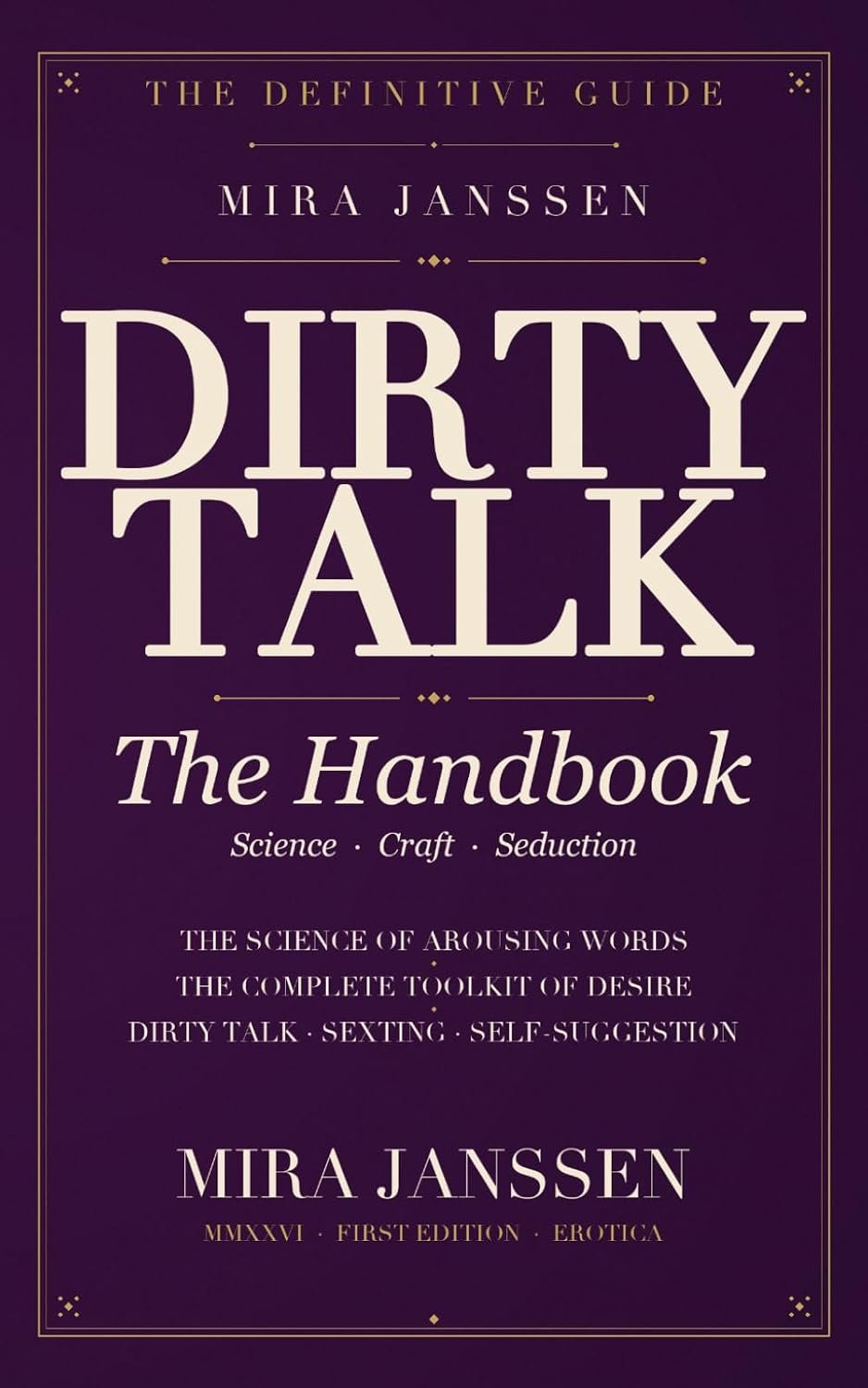
If the section above made the point that the shape of a sentence matters more than its content — this is the whole register, from soft to blunt.