Hypnokink: The Word the Scene Gave Itself
The short definition sits in the Hypnokink lexicon.
Every other word in my field was handed down from somewhere official. Hypnosis came from a Manchester surgeon in 1843. Suggestibility came out of laboratories. Induction sounds like something done to juries. Hypnokink is the exception: nobody prestigious coined it, nobody owns it, and no institution was ever going to volunteer a name for this particular interest, so the people it describes built one themselves. That detail tells you most of what matters about the scene. It organised itself, it wrote its own rules, and the rules turned out better than anyone would have predicted.
Hypnokink is the community's own umbrella term for erotic interest in hypnosis: the fascination with trance, suggestion and voluntarily exchanged control as an intimate dynamic. It covers the whole territory — people who love going under, people who love putting someone under, live sessions and recorded ones, a couple in their own bedroom and a scene with forums, etiquette and a flag. The word names the interest itself, not any single way of practising it.
A kink, not a technique
"Erotic hypnosis" describes an activity, and I use it because I teach the activity. Hypnokink names what sits underneath: the pull. Spell it apart — hypnosis kink — and you can hear the difference. A kink is not something you do; it's something you have, often long before you have a word for it or anyone to share it with. Most people I've met in the scene didn't choose the fascination so much as catch themselves already having it — a film scene that stayed with them for reasons they didn't examine too closely, a stage show that landed somewhere the performer never intended, the discovery that one particular register of voice reorganises their entire afternoon.
For some, it's one kink among several. For others it sits deep enough to work like an identity, something they'd have to explain on a third date rather than a preference they could drop. The word accommodates both without fuss, which is deliberate. An umbrella that polices its edges stops being an umbrella.
A map of the territory
The public square is easy to find. The largest subreddit, r/EroticHypnosis, is easy to find and large enough that the private-malfunction theory dies on contact: most people arrive convinced their interest is unique, and then the archive is full of other people who thought the same thing. Around that square: Discord servers where practice happens live, in text and in voice, usually under more safety rules than a chemistry lab; forums older than both, where the deep archives live; podcasts in which practitioners compare induction styles for two unhurried hours; meme accounts doing what meme accounts do, which is compress the whole subject into a spiral emoji and an in-joke. On TikTok the topic travels in euphemism because the filters eat the direct vocabulary — a creator says "that state" and the comments fill quietly with spirals.
You'll notice I'm naming no server, no creator, no shop. The geography shifts constantly, and the scene's own advice applies: find things yourself, read the etiquette before you post, and be slow to trust anyone in a hurry to trance you.
Files, scripts and what a recording can't do
Most people's first contact with the practice isn't a person. It's a file — a recorded session, headphones, door shut, volume low enough that the house stays asleep. Under the audio sits a genuinely interesting written culture: scripts, full sessions typed out, shared, performed, adapted, argued about. A good script is a strange kind of literature, half poem and half checklist, and reading them taught me more about pacing than any textbook managed.
But I'll say plainly what the file culture tends to say quietly. A recording cannot see you. It runs at one speed whether you're following or long gone; it can't hear your breathing change, and it can't stop. What it offers is trance as a consumable — private, repeatable, and entirely one-directional, a voice that doesn't know you exist. That's not nothing, and for people without a partner it's most of what's available. But it stands to the real thing roughly as a photograph of a meal stands to dinner. The version I teach happens between two present people, where the one speaking watches the one listening and adjusts sentence by sentence. That live work is closer to conversational hypnosis than to a file, and what trance actually is gets discovered together instead of downloaded.
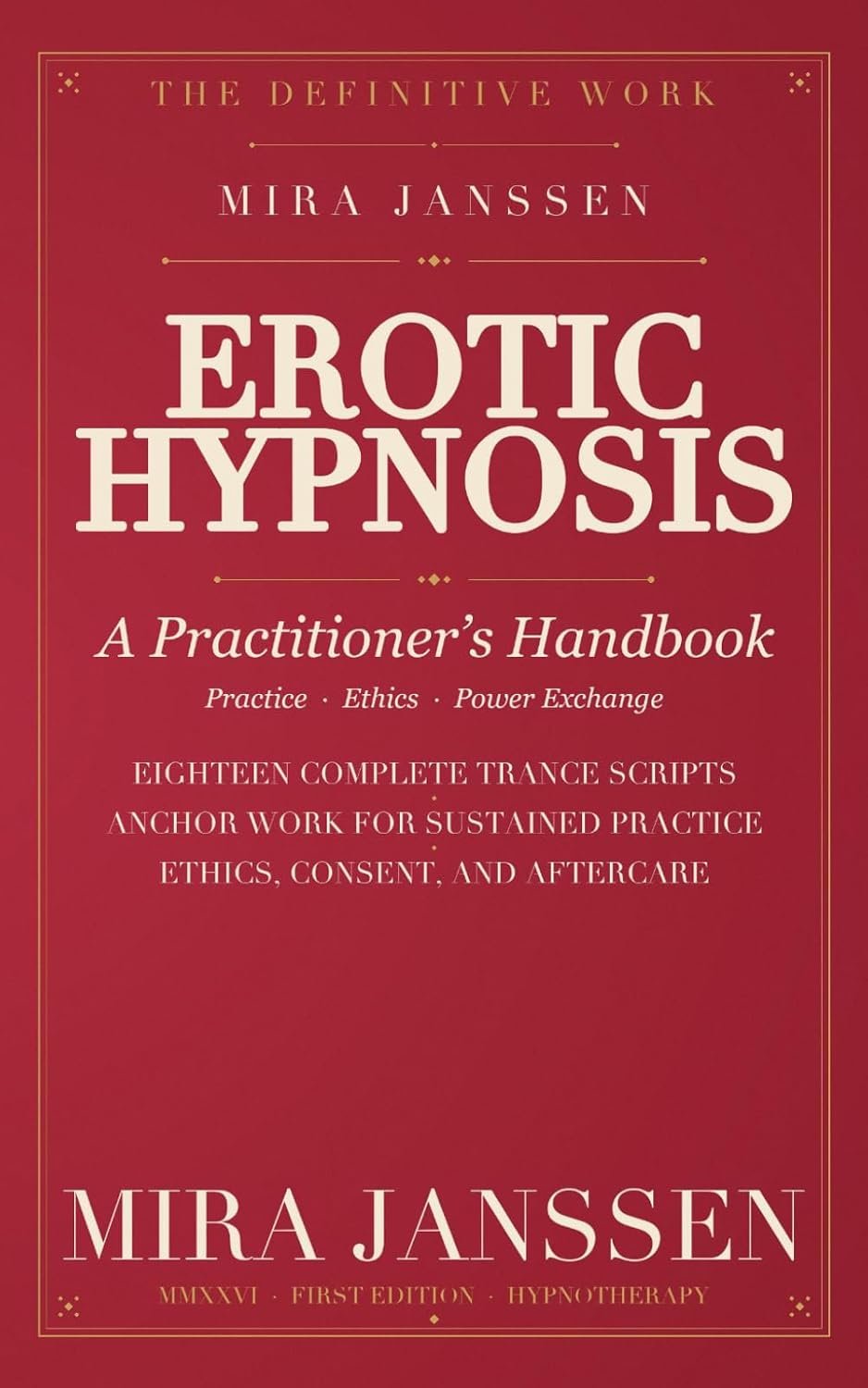
Agree roles, limits and the ending before choosing a script. Seven inductions, eighteen scripts and working sheets support preparation for consensual power-exchange practice.
See the bookThe flag, and who needs the label
There is a flag. Of course there is — every scene that survives long enough gets one — and naturally there's a spiral on it. You'll see it at kink events, on pins, in profile bios. For the people who fly it, it does what flags do: it says this is a real thing, it has a name, and you were never the only one. If you spent years assuming your response to a slow voice was a personal glitch, that message is not small.
And still — most of the people who could claim this word never will, and owe nobody an explanation for skipping it. If you have a partner and the curiosity, you can take everything the scene knows and never once say "hypnokink" out loud. Most couples do exactly that. The label exists for finding your people; if you've already found your person, its work is done before it starts.
The scene's real invention is its manners
Here's the inversion I keep returning to: a scene whose fantasies run on surrendered control has built one of the strictest consent cultures I have ever worked inside — stricter than polite society, which mostly runs on assumption. It had no choice. When the material is surrender, the container has to hold, and the scene learned early that the fantasy of powerlessness is only enjoyable inside a structure of actual power that never moves an inch.
So it built infrastructure. Negotiation before play: what may be suggested, what may not, which subjects stay untouched entirely. Limits treated as standing architecture rather than as a mood that might soften. Trigger hygiene, which I'd nominate as the scene's single best idea: a post-hypnotic trigger is a suggestion that outlives the session, so the careful corners of the scene treat them like tools that stay sharp — scoped to a person, a context and an expiry, installed only with permission, removed cleanly when a dynamic ends. Firing one uninvited, or planting one in a stranger, is as close to a cardinal sin as the scene has. And aftercare: reorienting someone, letting the world reassemble at its own pace, the unglamorous check-in a day later.
Nobody handed this down. It accreted, argument by argument, in forums and servers, written by the people with the most skin in the game, and it is the scene's real achievement — more than any induction, any file, any technique. When I walk couples through their first full session, the consent scaffolding is borrowed from scene practice more or less wholesale, and I say so.
The catalogue corner
Honesty requires one more paragraph. Part of this market sells trance the way a catalogue sells power tools: volume, escalation, ever more specific promises. Files sorted by fetish, copy guaranteeing helplessness or permanence, prices calibrated to the boldness of the promise rather than to anything the state can deliver. I'm not naming anyone and I'm not shaming anyone — the buyers are doing nothing wrong, and fantasy sold as fantasy is a legitimate product with a long history. The trouble starts only when label copy gets mistaken for mechanics, when someone expects the state to do what the thumbnail said. It won't. The state is real, measurably so, and it is also gentler, more cooperative and less total than the catalogue needs you to believe. Read the copy as fiction and it's harmless. Read it as engineering and you've been had, if only mildly.
If you're standing at the door
Two kinds of people finish an article like this. If you're on your own, the communities are where the practice partners, the feedback and the free education in etiquette live — lurk first, learn the manners, and file anyone promising instant helplessness under advertising. If you're partnered, you may not need the scene at all: check how your own attention answers suggestion with a suggestibility test, and run a slow first session with the person you already trust. The craft itself — sessions written out sentence by sentence, for two people in one room — is what my books are for.
Either way: take the word lightly and the manners seriously. Getting those priorities in that order is the most hypnokink thing I could possibly teach you.
— Mira
FAQ
Is hypnokink the same as erotic hypnosis? They overlap without being identical. Erotic hypnosis names an activity; hypnokink names the interest underneath it and the community around it. You can practise erotic hypnosis with a partner and never touch the scene, and you can live deep in the scene — forums, vocabulary, flag — without ever running a live session. Hypnokink is the umbrella; the activity is one thing standing under it.
Where do people find the community? Almost entirely online at first: the large subreddit, Discord servers for live text and voice practice, older forums that hold the archives, podcasts and meme accounts at the edges, and kink events in bigger cities for the in-person side. The standing advice is the same everywhere — read the etiquette before posting, watch before playing, and be slow to trust anyone in a hurry to put you under.
Do you need experience? No. Curiosity and a willingness to learn the consent norms are the entire entry fee. Plenty of people arrive having done nothing but listen to recordings, and the scene is generally patient with beginners who read first and ask second. With a partner you need even less: a quiet evening, a suggestibility test, and the patience to go slowly.
Is it safe? Trance itself is narrowed attention, not a medical event — you pass through something like it in every absorbing film. The genuine risks are interpersonal: sloppy negotiation, triggers left lying around, skipped aftercare, or playing with someone who mistakes the fantasy of control for a right to it. The scene's norms exist precisely to manage those risks, which is why learning the manners is the actual safety course. And anything that touches serious psychological weight belongs with a professional before it becomes a hobby.
Agree roles, limits and the ending before choosing a script. Seven inductions, eighteen scripts and working sheets support preparation for consensual power-exchange practice.
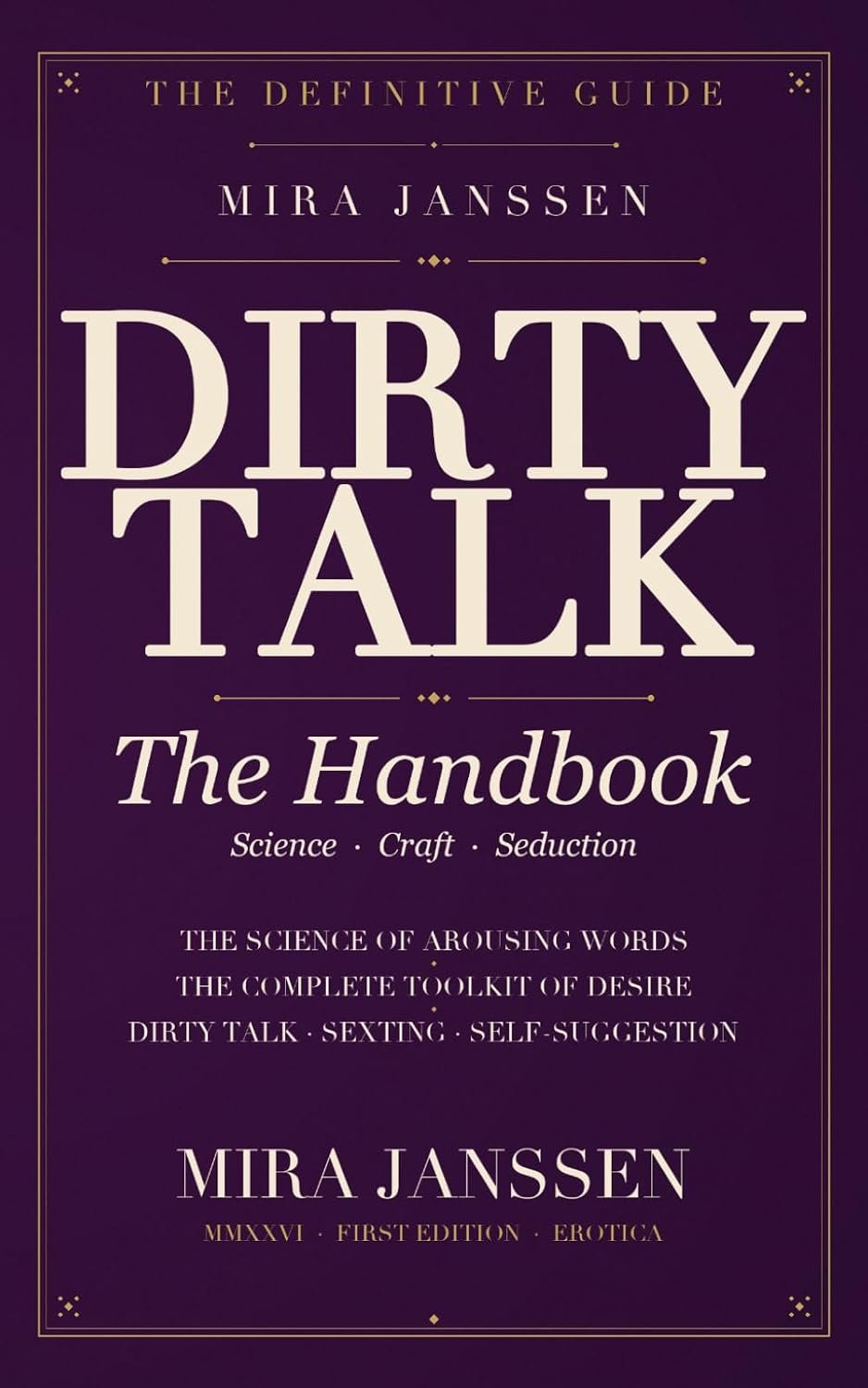
If the section above made the point that the shape of a sentence matters more than its content — this is the whole register, from soft to blunt.
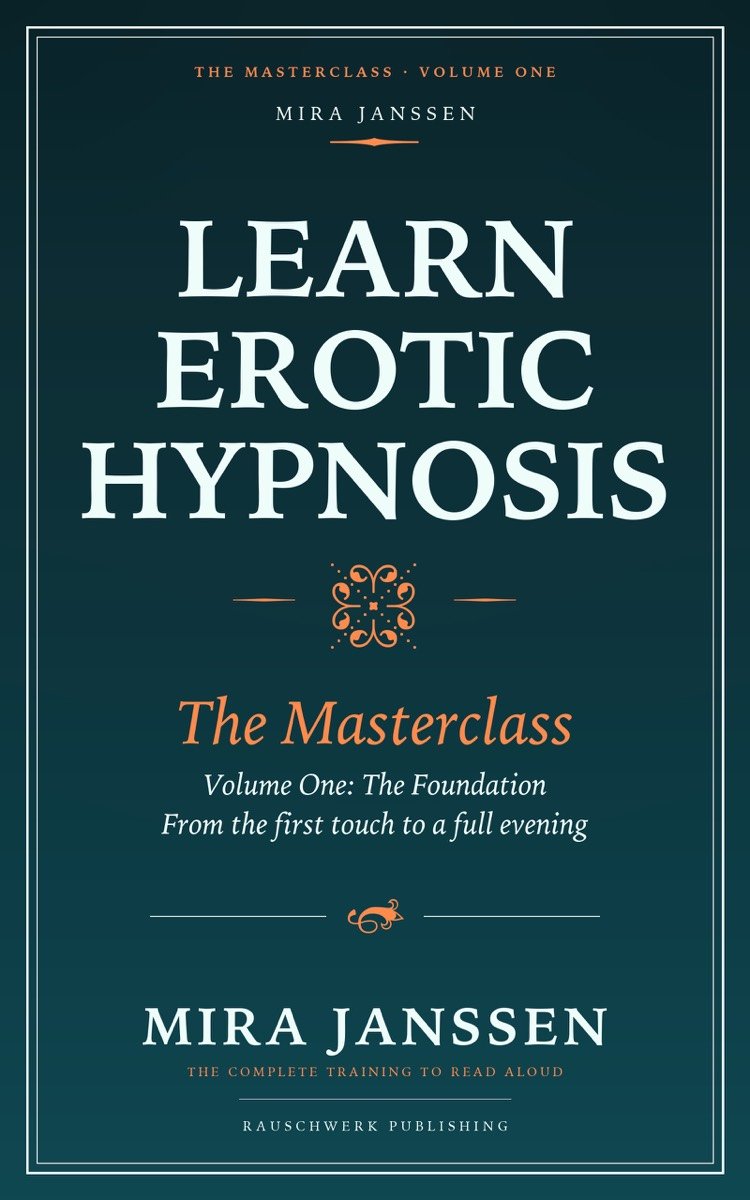
The foundation as a course rather than a reference: language, timing, reading the other person — in the order you actually learn them.